

Think about a recent marketing campaign you’ve seen that you feel missed the mark. Maybe it was a commercial where a product placement or a catchphrase came off as insensitive. Maybe one of your competitors pushed some features live that its audience didn’t ask for, and they’re getting backlash on social media.
There’s a common idea in marketing that brands are “just selling jeans” or “just selling cars.” But in reality, no brand exists outside of its cultural context. Every product, campaign, and message exists in a wider negotiation over meaning, influenced by social norms, power dynamics, and shifting values.
It can be easy to misread the moment, making cultural intelligence a strategic necessity for marketers.
Few people understand this dynamic better than Dr. Anastasia Kārkliņa Gabriel, cultural critic, writer, and award-winning author of Cultural Intelligence for Marketers (2024). Formerly a senior researcher at Reddit, she now advises organizations on societal shifts, translating what’s “now” and “next” in culture.
In this conversation, she unpacks why culture is best understood as a “struggle over meaning,” what brands get wrong when they mistake noise for relevant signals, and how marketers can responsibly leverage cultural intelligence.
Meaning and culture in flux
Brunni: You’ve described culture as a “struggle over meaning.” Can you speak more to that, and to what that perspective means in practical terms for marketers?
Dr. Anastasia: Meaning in culture is inherently elusive. It is constantly changing and evolving in response to culture and to the adjacent social, economic, and technological forces that shape it. To speak of culture as a “struggle over meaning” is to suggest that this process of making meaning isn’t neutral.
Meaning-making is how we delineate who we are, what we value, and what we’re about. Naturally, we will feel strongly about it.
Here’s just one example. There are conservative factions of society that, these days, will vehemently assert that their values are under attack by those who seek to bring more inclusion and acceptance of differences into society. It’s a battle over how we see reality. This is culture: a struggle over meaning, over ideas, and ideologies that shape what we see as normal.
To apply this to marketing, consider something as simple as the cultural meaning of weight loss. For decades, people have sought out solutions to get in shape. Today, ads for GLP-1 medicines have become ubiquitous, all the way up to tennis legend Selena Williams’ partnership with Ro.
In the early 1900s, advertising in the US encouraged women to gain, not lose, weight. It was only by the mid-20th century that fatness became a morally charged issue. At that time, ads openly used degrading, body-shaming language that would cause an uproar today.


But that’s the thing: Culture is the backdrop to our lives that’s always evolving. What was considered normal then isn’t normal anymore. Context is everything.
The lack of cultural literacy in advertising is why we still see marketing teams make mistakes that are largely avoidable. Most enduring brands know how to create meaning that is congruent with the cultural context within which they exist. Understanding how meaning travels across contexts is key to unlocking cultural intelligence for marketers.
Brunni: You’ve said in your book that culture is always in flux, but today that flux feels accelerated. Why is cultural intelligence more urgent now than even five or ten years ago? What makes it non-negotiable for brands?
Dr. Anastasia: Marketers must consider social media as a primary means of connecting brands with consumers.It’s no longer just a one-way street.
This is not to say that consumers didn’t have opinions on brands and campaigns before. Now, however, anyone can be online and express themselves, leading to a feeling of acceleration.
Everyone seemingly has an opinion of everything, and things like credentials and authority matter less and less.
Moreover, brands must now contend with additional issues. Take for instance the controversy with the Cracker Barrel logo changing. In the 24 hours following the story’s release, 44.5 percent of X posts appeared to be bots, and, among those calling for a boycott of the store, 49 percent appeared to be fake.

Meaning-making is how we delineate who we are, what we value, and what we’re about. Naturally, we will feel strongly about it. Understanding how meaning travels across contexts is key to unlocking cultural intelligence for marketers.
Cultural noise vs. signals that matter
Brunni: There’s a perception that cultural intelligence is a nice-to-have rather than strategic. What risks do brands run when they sideline it — and what about when it’s part of the core playbook?
Dr. Anastasia: We see the risks all the time, which should only reinforce the simple notion that cultural intelligence is a necessity for modern-day brands.
In summer 2025, we saw backlash against several brands’ high-profile campaigns, including a widely discussed case involving a major US retailer and another involving a restaurant chain.
The complaints centered around the campaigns having reproduced long-standing stereotypes that many cultural experts — including me — believe are racist. These missteps could have been prevented had there been more people with broader cultural knowledge present in the decision-making room.
Going to market is a risk in itself, no matter what you do. You’re always given a choice between losing and winning, and your job is to increase your chances of success.
Brands that consistently place cultural intelligence at the core of their playbook are winning at a higher rate than their competitors; it’s as simple as that.
Brunni: We live in a time where brands can measure everything, yet not everything is meaningful. How do you tell the difference between cultural noise and the signals that truly matter?
Dr. Anastasia: The key question here is this: what’s “meaningful”? What is creating new meaning that can serve as creative fuel? That’s a good place to start.
Noise is constant, amplified, and seems loud; it’s all that static in the background.Signals that matter have stronger cultural resonance.
If you look a bit more closely, you can trace them back to deeper cultural forces that shape how people think and behave.
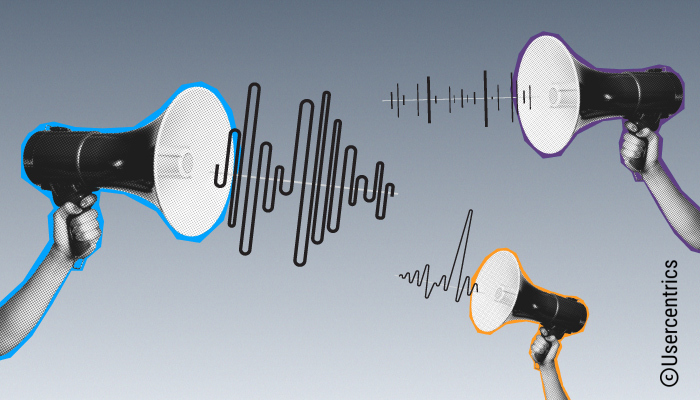
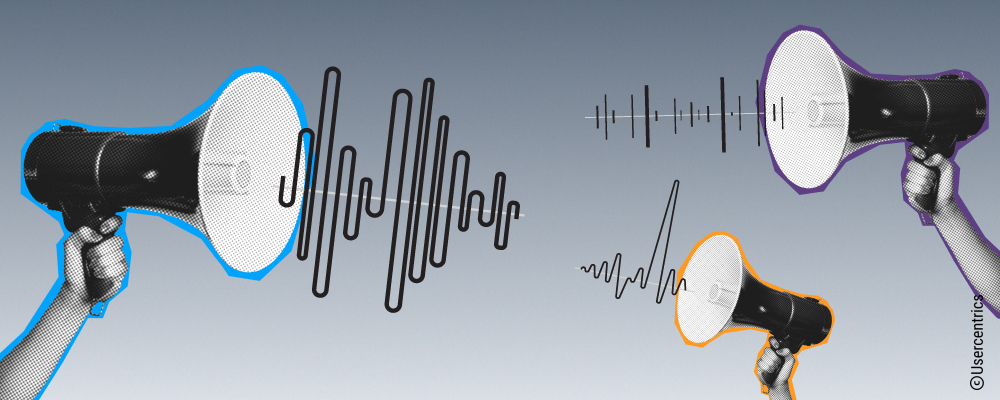
I often think about cultural signals as sound waves. Some are short, high-frequency bursts that rise and fall rather quickly. These would be viral trends that grab attention but don’t necessarily last beyond 72 hours.
For some brands, this might be an opportunity to shine and become part of, or even create, a viral online moment themselves. We saw Duolingo masterfully dominate the social space by leaning into the chaos of internet culture: leveraging social trends and creating memes in response to cultural events.
This won’t work for every brand, though, and it shouldn’t.
Other ‘soundwaves’ will have lower frequencies and longer wavelengths, carrying further and resonating for longer. The task is to distinguish between fleeting spikes in volume and the slower, deeper frequencies that actually shift how people think and express themselves over time.
Make cultural intelligence a key part of your next campaign.
Towards a cultural intelligence playbook
Brunni: From your perspective, how can brands honor cultural nuance without falling into the trap of over-surveillance or over-analysis?
Dr. Anastasia: Don’t confuse volume with insights. Become aware of how extractive research can be, and how extraction is part of any knowledge production that involves data mining and analysis.
Remember, you’re not just receiving data; you are taking it from somewhere.
AI technologies, in particular, have made it possible (and tempting) to “scrape” every corner of the digitized world. Brands run the risk of looking at a large pool of data and only then asking themselves what to do with it.
That’s why it’s so crucial to treat any research as a strategic exercise in itself by asking: What are we trying to understand, and why? What kind of data do we actually need to get there?
Move with intention. The work isn’t just about extracting and hoarding data, but about nailing down a point of view.
Brands run the risk of looking at a large pool of data and only then asking themselves what to do with it. That’s why it’s so crucial to treat any research as a strategic exercise in itself by asking:
What are we trying to understand, and why? What kind of data do we actually need to get there?
Move with intention. The work isn’t just about extracting and hoarding data, but about nailing down a point of view.
Brunni: Even culturally savvy brands misfire. What gives you hope about where cultural intelligence is heading, and what trends or shifts should marketers prepare for next?
Dr. Anastasia: That’s true. But what’s even more challenging is when savvy brands misfire intentionally. (I wouldn’t call them culturally savvy, but savvy enough to know what they are doing.)
Outrage marketing is an easy tactic for brands seeking to drive likes and clicks. We’ve seen examples where a CMO publicly boasts about wanting their campaign to push buttons, only to later feign ignorance and accuse their audiences of misinterpretation when it gets backlash.
What we’ll likely see next is that kind of division: brands that choose to lean into provocation to push for relevance, and those that invest in marketing with intention and substance. The latter type leans into ideas that evoke reactions (as good creative ideas should), but only because they take on real tensions in culture, instead of just manufacturing outrage.
Marketers should be prepared to navigate this “struggle for meaning” that often falls across political lines and exists within the broader socio-political context that shapes marketing.
There’s this misguided idea that brands are “just selling jeans” or “just selling cars.” But no brand actually exists outside of its cultural context.
What gives me hope are brand leaders who understand their role in culture and continue to move with integrity and a sense of responsibility, holding the industry to the highest of standards.
That’s the only way towards lasting trust and real, far-reaching impact — social, cultural, and, of course, commercial impact.
________________________
Dr. Anastasia Kārkliņa Gabriel is a cultural critic, writer, and award-winning author of Cultural Intelligence for Marketers (2024). Formerly a senior researcher at Reddit, Dr. Gabriel advises brands and organizations on societal shifts and trends, translating what’s “now” and “next” in culture. A frequent cultural commentator, her insights on social issues and current events have been featured in The Guardian, Forbes, Business Insider, Teen Vogue, among other publications. Dr. Gabriel writes a newsletter on culture and society on Substack.