
In early 2025, a thirty‑year‑old dystopian novel rose to breakout hit status and gathered a committed online following.A year before being picked up by users on TikTok sharing raving reviews on #BookTook, I Who Have Never Known Men only sold a few copies. Now, bookshops are struggling to keep up with demand and publishers are reporting tens of thousands of sales.
How does a long‑forgotten dystopian novel become a summer obsession (and my favorite book of the summer)?
While the book is a great piece of literary fiction, it was a community of readers that ultimately lifted I Who Have Never Known Men into mainstream and literary success.
This kind of cross‑pollination isn’t limited to niche novels. From social relationships to work and leisure, the boundaries that once separated “real life” and online life have dissolved.
When Meta’s Mark Zuckerberg describes the world we already live as “somewhat meta,” he speaks to what many of us experience daily. Our screens migrate from desk to pocket to face, and digital layers seep into classrooms, shops, and living rooms, making it harder to understand where online ends and offline begins.
How did we get here? Let’s explore the meaning of cultural intelligence and digital trust now that every moment is both IRL and URL.
The slow dissolve of boundaries
The slow dissolution of boundaries happened less through isolated breakthroughs and more as a slow but steady cultural drift: checking email outside office hours, livestreaming a concert instead of attending in person, building a career on YouTube or, conversely, taking recommendations from influencers instead of friends.
The repetition of each of these small habits, powerless in isolation, chipped away at the boundary that once kept online and offline separate.
We’ve arrived at a hybrid existence where what happens online (URL) constantly spills into what happens offline (or IRL, from “in real life”), and the other way around.
A post on Instagram influences how you’re perceived at work. A workplace Slack thread shifts into weekend friendships. And the audience viewing any moment is never just the people physically present, but also the network watching from afar.
From vibe coding to AI slop, the content creator shows how to connect with audiences through funny, honest, educational content.
From moments to movements
What starts as a single act online rarely stays contained. A meme, a negative review, a polarizing comment; each only creates meaning as it picks up momentum and leaps from feeds into everyday conversations. One person’s book recommendation becomes a community’s bestseller, one hashtag a global protest.
The strength comes from numbers. Small signals combined build shared narratives, and those narratives travel back into “real life” with tangible effects: shelves emptied, streets filled, elections swayed. The shift from isolated moments to collective movements is what truly dissolved the line between IRL and URL.
Looking back, it’s hard to separate cause from effect. Did digital platforms mirror what was already happening offline, or did they create the conditions for it to scale? The answer is both, and that entanglement is the essence of the continuum in which we now live.
The URL ↔ IRL continuum
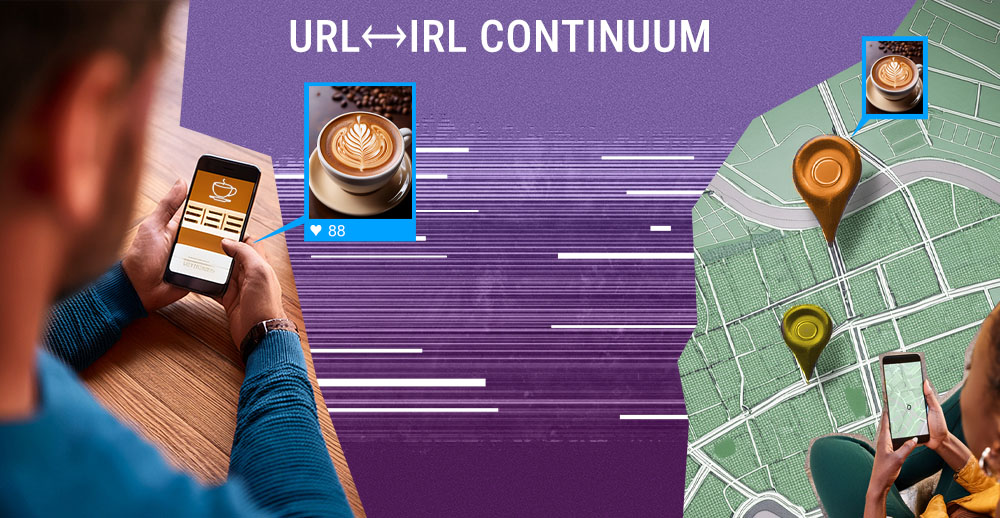
Today, the boundary between the URL and the IRL has blurred into a continuum. Our online and offline behaviors don’t sit in parallel tracks; they’re in constant conversation and mutual influence, creating a feedback loop where every move carries both physical and digital weight.
Order a coffee through an app and your local café’s loyalty program knows your morning routine. Share a photo from that café and it becomes part of someone else’s map of the city. The continuum is less about being “on” or “offline” and more about inhabiting both spaces at once.
Living in this hybrid condition reshapes how we socialize, learn, and work. It’s liberating in its flexibility but also disorienting in its demands.
The continuum’s double-edged sword
The continuum offers genuine freedoms.
- A freelancer builds a global career without gatekeepers.
- A teenager in a small town finds their community on Discord.
- Niche passions can flourish in dedicated corners of the internet, spilling back into local meetups and real-world collaboration.
But those freedoms can also bring challenges, and the dissolution of boundaries means there’s nowhere left to be off-duty.
- The weekend brunch becomes (aesthetically pleasant) content.
- Hobbies are suddenly expected to turn into profitable side hustles.
- Everyone is expected to have a personal brand or become an online expert
- A casual opinion risks creating a permanent record on social media, and the potential threat of being cancelled.
The pressure to perform spreads from just influencers to everyone with a profile, and the audience for any given moment expands beyond your control. Everyone inhabits the same feed now: your friends, your ex, and your future employer, not to mention your entire extended family.
As a result, context collapses. What you share with close friends reaches that one person you went to school with 15 years ago; what you post for your work peers gets seen by running club colleagues.
The ability to code-switch and be different versions of yourself in different rooms becomes nearly impossible when all rooms merge into one scrollable stream.
ListenFirst’s Director of Marketing Chase Varga shares her strategy while keeping privacy in the equation.
The cost of opting out
Opting out isn’t as simple as logging off. Connection, opportunity, and even credibility are now mediated through the filter of digital presence.
The person who avoids LinkedIn might miss the next job offer.
The freelancer who doesn’t join multiple Slack communities risks invisibility.
To participate in society increasingly equates to having an online presence.
But participation has a price. Algorithms decide what’s visible and what gets buried, often in ways users don’t really understand. The continuum promises connection but can just as easily deepen isolation for those on the wrong side of its logic.
Trust takes a hit when essential interactions live behind platforms and updates are trapped in feeds, support is routed to bots, and applications are gated by accounts.
The continuum becomes less a neutral territory and more a landscape where participation requirements and platform dependencies are baked into the infrastructure.
We’re more connected and more anxious, more visible and more vulnerable, more empowered and more exhausted. The continuum is a core part of this tension, lived daily as we navigate its blurred edges.
And yet, awareness offers a way through. Understanding how the continuum influences our choices is the first step toward navigating it with more agency and intentionality.

Awareness as a form of agency
The more we understand how hybrid spaces influence and shape us, the more agency we have to navigate them on our own terms. The first step to increase our agency is to notice how the continuum actually works on and around us.
Your feed isn’t neutral: It’s engineered to maximize engagement, often at the cost of nuance. Once you recognize that curation, you can start moving through it differently.
Performance vs. connection
The continuum invites constant self-presentation. Anything shared might be seen, saved, screenshot, repurposed. The worthwhile challenge is learning to distinguish between moments that stay analog versus moments meant for sharing.
Sharing is caring
Every post, comment, and DM is both a data point of self-expression and a contribution to the ecosystem around you. Each time you choose when to be visible and when to step back becomes a small act of autonomy in an always-on environment.
Consent as an everyday practice
Consent expands way beyond agreeing to Terms of Service — speaking of which, when was the last time you read one of those in full? It’s also the act of trying to understand what data travels where and, more importantly, who benefits from it.
Awareness doesn’t make the continuum disappear, but it empowers you to move along it in ways that are more deliberate and with a clearer sense of what you’re willing to trade and what you’re not.
If your Google history is a diary you never meant to write, you’ll enjoy our Q&A with Pulitzer finalist Vauhini Vara.
Cultural intelligence for brands
If literacy gives individuals agency, cultural intelligence does the same for brands. The continuum is the environment where identity, community, and trust are in continuous conversation and are constantly negotiated.
To earn a place within it, brands need to understand each of those elements at play.
Cultural intelligence means reading cultural signals with nuance and articulating them in light of the specific time and place in which they occur.
It’s about knowing when to speak, when to listen, and when not to engage altogether is as important as the message itself.
The difference between joining a conversation and hijacking it often comes down to respect for context.
The BookTok phenomenon is a reminder of what works. A community lifted I Who Have Never Known Men into the spotlight not because publishers forced it, but because readers trusted one another.
Brands must also approach spaces with the attitude of adding value instead of noise if they want their messages to resonate.
On the flip side, forced brand insertions rarely land. People don’t want to be treated as “consumers” in every moment of their hybrid existence. Recognizing boundaries and accepting that not every touchpoint is an invitation to sell can be the difference between trust gained and trust lost.
Permission as foundation
For the marketers amongst us, the task comes down to alignment: tone, values, and presence that feel connected across IRL and URL touchpoints shows consistency.
In a context where identities shift fluidly across spaces, brands that can show up with coherence and authenticity are the ones building relevance.
How? Cultivate a direct relationship with your audience by listening to their preferences.
Here are a few ideas.
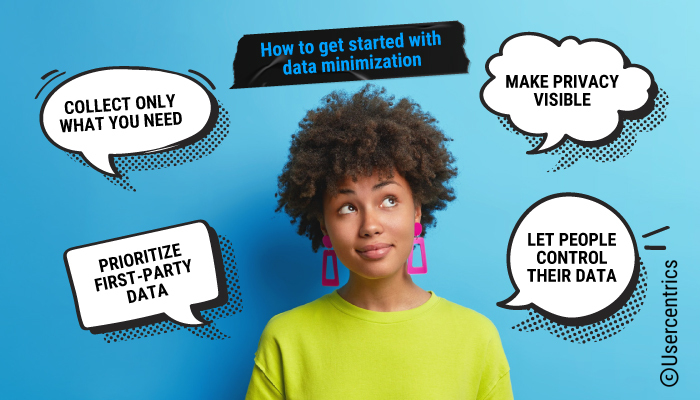
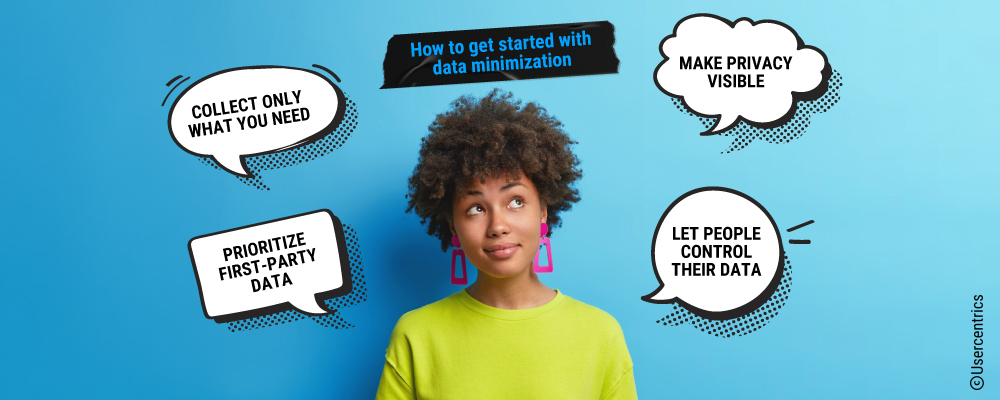
Prioritize first-party data
- Shift your data strategy from third-party collection to first- and zero-party data.
- Ask users directly for their data, instead of inferring it from hidden trackers.
- Build relationships on mutual exchange: higher data quality and lower legal risk for brands, more meaningful and relevant personalization for users, stronger trust for both.
Collect only what you need
- Before collecting data, ask if it’s really necessary.
- Keep only the data you have decided you need, for only as long as you need it.
- Audit your forms, consent flows, and analytics setup regularly.
Make privacy visible
- Tell people what data you collect, why you need it, and who can see it.
- Use plain language instead of legal jargon.
- Place this information where it’s easy to find, not hidden in long policies.
- Update users whenever practices change.
- Treat transparency as the basis of long-term trust.
Let people control their data
- Build consent into your design from the start, not as an afterthought.
- Make it granular and let people choose what to share and for what purpose.
- Offer clear options to update preferences, withdraw consent, or delete data.
- Treat consent as an ongoing conversation, not a one-time extraction.
Marketers are key forces in the environment of trust. Every campaign, data practice, and touchpoint shapes the infrastructure of digital life that we all exist within.
Architecting better scaffolding
This summer, I got turned on to I Who Have Never Known Men by a friend, but I only realized it was trending on BookTok when writing this article.
Neither my friend nor I, as the aging Millennials that we are, are on TikTok. Sure, it might have been a coincidence and the book found us through completely analog ways…but who is to say?
This uncertainty is exactly what defines life in the IRL↔URL continuum.
It’s the new reality we live in, and the backdrop against which culture and connection takes place. The question isn’t whether we embrace it, but how we build within it.
As marketers, we are already shaping this shared landscape through the stories we tell and the systems we design. Every campaign is a small piece of the scaffolding.
Beyond just clicks or conversions, these choices contribute to the digital environment we’re all experiencing.
It means recognizing boundaries, respecting consent, and giving people agency over the extent of their online presence. It means designing systems that reflect empathy and foresight, rather than extraction.
When brands act with cultural intelligence and privacy-led principles, we can tilt the balance toward trust.
They want privacy, personalization, and stories that feel real. Here’s what it means for the future of marketing.