
While marketing automation unlocks scale, privacy regulations call for restraint. Now, marketers are being asked to reconcile these seemingly opposite forces, and to show that consent and conversion aren’t mutually exclusive.
That’s exactly what Navah Hopkins has spent her career on.
By combining strategy, ethics, and technological innovation, Navah has built systems that scale value and not just volume. From SEO to pay-per-click (PPC), the through-line of her work is clear: use data responsibly, automate with empathy, and build marketing that helps humans at scale.
In this interview, Navah shares why consent-driven campaigns lead to stronger retention, how data minimalism clarifies what’s truly important, and why pairing AI automation with human creativity can open the path to greater marketing success.
First, some wisdom from the PLM Summit
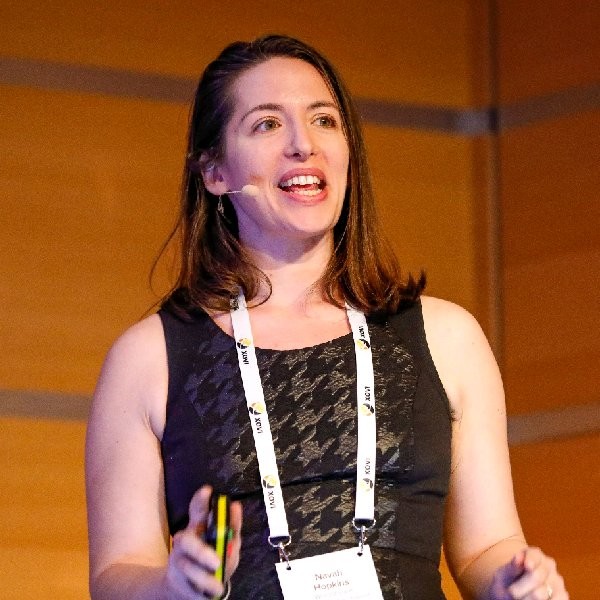
At the Usercentrics 2025 Privacy-Led Marketing Summit, Navah took part in a spotlight session on PPC performance in a privacy-first world — during which she brought her perspective to the question: How can marketers grow audiences without compromising the trust that makes growth sustainable in the long run?
While many marketers still view data privacy through the lens of a cookie manager, the web is changing so quickly that the check-box won’t always be relevant. But Navah sees this as an exciting “challenge mode” for marketers.
“The world of consented conversations won’t be grounded in websites forever,” she told hundreds of marketers, live. “We have to communicate at every stage of the funnel knowing that not everyone will say yes to consented data, and so, we can’t speak one-to-one with everyone. In some cases you’ll need to speak to a cohort of thousands of people and be as relevant as possible with your creative.”
Navah offers two pieces of advice for this situation: create your messaging wisely, and consider how AI interfaces are changing how that message shows up. “Whether we’re talking Microsoft Copilot or AI overviews, your creative needs to communicate exactly what you offer clearly, accessibly, and without anything else supporting it,” she told Summit attendees. For example, ads that offer free shipping in 20 days or discounts for return customers without other context won’t be very impactful.
On the second point, Navah encourages marketers to set up Consent Mode correctly. “There is a fundamental paradox that privacy constrains the data that AI needs to function. So if you want to lean into AI and automation, it’s important to build those consented conversations with your users so that you can pass that data through,” she says.
Beyond the PLM Summit, Usercentrics’ senior writer Brunni Corsato spoke more with Navah about her career, leading up to the current moment in AI and advertising.
Finding the human piece in automation
Brunni: You’ve worked across SEO and PPC, and now you’re a Product Liaison for Microsoft. Through all those shifts, what’s been the through-line in how you think about building relationships with your audience?
Navah: I’ve spent the lion’s share of my 17 years in the digital marketing industry working in adtech, both agency and in-house. In June 2025, I was brought on board Microsoft specifically to be a voice for the advertising community.
My driving motivation in this work is to help people. It matters that whatever I’m doing helps the most humans possible.
What’s fascinating is that my ability to be the most helpful is always strongest while working in a SaaS or product mindset. Although I love consulting work — I get to have rich conversations and perform “hands on keyboard” work to keep myself technically current — I’ve found the most rewarding work is scaling a function to hundreds, if not thousands, of people through automation.
I’ve even been able to make bulk changes based on user feedback. For example, Microsoft Advertising offered title casing as the default for when marketers put creative in. I brought the insight that people should be given the choice for sentence casing or title casing. After all, Microsoft’s own style guide uses sentence casing! In this case, one change quickly impacted thousands of people.
I’m grateful that automation has never been more accessible, so those who might have been intimidated by scaling their innovation with strong virtues can finally lean into that way of working and helping.
Brunni: You’re a vocal proponent of turning marketing into consent-driven conversations. What does that look like in practice, and why do you think it matters more than ever today?
Navah: Consent-driven conversation means honoring your customer’s agency in the marketing conversation.
For example, there was an ad that harassed me so aggressively that I started blocking it. I did everything possible. But in this situation, because the advertiser didn’t have my consented email to say ‘exclude me from your targeting,’ they couldn’t control whether I’d be served the ad. In other words, they can’t avoid targeting me until I give them consent to exclude me. [Editor note: Consumer rights in such situations vary by location because opt-in/out regulations differ across U.S. states, countries, and regions.]
I’d encourage marketers to change the framing of consent. A lot of brands don’t realize that it’s not just about nurturing. It’s also about saying, “Hey, if you don’t want to hear from us, give us consent to add you to a ‘no-target list.’”
So, rather than co-opting people into a marketing stream they may or may not have interest in, give them the opportunity to share that they’re happy to hear from you — and be clear about what you’re going to do with that information, whether they’re okay being served ads or prefer to be excluded.
If you don’t lean into consent, you are starting from a place of abused trust. This makes sales harder, and retention will likely come down to the cheapest price instead of overall value. In the long run, it saves more to invest in consent.
From a technical standpoint, Microsoft and other advertisers offer an advanced consent mode that helps. But we should also consider the human standpoint: How much friction are you creating with the humans that you want to speak to? Because I consider nagging ads a kind of poor sales. I don’t engage with them.
Have you heard about dark patterns? (Spoiler alert: This form of short-term gain often doesn’t translate into customer retention.) Here’s what you need to know about how they impact consumer trust.
Brunni: Marketers often feel pressure to collect everything they can. What do you think about the other extreme, sometimes called data minimalism? What are practical ways for teams to figure out what matters to measure in advertising?
Navah: To me, data minimalism means restricting data focus and collection to what we will actively use to achieve desirable outcomes.
That means beginning the data conversation with a clear idea of what is important to track and why. Once you have that clear picture, you can frame the consent request in a rational ask, instead of one that seems grounded in habit or data greed.
The average business needs to know how much they’re spending on campaigns, as well as the results from that spend. While it’s nice to know more than that, unless you will act on that data, it’s just noise getting in the way of the metrics that matter.
In a world where we don’t necessarily have consented conversion, we can think about this from the perspective of pragmatic math. This means that on paper, your budget has a chance to deliver you at least one lead, one sale per day. For example, if your average cost-per-click is $5, setting a budget of $10 a day isn’t useful because you can only fit two clicks in your day.
While you need the data to know you’ve made trustworthy conversions and to make good decisions about cost, you don’t need perfect attribution modeling, or to know who the people behind those clicks are.
Consent driven conversations means honoring your customer’s agency in the marketing conversation.
If you don’t lean into consent, you are starting from a place of abused trust. This means sales will be harder, and retention will likely go down.
It saves more in the long run to invest in consent.
Rethinking performance in the privacy-first era
Brunni: Cultural and behavioral shifts — such as rising privacy expectations or changes to how people interact with ads — are happening fast. How can marketers tune into those signals while still keeping campaigns effective?
Navah: The best way to thrive proactively in the privacy-first era is to lean into tools oriented around that future.
A great example is Microsoft’s impression-based remarketing tool. Since people don’t behave as predictably as they used to, using impressions in this way is both privacy-compliant and a useful tool for marketers.
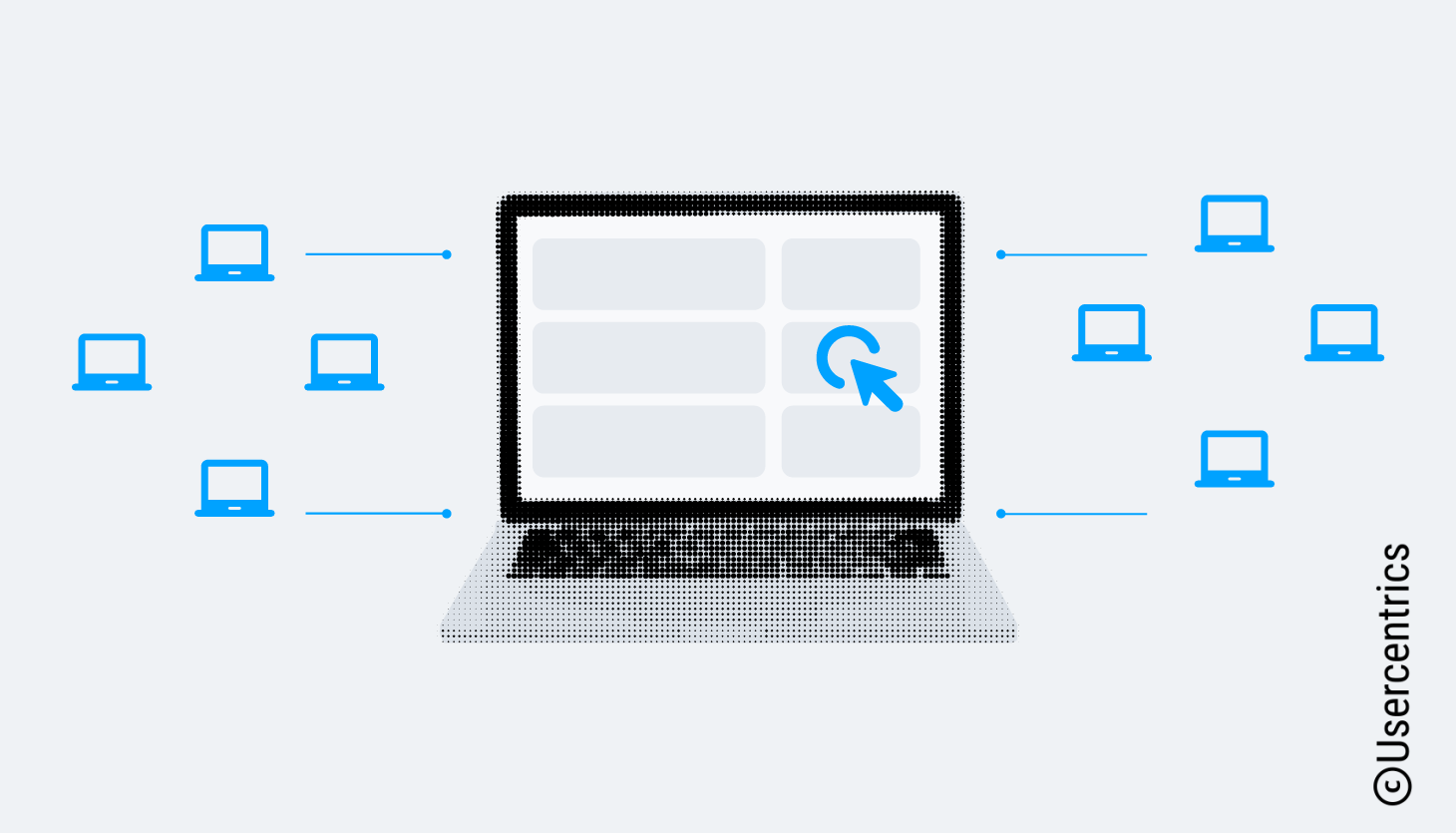
Impression-based remarketing allows marketers to build audiences based on impressions instead of consented clicks, while individual identities are masked. These audiences can be used to target, exclude, or bid up or down based on impressions in Search, Performance Max (PMax), Audience ads, and Multimedia ads. Connected TV (CTV) can’t directly use these audiences to target, but they can be used to fuel audiences.
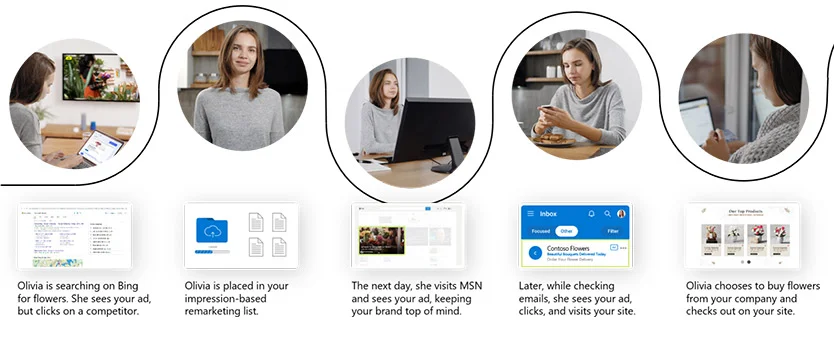
Impression-based remarketing accounts for the reality that people are giving consent less often and considers a future when the agentic web acts on behalf of users, and may not even visit a website to click. It effectively gives marketers a ‘backup chance’ without having to nag for consent.
It also honors the fact that humans behave in complex ways that marketers won’t be able to perfectly predict. Today, targeting only search or display placements on desktop is not going to work. But if you’re feeding Copilot users into a Pmax campaign, an impression-based remarketing list ensures you’re able to capture them and target them effectively throughout the journey.
Brunni: You are a vocal advocate for partnering human creativity with the profitability of AI. Can you speak more to that and what that means for marketers day to day?
Navah: Humans do a great job of understanding their target customer, translating language into messaging that will resonate, and designing creative assets that inspire desire and need.
However, humans have only so many hours in the day to do all the tasks that need doing.
If an AI assistant could come in for the “boring” work like formatting, structuring A/B tests, and reporting, and free up humans to do the analytical and creative tasks they’re best suited to, that’s a more profitable use of time — for the person and the company.
AI also tends to be better at understanding where there are new customers to be won, since it’s not limited by biases of what’s worked in the past.
I believe that by partnering human creativity and AI’s ability to augment outputs, marketers can achieve even more success.
_________
Navah Hopkins is the Product Liaison for Microsoft Advertising and an industry veteran. She’s an international speaker, contributes to industry publications, and volunteers for minority empowerment initiatives.