
Nikki Festa O’Brien, the CEO of Greenough Communications, was walking a client through the new homepage content that her team had created when she fielded a familiar question.
“‘We’ve already said that. Do we really need to say it again in this animation?’” the client, CEO of a healthcare company, asked her. “And I said yes, because it’s not enough to say it three times. We need to say it at least 75 more for the right people to hear it.”
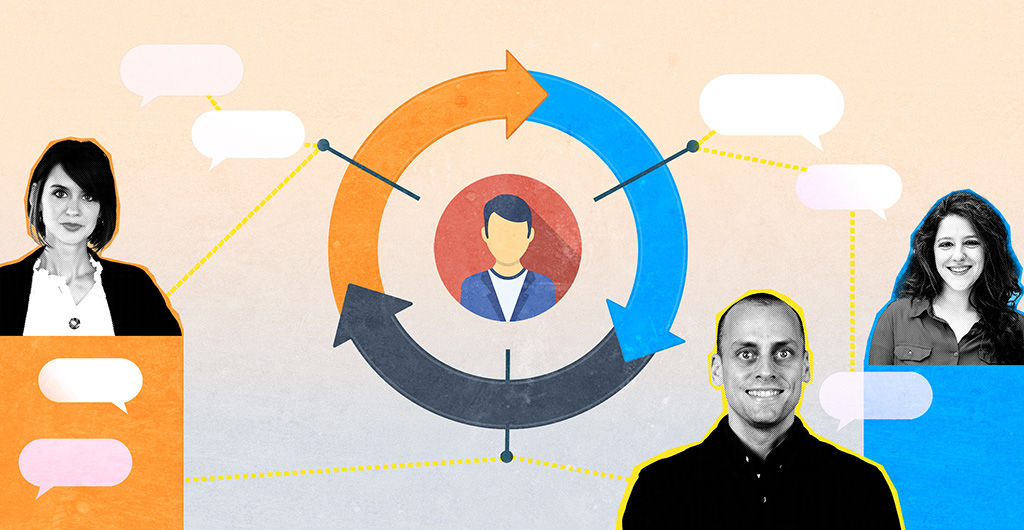
Festa O’Brien shared this story at the Usercentrics 2025 Privacy-Led Marketing Summit, while speaking on a panel alongside Usercentrics’ own magazine managing editor, Chloé Skye Weiser and Steffen Hedebrandt, the co-founder and CMO of B2B activation and attribution platform Dreamdata.io.
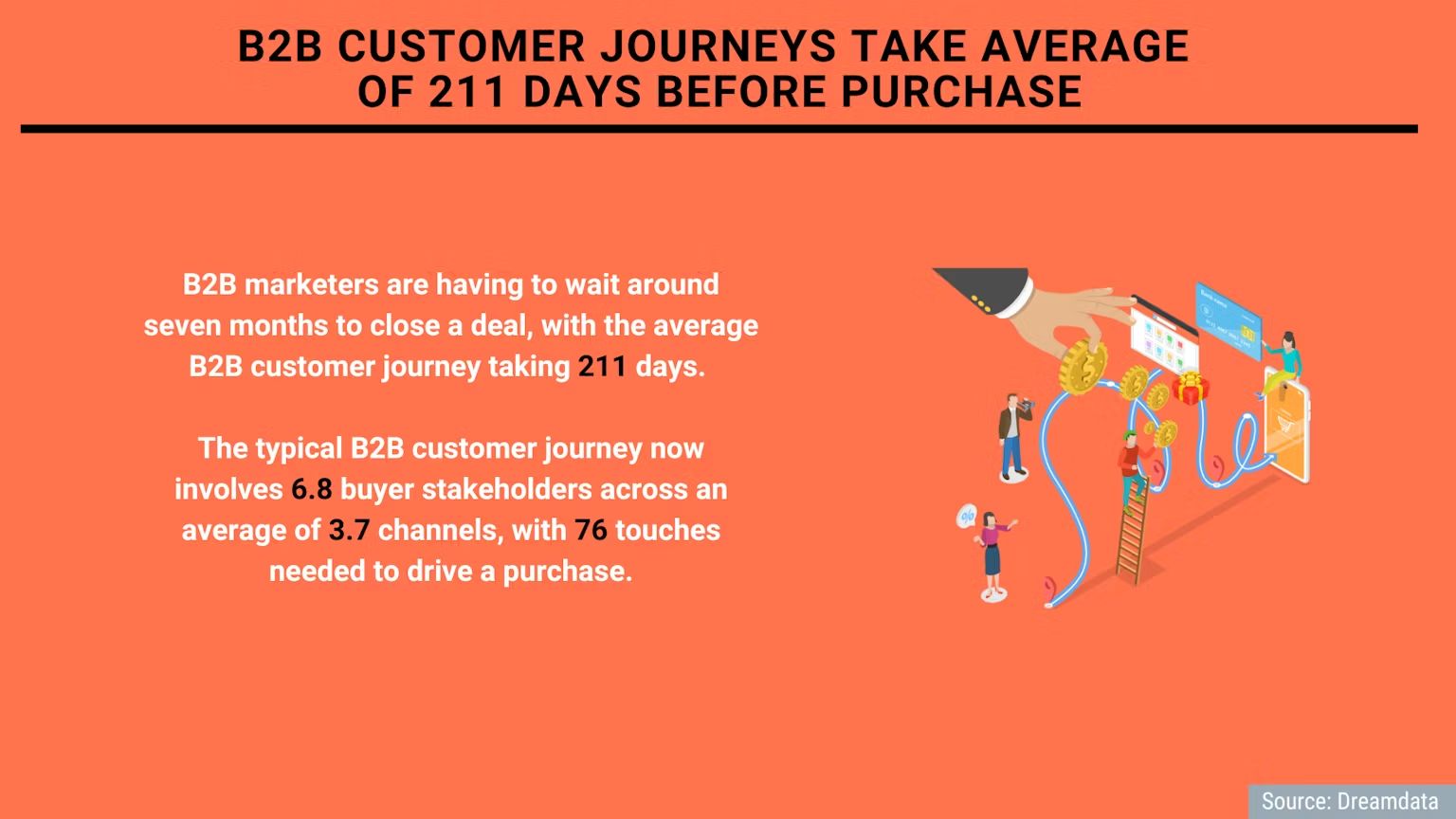
As it turns out, Festa O’Brien hit the nail on the head. Recent Dreamdata research, based on ~123,000 B2B customer journeys from the platform, found that the average B2B purchase takes 211 days and requires 76 touches across 3.7 channels and 6.8 stakeholders.
But changes in data collection and attribution models make retargeting tougher than ever, which creates a critical question for marketing teams:
How can we reach our audience at all, let alone 76 times?
“It’s not enough to just wait 211 days,” Hedebrandt says. He and Festa O’Brien share how their teams drive momentum: with value-driven content and creative campaigns that are measured across the customer journey.
It’s time to delight audiences again.
What privacy means for marketing
For a long time, we’ve used cookies for retargeting. When consumers accepted our website’s cookies, we could then serve them ads on Meta, YouTube, and other apps and media.
But as shown in Usercentrics’ 2025 State of Digital Trust report, people are accepting cookies less than ever: 46 percent of people click “accept all” for cookie use less often than they did three years ago. Our data also suggests that consumers are becoming increasingly uneasy with retargeting, with 62 percent saying they feel they have become “the product.”
of people click “accept all” cookies less often than they did three years ago.
say that retargeting makes them feel they have become “the product.”
At the same time, consumers are using AI chatbots rather than traditional search engines. When they do search, they often read AI previews instead of clicking through on search results. SparkToro found that nearly 60 percent of Google searches end without a click, and that’s unlikely to turn around.
We’re reckoning with a new reality: AI interfaces are diverting a massive amount of web traffic, which disrupts the traditional way that many brands work. “A brand’s website and their channels are no longer the front door. They’ve become feeders to an LLM,” says Festa O’Brien, referring to the large language models (LLMs) behind AI chat interfaces like Gemini and Claude.
It’s harder for brands to target content that drives conversions, and generating creative assets with AI can backfire when it’s poorly executed.
Hedebrandt has seen a lot of AI-generated content, both good and AI slop. “There’s so much content out there, and the bar for acceptable quality content has gone up a lot,” he says.

B2B is a battle for attention. Let’s say we’re selling an attribution project to a marketing department. Somebody else is trying to sell them a PR campaign [simultaneously]. There’s so much noise that you need to stay top of mind all the time.
Connection is at stake in the battle for attention
Brands are fighting hard to be seen online. In practice, many B2C brands operate with more creative freedom, whereas B2B brands often feel they need to stay buttoned up, even though it’s not always the best approach.
There are people behind every business, and you need to engage about seven of them for each B2B purchase. It’s a tightrope balancing act: Come across as knowledgeable and trustworthy, but don’t create dry or boring content. Sell, but don’t make people feel like they’re being sold to.
“B2B is a battle for attention,” says Hedebrandt. “Let’s say we’re selling an attribution project to a marketing department. Somebody else is trying to sell them a PR campaign [simultaneously]. There’s so much noise that you need to stay top of mind all the time.”
Building trust around your brand is a matter of understanding customer intent, building authority, and measuring your visibility, says Festa O’Brien. These are also the foundations that marketers need to win over share of voice.
Think of it as a loop: When you know what your customers want, you can create content that delivers it.
Focus your efforts on the digital spaces where people spend time: community forums like Reddit, video-driven platforms like YouTube and TikTok, and AI chatbots.
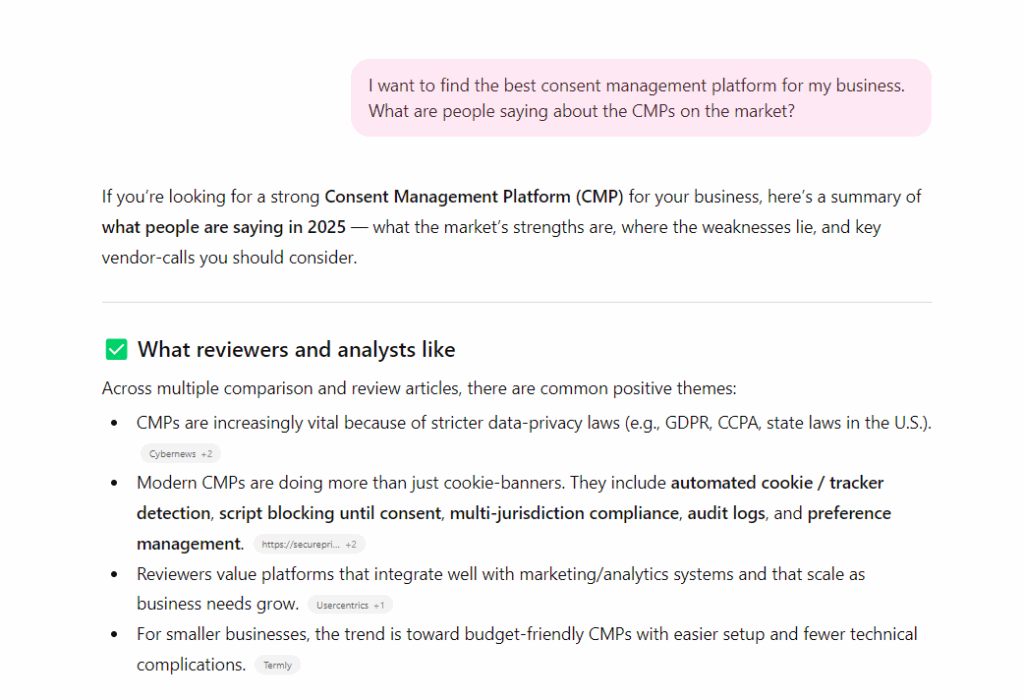
“If you want to be on the list of vendors that people speak to in the future, you need to appear in the AI search overview,” says Hedebrandt. He recommends writing in a question-and-answer style, using bullet points, and sharing proprietary data, which works well for generative engine optimization (GEO), also called answer engine optimization (AEO).
“When I study the traffic on the Dreamdata website, six of the top 10 pages are the ones where we display proprietary benchmarks,” he says.
The return to authenticity
To stay top of mind, brands must juggle both consistency and variety. That means consistency in your message and variety in how you deliver it across the channels your audience prefers.
“Get your message clear and lean into it across formats, and in new ways,” says Festa O’Brien.
One way that brands approach this is through inbound marketing, including the content flywheel model and the AI-era loop marketing model popularized by HubSpot. On a foundational level, content flywheels use value-driven content to attract, engage, and delight customers. Then, marketers take what works and build on it, with the goal of turning customers into brand advocates. (After all, many still consider word of mouth the most effective form of advertising.)
These approaches also support the goals of Privacy-Led Marketing (PLM), which places consumer trust as the heart of business growth.
Despite the content fatigue, people enjoy content they consider authentic, but it’s a tricky balance. When brands use AI, consumers still want to feel there is a person behind the content. They also want messaging that values and considers them.
Hedebrandt says brands can tap into authenticity by identifying a relevant feeling or experience that many people share.
“It comes across as authentic when you can feel the person is experiencing exactly what I am experiencing,” says Hedebrandt. “Then all the mediocre AI content out there will get completely ignored.”
This approach performs especially well with Gen Z consumers, and it’s something they’ve shown they want more of.

Get your message clear and lean into it across formats, and in new ways.
The content that’s working
Authenticity, relevance, deciding what metrics matter — it’s a lot to keep track of. At the end of the day, the strongest content meets your customers where they are while also keeping them on their toes.
Here’s what Hedebrandt and Festa O’Brien find most authentic.
Short-form video
Dreamdata’s quirky short about “CMOs in the wild,” on LinkedIn, traced Hedebrandt’s day using an anthropological approach and a Gen Z lens. According to HubSpot, 21 percent of marketers say short-form video brings the highest ROI, and over 17 percent will increase investment.
Podcasts
Festa O’Brien finds former U.S. presidential candidate Kamala Harris’ appearance on the Call Her Daddy podcast “memorable” because it marked the campaign’s “turning point from traditional media” towards the more informal places people get their news. Many podcasts already combine the format with crawlable transcripts and short-form video for social media.
Relatable LinkedIn posts
Hedebrandt sometimes posts screenshots of his own inbox on LinkedIn. “They do exceptionally well because people can say, my Gmail looks exactly the same,” he says. (P.S. Keep reading for tips on how to supercharge your email strategy.)
Hedebrandt’s personal mission is to make B2B fun again. “We find ways to make fun of ourselves because humor really works on social media,” he says.
We find ways to make fun of ourselves because humor really works on social media.
Centering your campaigns on trust
When it comes to building trust organically, brands can lean on campaigns based on influencer marketing and user-generated content (UGC).
Brands that choose the right influencer for their campaigns can see ROI of USD 6.50 for every dollar spent, according to SproutSocial. Many are trusted sources known for delighting their audiences, like YouTubers Hank and John Green (the Vlogbrothers), tech reviewer Marques Brownlee, and Jenna Kutcher of the business and marketing podcast Goal Digger.
On LinkedIn, Festa O’Brien and Hedebrandt recommend looking for Top Voices (a select group of subject-matter experts on the platform) and individual B2B influencers, respectively.
Marketers can also find opportunities to boost UGC, which speaks in the voice of your target customers. Festa O’Brien describes helping a client launch a product for clinicians, when she realized the product “already had a rabid fan base” among real clinicians.
“Why would we spend all that time and energy on influencers, rather than have folks who use the tool in real life tell the story for us?” she remembers asking.
The resulting marketing campaign included clinicians sharing why the product was central to their daily work, and illustrating the trust they have in it.
Our client already had a rabid fan base around the product. Why would we spend all that time and energy on influencers, rather than have folks who use the tool in real life tell the story for us?
What will you set in motion?
The way consumers prefer to find information has changed rapidly in just the last few years. But for all of the challenges, Hedebrandt is optimistic about the future.
“This is an exciting time to be a marketer, and a fantastic opportunity for your business,” he says, estimating a gap of two to five years before bigger companies catch up. “If you’re fast and savvy, there’s a big opportunity to grab attention.”
Ultimately, great content is a building block in a privacy-first marketing strategy that drives consumers to choose your brand over others. When they like what you do, they’re often more willing to share their data with you. Then you can retarget — but wisely!
Have you seen the Usercentrics State of Digital Trust report? Get up to speed on what consumers want from brands and how you can win over their trust.