

Most brands underestimate how culture reframes their message. A phrase that feels confident in one market reads as abrupt in another. A familiar expression suddenly loses meaning.
Even teams that share a language can misinterpret tone, intent, or context — creating friction that no style guide can prevent.
These cultural nuances influence how people perceive a brand, how teams collaborate, and how trust is built or quietly eroded. They also reveal the hidden challenges of scaling communication: what works in one context can backfire in another, and assumptions that feel universal often aren’t.
Grace Baldwin, the co-founder of BrandStack, has spent a decade helping brands communicate across cultures. She shares how responding thoughtfully to these differences helps brands keep their voice consistent while connecting with different audiences.
Building a business across borders
Livia Hirsch: You built your business across borders from the beginning. How has that shaped the way you think about cultural intelligence?
Grace Baldwin: I never set out to build an international business. I was a young American living in the Netherlands, figuring out taxes and operations, which meant everything I built grew globally by default.
Over the years, I worked with clients from Singapore to San Francisco, and my business partner is in the U.K., so cross-cultural work became part of my everyday life.
What really shaped me, though, isn’t the time zones or the logistics; it’s the small assumptions you don’t realize you’re carrying until they collide with someone else’s.
For instance, my U.K. co-founder and I sometimes talk past each other because we assume shared references that are not actually shared. With clients, I see the dynamic shift, too. UK clients relax into conversation with him, while American clients naturally look to me when the conversation becomes more direct.Ultimately, working cross-culturally every day is a continual reminder that the world is bigger than what you know. It requires staying open to new perspectives and avoiding judgment about things you don’t fully understand.

Your brand is like a pair of glasses. It’s a lens anybody on your team can use to understand how the business makes decisions and talk about your unique value. The prescription shouldn’t change whether you’re in Corsica or Colorado.
Livia: Where do brands tend to go wrong when communicating across cultures?
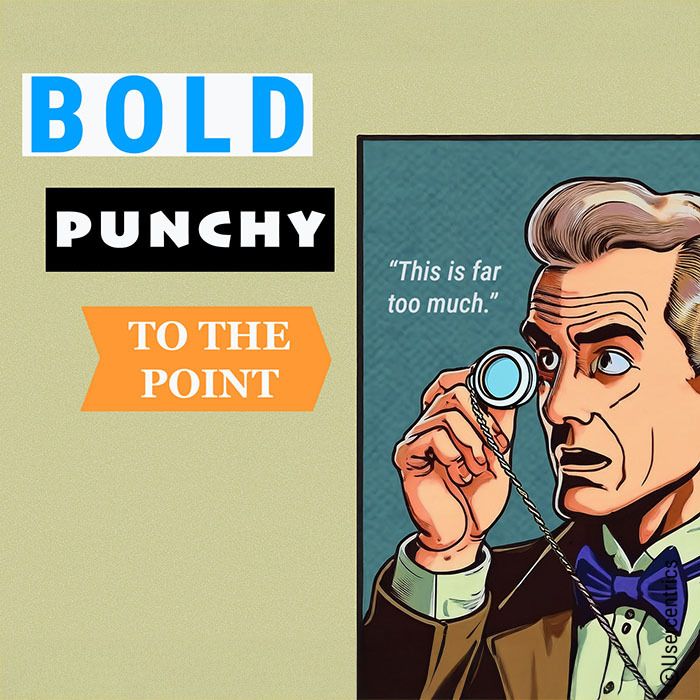
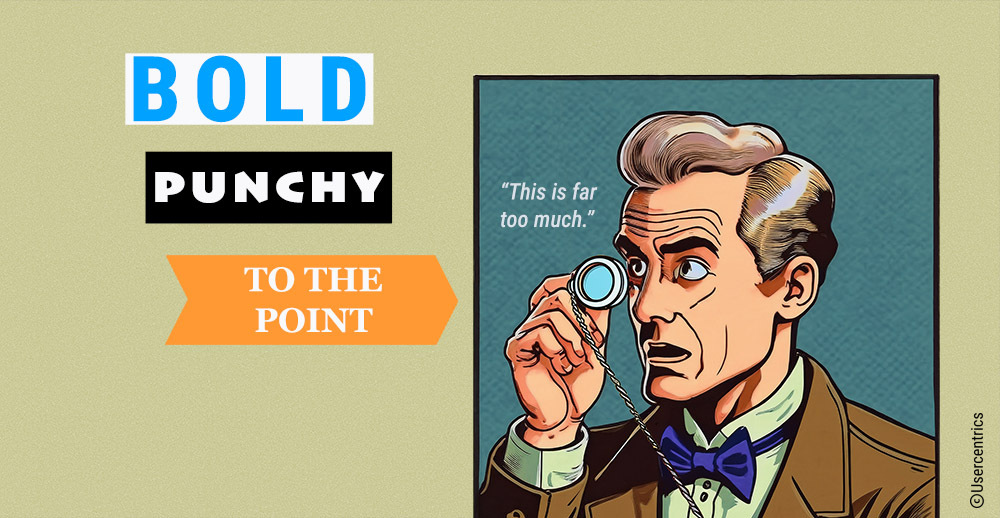
Grace: A common mistake is not reading the room. A lot of messaging advice online is very American: bold, punchy, and straight to the point. But not every culture wants to be spoken to that way.
What brands miss is that your tone of voice is not one-size-fits-all. You don’t need to change who you are as a brand, but you do need to adjust how you express yourself depending on the audience.
A Dutch audience, a British audience, and a US audience respond to different rhythms, pacing, and levels of directness. The brands that struggle are the ones that assume what works in one culture should automatically work in another.
Translating brand across markets
Livia: How has this shaped the way you think about brand voice and consistency across markets?
Grace: Your brand is like a pair of glasses. It’s a lens anybody on your team can use to understand how the business makes decisions and talk about your unique value. The prescription shouldn’t change whether you’re in Corsica or Colorado.
However, the tone of voice, and how you express yourself, will shift across cultures. It’s like the frame and style of the glasses. While cat eye lenses may be popular in one place, horn-rimmed glasses are more popular in another. The key is building a framework that’s strong enough to guide without being so rigid it can’t adapt.
Working internationally has also forced me to write more concretely. I learned that idioms and hyper-specific cultural references fall flat. For example, early in my career, I used the phrase “fighting the tide,” which is common in the US.
Meanwhile, the Dutch translation came back completely literal and confusing.
“To fight the tide” (or swim/go against the tide) is an idiom meaning to resist popular opinion, trends, or powerful forces, like trying to swim upstream against a strong current.
This taught me to use language that’s clear even without a shared cultural background. You start to choose images and phrases that carry across borders instead of ones that rely on cultural shorthand.
For instance, different countries use pounds and kilos for weight. But if I say something weighs about as much as a housecat, most people will get a general understanding.
Jens Quentin of Eye-Able explains how to account for different languages, regional needs, and disabilities.
Livia: What opportunities do you see for marketers who work across cultures?
Grace: The biggest opportunity is perspective. When you work across cultures, you start to notice the subtle differences in how people communicate, make decisions, and respond to ideas. That awareness makes you better at your job because you’re no longer assuming everyone interprets things the same way you do.
There’s also the benefit of variety. On a typical day, I might speak to a French-American colleague, then a Greek client, then my British co-founder. That mix keeps you curious. It pulls you out of a single-market mindset, which is something many teams don’t realize they’re stuck in until they work internationally.
And the need for this awareness is only growing. As more companies expand globally, they are realizing that messaging needs to evolve with them. Some clients want a unified global tone. Others need a more US-centric approach because that is the market they are breaking into.
Helping brands understand those nuances, and supporting them through that shift, is becoming a core part of global marketing.
Evolving trust on a global scale
Livia: With AI increasingly part of the creative process, how do you think about authenticity and trust across cultures?
Grace: AI is great when you use it intentionally, but it doesn’t replace clarity of thought.
If you’re not sure what you want to say, AI won’t fix that. But if you have a strong idea, it can help you shape it more clearly. I’ll often use AI to adjust tone for a U.K. publication or to break up a long sentence so the flow feels more natural.
What I find most valuable about AI is how it helps people who have great ideas but struggle to express them. I’ve seen non-native speakers use it to communicate in a way that lets their ideas shine. From a cultural intelligence perspective, that accessibility matters.
That said, using AI responsibly means having clear boundaries.
We recently created an AI privacy policy for our agency because we felt we needed guardrails so we could use AI confidently while keeping client data safe. Data privacy expectations vary significantly by region, which makes those guardrails even more important.
Authenticity isn’t a tagline. It’s your character in practice. It’s how you behave under stress, how you make decisions, how you show up when things are going well and when they’re not.
When you understand your brand at that level, staying consistent across cultures becomes simpler. You’re working from who you are, not performing what you think each market wants.
Livia: Trust is a major theme in marketing on a global scale. How can brands best build it across borders?
Grace: The simplest answer is to be yourself. In B2B specifically, people can sense when something feels inflated.
For instance, we recently won a project where the client asked for case studies we didn’t have. We told them why, and it built trust instead of diminishing it.
Authenticity isn’t a tagline. It’s your character in practice. It’s how you behave under stress, how you make decisions, how you show up when things are going well and when they’re not.
When you understand your brand at that level, staying consistent across cultures becomes simpler. You’re working from who you are, not performing what you think each market wants.
Livia: What’s the most practical advice you have for enterprise companies expanding into new markets?
Grace: My top advice is to get your foundations right before you scale. Too many companies rush to execution and only realize the gaps once they’re trying to coordinate across markets, time zones, and languages.
However, your brand strategy defines the voice and perspective of your brand. It defines your worldview. Your style guide keeps everything cohesive by defining the structural details like punctuation, formatting, and rules.
When those foundations aren’t clear, inconsistencies multiply fast. As soon as you start translating, localizing, or scaling your team, every gap becomes painfully visible.
Strong guardrails enable consistency without killing creativity. These foundational elements make it possible to express your brand consistently, no matter the market, the language, or the size of the team.
Without them, it’s up to each person to guess what the brand would do. And across cultures, where instincts about tone and trust differ, those guesses won’t align.
_______
Grace Baldwin is the co-founder of BrandStack, a rebranding agency that helps mid-sized B2Bs get enterprise-ready and make their unique value obvious. With a decade of experience working across cultures and continents, she helps businesses clarify who they are and how they show up in global markets.