
Email is certainly having a moment, for a channel declared “dead” more times than we can count.
A boom in newsletters has brought the format back into cultural relevance, and privacy shifts made it strategically indispensable. While the rest of the marketing stack scrambles to adapt to disappearing signals, the strength of email as a tool is rooted in a deceptively simple trust: People must still choose to open it.
When you respect the attention of your audience, maintain clean lists, and measure accurate signals of consumer behavior, email outperforms most of the modern stack, with ROI of up to USD 36 for every dollar spent.
As highlighted at the Privacy-Led Marketing Summit, email’s next chapter belongs to marketers who design for people’s expectations of privacy, instead of around them.
A year in email: performance, shifts, and new constraints
Across industries, email continues to deliver some of marketing’s most reliable engagement signals.
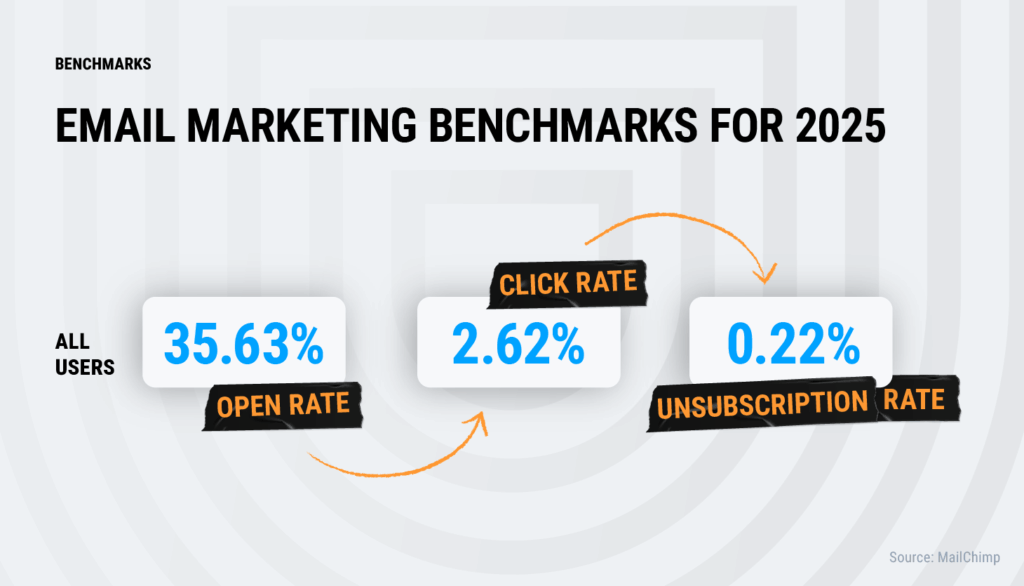
Mailchimp’s global benchmarks show an average 35 percent open rate, 2.6 percent click rate, and unsubscribe rates below 0.3 percent. Those numbers point to email being one of the most stable channels in a marketer’s toolkit, which is no easy feat in a landscape dominated by algorithmic unpredictability and fragmented user attention.
But Apple shook up the stability of email when it rolled out Apple Mail’s Mail Privacy Protection (MPP), which changes how “opens” are recorded by preloading email content on Apple devices.
This shift affects a huge share of global email activity. Of the 4.5 billion email users worldwide, 55.64 percent use Apple Mail. Now, instead of reflecting email recipients’ behavior, an open may just signal deliverability.
For marketers, it creates an unexpected tension: MPP is a win for user protection, but it also makes one of marketers’ most familiar metrics somewhat unreliable.
This doesn’t have to be a contradiction. It’s a recalibration towards better indicators of engagement, like clicks, conversions, and long-term engagement patterns driven by clean lists and respectful email practices.
What marketers should actually measure now
As open rates are diluted, marketers are moving towards the metrics that still hold up under privacy pressure.
What matters now isn’t just to reach inboxes, but what people actually do when they see your company’s name as the sender.
Email success goes beyond opens and clicks, and performance becomes clearer when we focus on signals rooted in real behavior, not passive impressions.
Even as privacy rules evolve, many of these metrics remain intact, like list quality, clicks, and cohort-based lift.
Clean data and list integrity
The quality of an email list shapes everything that comes after it. Outdated or inactive contacts don’t just distort performance signals, they quietly erode trust.
A lot of senders overlook how important it is to have a clean list. A low number of active users can have a negative influence on your deliverability.
One unexpected side effect of MPP is that it makes inactivity easier to spot. Because Apple preloads images by default, a lack of opens over time is a strong indicator that an inbox has been abandoned.
It’s also a clearer basis to remove dormant contacts and focus lists on the readers who are genuinely present.
For marketers, a lean list is a performance asset. Cleaning up your email list regularly keeps engagement rates honest, protects sender reputation, and widens the gap between audiences who are merely reachable and those who are actually responsive.
Clicks: the clearest signal you have
Where open rates are ambiguous, clicks directly reflect the conscious choice to go deeper, learn more, or take the next step.
Clicks are also one of the few points in the journey that are untouched by platform-level privacy shifts and still track cleanly and consistently across campaigns, audiences, and devices.
That said, email is only half of the story. Once users reach a landing page, the analytics picture depends on whether they give cookie consent. For this reason, it’s normal to see more clicks than sessions: The visit happened, but the user opted out of being tracked.
Privacy-first email: respecting users while driving performance
Email has always relied on permission. But in the current playbook, permission plays a bigger role in shaping performance.
Email performs best when it’s built around choice, clarity, and genuine value.
Personalization should feel respectful, not intrusive
Personalization has always walked a fine line. Whereas name-filled subject lines once felt intimate, they now feel performative.
Instead of forced familiarity, today’s email success depends on personalizing around interests, not identities.
When someone browses running shoes, talking to them about running is helpful. But referencing their birthday, relationship status, or obscure profile details can feel more uncomfortable than anything.
Today, meaningful personalization isn’t about using all the data you have, but using the data that users expect you to use.
Clear UX for opt-in, opt-out, and everything in between
Trust is shaped long before the content of an email is read. It starts with how users join a list, how they update their preferences, and how easily they can leave.
In other words, a double opt-in confirms intention. An unsubscribe link that works on the first click signals respect. A predictable send cadence reduces inbox fatigue.
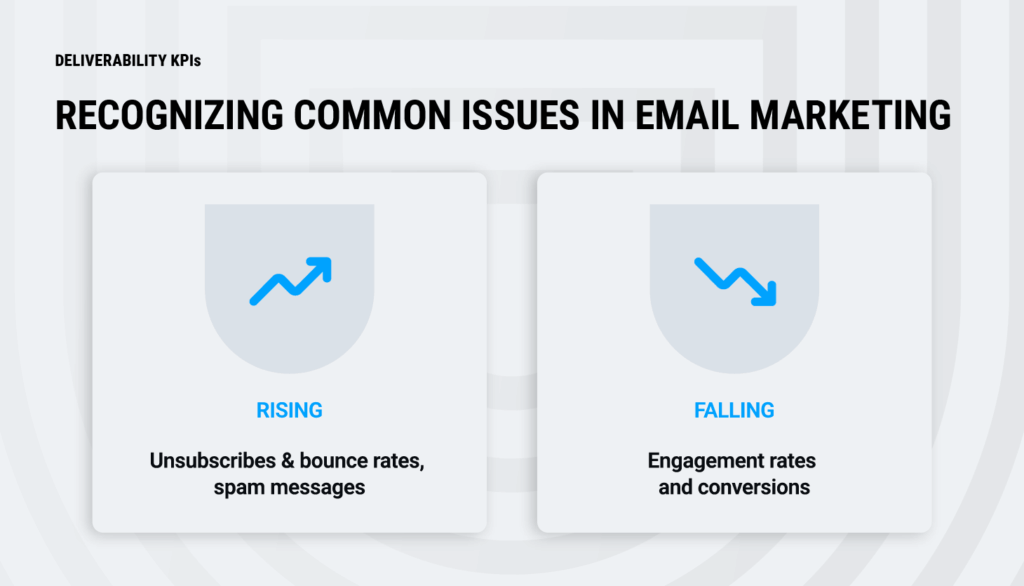
But rising unsubscribes, low engagement, or signs of irrelevance are signs that a sender has the opportunity to build a more privacy-first email strategy.
Great email UX is a privacy practice. It keeps every action simple, visible and voluntary — no tricks, hidden steps or dark patterns.
Checklist: building a privacy-first email campaign
All this translates into a set of practices that strengthen both performance and trust, respecting how people interact with their inboxes.
Here’s a checklist to use as a starting point:
Build a privacy-first email campaign
- 1. Start with clean, consented data.
- 2. Remove inactive contacts regularly.
- 3. Measure clicks, not opens.
- 4. Keep personalization contextual.
- 5. Brand your opt-in and opt-out moments.
- 6. Set expectations for your send cadence.
- 7. Use UTMs consistently. A simple tag like utm_source=email ensures clicks are attributed correctly across analytics tools.
- 8. Let consent shape analytics (clicks > sessions)
- 9. Build measurement around behavior.
Where email goes from here
An impactful email strategy builds around behavior, designs for relevance, and allows privacy to guide the workflows.
Email hasn’t lost its edge — far from it. But landing in someone’s inbox is a privilege that needs to be earned through relevance, clarity and respect.
Email’s quiet advantage is that it forces marketers to align with user expectations. Before every send, ask yourself, is this relevant to the user? Does the user need this email?
If you can answer YES to those questions, email will remain one of your most accurate and most durable channels in the stack.
Deepen your knowledge: Future-proof your martech stack for 2026, from tracking to trust.