

How to update your terms of service: best practices and templates
Your terms of service were written for the business operations you used to run. But you’ve since launched new features, adjusted your pricing, possibly expanded into new markets, or changed how you handle user data. Meanwhile, that terms page hasn’t changed at all.

However, outdated terms don’t just create legal gaps; they can make your entire agreement unenforceable when you need it most. Whether you’re dealing with the EU’s General Data Protection Regulation (GDPR) or the California Privacy Rights Act (CPRA), keeping your terms of service current isn’t optional.
Let’s look at when updating terms of service becomes necessary, what your new terms and conditions should include, and how to communicate changes effectively.
At a glance
- Updating terms of service keeps your legal agreements aligned with your current business operations and regulatory requirements.
- Most regions require at least 30 days’ notice before implementing new terms and conditions.
- Common updated terms and conditions triggers include regulatory changes, new features, pricing adjustments, and modifications to data practices.
- Regular reviews (at a minimum, annually) help you stay legally compliant and avoid scrambling when business operations, partner requirements, or regulations change.
- Failing to update terms of service can result in unenforceable agreements and regulatory penalties of up to EUR 20 million under the GDPR.
What are terms of service updates, and why do they matter?
Terms of service establish the legal framework between you and your users. They outline how users can interact with your platform, what data you collect, how you handle disputes, and what happens when issues arise.
When these terms don’t reflect your current practices or comply with current regulations, you’re operating without proper legal coverage.
Your terms of service is not a static document. It needs to evolve as regulations change, as you add new features, pricing structures shift, data practices evolve, and third-party integrations get added.
When your terms don’t reflect these realities, the gap between what your agreement says and what your business does can create serious risk.
Outdated terms can fail you in three key ways:
- Legal challenges: Terms may not hold up if disputed in court.
- Regulatory exposure: They can put you at risk of fines or enforcement action.
- Eroded user trust: Users lose confidence if your practices don’t match your stated terms.
Keeping your terms of service up to date protects all sides. Users gain clarity about what they’re agreeing to, while you ensure your legal foundation accurately reflects your operations. Regular updates turn your terms from a static contract into a living document that safeguards your business and strengthens user trust.
When do you need to update your terms of service?
The simple answer: at least once a year, with immediate updates whenever your business undergoes significant changes. But knowing which changes count as significant helps you stay ahead of problems rather than reacting to them.
Here are the most common triggers that signal it’s time to revisit your terms.

When new data privacy laws take effect, or existing ones expand, your terms need to reflect those requirements. For instance, Google’s EU user consent policy forced businesses using Google services to revise their consent handling.

Adding a subscription tier, introducing third-party integrations, launching in new markets, or rolling out features that collect new types of data all create legal considerations that your terms must address. Your documentation needs to cover these scenarios before they become problems.

Changes to your pricing structure, billing cycles, or refund policies require clear documentation in your updated terms and conditions. Users need to understand what they’re paying for and under what conditions they can seek refunds or cancel services.

As you grow, you might collect new types of user data, work with new processors, implement new security measures, or change how long you retain information. Each change should be reflected in your terms to maintain transparency and legal coverage.

If users are confused about specific policies, your terms probably need clarification. Platform policy updates from Google, Meta, or Microsoft often require corresponding changes to your own terms, as these providers set requirements for how you handle user data.
What should be included in new terms and conditions?
Updating your terms of service isn’t just a legal formality; it’s an opportunity to clearly communicate how your platform works and what users can expect. When creating or revising your terms, focus on transparency and clarity.
Users should be able to understand both what’s changing and how your overall practices affect them. There are several key elements to include.
What’s changing and why
Users need to understand what’s different. If you’re updating your data retention policy, explain the change and the reason. If you’re adding features that collect location data, state that clearly without legal or technical jargon.
Data collection and usage policies
Specify what data you collect, how you use it, who you share it with, and how long you retain it. Under the GDPR and similar regulations, this transparency isn’t optional; it’s required for compliance.
User rights and responsibilities
What can users expect from you? What do you expect from them? Include information about account termination, content ownership, acceptable use, and the process for exercising data rights like access, deletion, or portability.
Dispute resolution and liability limitations
Specify your jurisdiction, outline how disputes will be handled, and clearly state any limitations on liability. Different regions have different requirements here, so ensure your terms reflect the laws where you operate.
Contact information and effective dates
Users need to know when the new terms take effect and how to reach you with questions or concerns. For businesses operating across multiple jurisdictions, your terms should acknowledge regional variations.
How to notify users of updated terms of service?
Once you’ve updated your terms of service, it’s important to make users aware of it. Most regions require at least 30 days’ notice before new terms take effect, giving users time to review changes and decide whether to continue using your service.
The notification itself needs to be clear about three things:
- What’s happening
- When changes take effect
- Where users can review the full document
Below are different methods and best practices for sending a notice to your users.
Email notification of updates to terms of service
Email is the most popular method for providing notice because it reaches your users directly and provides a reliable notification record. However, the email notifying about the updated terms and conditions should be clear and actionable.
Best practices for email notification
- Open with a clear statement about the update
- Provide a brief summary of key changes (3–5 bullet points maximum)
- Link to the full updated terms
- State the effective date prominently
- Explain what happens if users don’t agree with the new terms
- Include clear contact information for questions
Example of an email notification about updated terms of service
Subject: Updates to our Terms of Service, effective January 15, 2026
We’re updating our Terms of Service to reflect new features and enhanced privacy protections. The new terms take effect on January 15, 2026.
Key changes include:
- Updated data retention policies aligned with GDPR requirements
- New provisions for our recently launched analytics dashboard
- Clarified refund and cancellation procedures
You can review the full updated terms of service [here]. By continuing to use our service after January 15, 2026, you’re agreeing to these new terms.
Questions? Please reach out to our team at [contact].
It’s best to send your first notification when you announce the change, then send a reminder a few days before the new terms take effect.
Do you need a full Terms of Service template to customize? Download template.
Website notification of updates to terms of service
Website notifications catch users who might miss a company’s email but still use your service regularly. A persistent banner ensures visibility without excessive disruption.
Best practices for website notifications
- Make the notification visible but not intrusive
- Keep messages concise and actionable
- Include links to the full terms of service
- Highlight the effective date of changes
- Maintain a permanent link to the current terms in your website footer, ideally including a “Last updated: [date]” timestamp
Notification methods
Depending on the significance of the changes and how users interact with your site, there are several ways to notify them. Here’s a breakdown of the most common approaches.
1. Banner notification
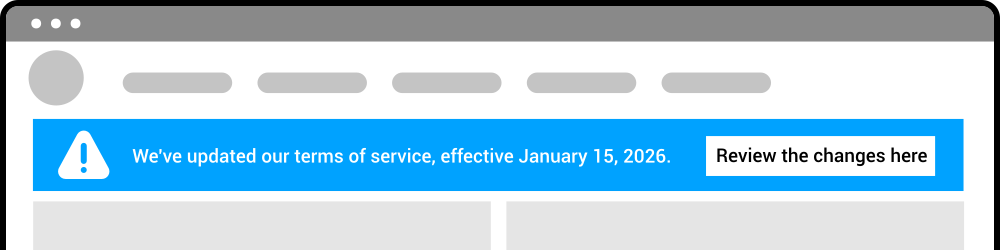
A persistent banner at the top of your website ensures visibility until users acknowledge it or until the new terms take effect. Keep it short — one or two lines — and include a link to the full terms.
Example:
“We’ve updated our terms of service, effective January 15, 2026. Review the changes [here].”
2. Modal pop-up
For major changes, a modal pop-up that appears when users log in helps to ensure that they see the update. Keep the content brief, highlight key changes, and provide buttons to either review the full terms or continue.
3. Dedicated update page
Consider creating a standalone page summarizing changes in plain language. Include:
- A scannable list of what’s changed
- Side-by-side comparisons for major updates
- A link to the full legal document
- A timestamp showing the last update
4. Footer Link
Always keep a link to your current terms of service in the website footer. Updating the link text with “Last updated: [date]” helps users quickly verify they are viewing the latest version.
Example and best practices for app notification of updates to terms of service
Mobile apps present unique notification challenges. Users expect minimal interruption, but it’s still essential to ensure they’re aware of updates to your terms of service. Here are some ways to notify users within your app.
1. In-app notification
When users open your app after announcing changes, show a full-screen notification that they must acknowledge. This is especially important for apps handling sensitive data or financial transactions.
For example: “We’ve made updates to our Terms of Service. These changes take effect on January 15, 2026. Review and accept the new terms to continue using the app.”
Include two clear buttons: “Review terms” and “Remind me later” (if the effective date hasn’t arrived yet).
2. Push notification
Send a push notification when you first announce the terms of service update. Keep it short and actionable.
For example: “We’ve updated our terms of service. Review the changes before they take effect on January 15, 2026.”
3. Badge or indicator
Add a notification badge to your settings or profile section that persists until users acknowledge the updated terms. This provides a visual reminder without being intrusive.
The goal is to balance visibility with user experience. Users need to see and acknowledge the update without feeling that the app is obstructive.
The legal risks of not updating your terms of service
Outdated terms create a false sense of security, giving the impression that your legal protections are in place when they may not be. When your agreement doesn’t reflect current practices or comply with regulations, it becomes unenforceable, leaving your business exposed if disputes arise.
This exposure isn’t just theoretical; regulatory penalties can be substantial. GDPR penalties can reach EUR 20 million or 4 percent of annual turnover, and CCPA fines start at USD 2,500 per incident and rise to USD 7,500 for intentional breaches.
Inaccurate terms can also create operational problems. Platforms like Google, Meta, and Apple require apps to maintain up-to-date agreements, and discrepancies discovered during audits can result in suspended access to essential services until issues are resolved.
Taken together, these legal and operational risks highlight why keeping your terms current isn’t optional; it’s essential to maintaining both compliance and continuity.
Keep your terms of service updated to protect your business and your clients
Your terms of service need to reflect your business as it exists right now. Schedule annual reviews at a minimum, and update immediately when you launch new features, adjust pricing, enter new markets, or see regulatory changes on the horizon.
When you keep your terms current and communicate changes clearly, you’re not just checking a compliance box. You’re building trust with users who want transparency about what they’re agreeing to, and you’re ensuring your legal foundation stays solid as your business grows.