
Data protection assessments can seem complex, but they’re essentially risk checks for your data processing activities. Before rolling out a new feature, updating your marketing platform, or adding new tracking, it’s important to know whether you’re introducing privacy risks for your users.
In that process, two terms usually come up: Privacy Impact Assessment (PIA) and Data Protection Impact Assessment (DPIA).
While they share similar goals, they can have important differences that affect when and how you use them. Getting this right matters because it can impact your privacy compliance requirements and can protect your business from regulatory issues.
Here’s what you need to know.
At a glance
- A PIA is a flexible assessment used across many jurisdictions to understand privacy risks.
- A DPIA is required by the GDPR when data processing is likely to pose a high risk.
- DPIAs often have stricter expectations, such as documented risk analysis and DPO involvement.
- PIAs are still valuable even when not mandatory, especially when adopting new tools, vendors, or features that involve personal data.
- Organizations operating under the GDPR should generally treat DPIAs as a requirement and use PIAs to strengthen their privacy program in areas not covered by law.
What is a Privacy Impact Assessment (PIA)?
A Privacy Impact Assessment (PIA) is a systematic process for evaluating how your data processing activities affect individual privacy. Think of it as a privacy health check that identifies potential issues before they become problems.
PIAs are a general best practice tool used across different privacy frameworks and jurisdictions. Companies typically conduct PIAs to understand privacy risks, document their approach to handling personal data, and demonstrate accountability to stakeholders.
The assessment looks at what data you collect, why you need it, how you’ll protect it, and what could go wrong. This helps you spot issues early — like collecting more data than necessary or missing adequate security controls.
When is a PIA mandatory?
PIAs are rarely mandated by law, but some jurisdictions do require them in specific situations.
For instance, in Canada, under certain situations, federal institutions must conduct PIAs under the Privacy Act, and private-sector organizations may have PIA obligations under the Personal Information Protection and Electronic Documents Act (PIPEDA).
Several provinces, including Alberta, also require PIAs for public bodies for certain processing. Private-sector organizations in general aren’t obligated to complete PIAs under PIPEDA, though many choose to use them as a best-practice tool.
In the United States, private companies aren’t subject to a federal PIA requirement. Federal agencies, however, must complete PIAs under the E-Government Act of 2002 for any IT system that handles personal information.
Some state laws,don’t explicitly mandate PIAs but do encourage privacy risk assessments as part of reasonable security. However, some states’ regulations do or will require privacy risk assessments with respect to certain processing, including California under the updated CCPA regulations.
Organizations regulated by the Health Insurance Portability and Accountability Act (HIPAA) are also encouraged to perform privacy assessments as part of compliance, even if they aren’t formally labeled as PIAs.
Other jurisdictions follow a similar pattern. Australia’s Privacy Act recommends PIAs for government agencies, and New Zealand’s Privacy Act encourages them for projects with meaningful privacy risks. Many international organizations also adopt PIAs voluntarily to align with broader privacy standards like ISO 29134.
What should be included in a PIA?
The scope and depth of a PIA can vary based on your organization’s needs and the complexity of the processing activity. However, most effective PIAs include these core elements:
- Description of the processing activity: Detail specifically what data you’re collecting, from whom, and via what methods, as well as who will have access to the data.
- Purpose and justification: Explain why you need this data and what you plan to do with it. This helps assess whether the collection is necessary and proportionate.
- Privacy risk identification: Identify specific risks to individuals, such as unauthorized access, data breaches, discrimination, or inability to exercise rights.
- Risk assessment: Evaluate the likelihood and severity of each identified risk. Consider both worst-case scenarios and realistic expectations.
- Mitigation measures: Document how you’ll reduce or eliminate each risk through technical safeguards, organizational measures, or policy changes.
- Stakeholder consultation: Include input from relevant parties, such as privacy specialists, legal counsel, IT security, and potentially the individuals whose data you’ll process.
- Signoff and accountability: Get approval from decision-makers who take responsibility for implementing the assessment’s recommendations.
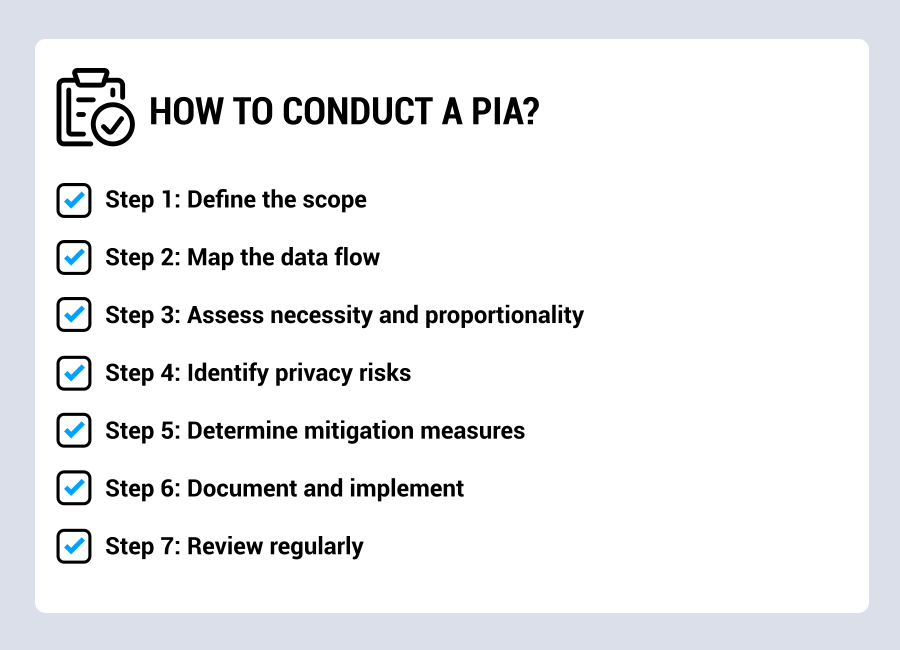
How to conduct a PIA?
To get an accurate picture of your organization’s data practices, you should have a clear and proactive approach.
Step 1: Define the scope
Clearly identify what processing activity you’re assessing. Is it a new customer loyalty program? A website redesign that changes data collection? Be specific about what’s included and excluded.
Step 2: Map the data flow
Document how personal data moves through your systems. Where does it come from? Who has access? Where is it stored? Who do you share it with? This creates visibility into potential risk points.
Step 3: Assess necessity and proportionality
For each data element, ask whether you truly need it to achieve your purpose. Could you use less data or anonymized data instead? Is the retention period justified? Is any data getting reused for additional purposes (for which consent may not have been obtained)?
Step 4: Identify privacy risks
Consider what could go wrong from the individual’s perspective. Beyond security breaches, think about discrimination, loss of control, reputational harm, or inability to access services.
Step 5: Determine mitigation measures
For each risk, identify specific actions to address it. This might include encryption, access controls, staff training, clear privacy notices, or mechanisms for individuals to exercise their rights.
Step 6: Document and implement
Create a clear record of your assessment, decisions, and planned actions. Then ensure those mitigation measures are actually implemented, not just documented.
Step 7: Review regularly
Privacy risks evolve as your processing changes, new threats emerge, and regulations develop. Set a schedule to review and update your PIA annually at a minimum for ongoing activities.
What is a Data Protection Impact Assessment (DPIA)?
A Data Protection Impact Assessment (DPIA) is a specific type of assessment required under the General Data Protection Regulation (GDPR). While similar to a PIA in purpose, a DPIA has formal requirements defined by law.
Under Art. 35 GDPR, data controllers must conduct a DPIA when processing activities are likely to result in a high risk to individuals’ rights and freedoms. This isn’t optional; it’s a legal obligation that applies before you begin the processing.
DPIAs are designed to look closely at how your data processing works and identify any risks. Under the GDPR, they have specific requirements for what needs to be included, who must be consulted, and how everything should be documented.
In practice, this means the process is more structured than a general PIA, often involving detailed records, mandatory consultation steps, and, in some instances, input from supervisory authorities.
When is a DPIA mandatory?
Art. 35 GDPR specifies that DPIAs are mandatory when processing operations are likely to result in high risk. Three specific scenarios always require a DPIA.
1. Systematic and extensive profiling with significant effects
This includes automated decision-making or profiling that significantly affects individuals. Examples include credit scoring, automated insurance pricing, algorithmic hiring decisions, or personalized pricing based on behavior analysis.
2. Large-scale processing of special categories of data
Processing sensitive data like health information, biometric data, genetic data, or criminal records at scale requires a DPIA. What counts as “large scale” depends on factors like the number of individuals affected, volume of data, duration of processing, and geographical extent.
3. Systematic monitoring of public spaces
Large-scale, systematic monitoring of publicly accessible areas requires a DPIA. This includes CCTV networks, facial recognition systems, or other surveillance technologies in public areas.
What should be included in a DPIA?
There are certain minimum regulatory requirements for what a DPIA must include. The key components of a DPIA are:
- Systematic description of processing operations: Document what personal data you’ll process, the purposes of processing, data flows, system architecture, storage duration, and third parties involved. Be detailed and specific.
- Assessment of necessity and proportionality: Explain why the processing is necessary to achieve your stated purpose and demonstrate that you couldn’t achieve the same goal with less intrusive methods.
- Assessment of risks to rights and freedoms: Identify specific risks to individuals, not just to your organization. Consider unauthorized access, data breaches affecting vulnerable groups, discrimination from automated decisions, inability to exercise rights, or emotional distress.
- Measures to address risks: For each identified risk, determine how you’ll reduce or eliminate it. Include technical safeguards like encryption, organizational measures like staff training, contractual protections with vendors, and transparency measures.
- Data Protection Officer consultation: If you have a Data Protection Officer (DPO), you must consult them during the DPIA process and document their input.
- Stakeholder input: Consider seeking input from individuals whose data you’ll process, when appropriate. This might mean user surveys, focus groups, or consultation with representative organizations.
The documentation should be detailed enough to show compliance if a regulator reviews it. It serves as evidence that you’ve properly evaluated and managed the privacy risks.
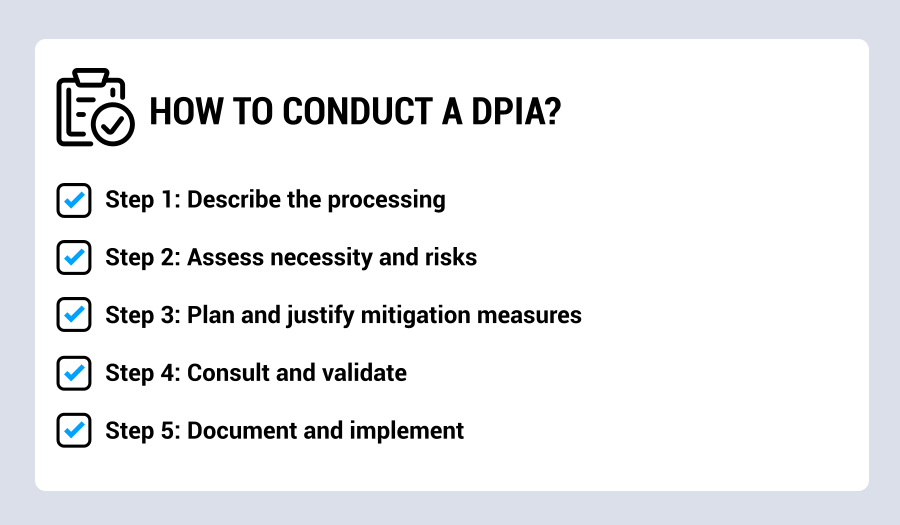
How to conduct a DPIA?
The GDPR doesn’t dictate a specific method for conducting a DPIA, so controllers have flexibility in how they assess risks and shape their decisions. The core steps generally include the following.
Step 1: Describe the processing
Map out what the processing involves, such as the data you collect, who it affects, why you’re using it, how it moves through your systems, how long you keep it, and any third parties involved.
Step 2: Assess necessity and risks
Check whether each part of the processing is needed and where you could minimize data. Identify the risks to individuals and consider their likelihood and impact based on your current safeguards.
Step 3: Plan and justify mitigation measures
Outline the steps you’ll take to reduce each risk, whether through technical controls, internal policies, contractual requirements, or added transparency. Note why each measure is sufficient.
Step 4: Consult and validate
If you have a DPO, involve them and record their input. If high risks remain and you can’t fully address them, consult your supervisory authority before moving ahead.
Step 5: Document and implement
Compile everything into a DPIA report, get signoff, and reflect the findings in your consent collection, user controls, and platform configuration.
What’s the difference between DPIA vs PIA?
The distinction between a PIA vs DPIA comes down to legal obligation, documentation standards, and regulatory oversight.
| Aspect | PIA (Privacy Impact Assessment) | DPIA (Data Protection Impact Assessment) |
| Legal basis | Voluntary best practice; may be required by some non-GDPR regulations | Mandatory under Art. 35 GDPR for high-risk processing |
| Scope | Flexible; can be adapted to various privacy frameworks and jurisdictions | Specific to GDPR requirements, applies in the EEA and wherever the GDPR governs your processing |
| When required | Based on organizational policy or general privacy assessment | When processing is likely to result in a high risk to individuals’ rights and freedoms |
| Documentation standards | Flexible format determined by your organization | Must meet specific Art. 35 GDPR requirements with defined minimum content |
| Consultation requirements | Varies based on organizational practice | Must consult Data Protection Officer if you have one; may need to consult supervisory authority |
| Regulatory oversight | Generally internal, but regulators may request during investigations | May require submission to the supervisory authority if risks cannot be adequately mitigated |
| Depth and rigor | Varies based on assessed risk and organizational standards | Requires systematic, detailed analysis meeting legal standards |
| Legal consequences | Missing a PIA may be poor practice, but typically not a direct violation | Failing to conduct a required DPIA violates GDPR and can result in regulatory action and fines |
Which one do you need?
Which assessment you need depends on your processing and where you operate.
If you’re subject to the GDPR and your processing involves systematic profiling with significant effects, large-scale use of sensitive data, or monitoring public areas, a DPIA is required.
The same applies if your supervisory authority lists your type of processing as high risk. When in doubt, for most companies serving European users, the DPIA is a key legal requirement.
If your processing doesn’t reach that high-risk threshold, a PIA can still be useful. It helps you evaluate privacy risks without the stricter requirements of a DPIA. PIAs are also helpful if you operate outside the GDPR but want strong privacy practices or need to review new products, technologies, or vendors.
In some cases, both assessments play a role. Businesses operating in multiple markets might run DPIAs for GDPR-regulated activities and use PIAs for everything else. Many companies also use PIAs to support a broader privacy program alongside mandatory DPIAs.
Who’s responsible for carrying out a PIA and DPIA?
Responsibility for a privacy assessment starts with the team proposing the data processing, but your organization as a whole remains accountable as the data controller. For both PIAs and DPIAs, the initiating team needs input from privacy specialists, legal, IT security, and other affected departments.
For DPIAs under the GDPR, a DPO must be involved, and their advice documented, though they don’t perform the assessment themselves. External consultants can assist, but accountability must always stay within your company.
Discover who should be responsible for GDPR compliance within your company.
Use the insights from a PIA and a DPIA to take action
PIAs and DPIAs both help you understand and reduce privacy risks, but they serve different purposes. A PIA gives you flexibility to assess privacy impact in a wide range of situations, while a DPIA is a defined legal requirement whenever your GDPR-regulated processing reaches a high-risk threshold.
Most companies will use both at different points. What matters most is carrying those insights forward. The way you collect consent, explain data use, and give users control should reflect what the assessment uncovered.
When those pieces work together, you reduce your privacy compliance risk. And you build a long-term privacy strategy that’s consistent, transparent, and easier to maintain as your organization grows and technologies and laws change.

Join our growing community of data privacy enthusiasts now. Subscribe to the Usercentrics newsletter and get the latest updates right in your inbox.
