

A practical guide to marketing data governance
Poor quality data doesn’t just skew reports. It affects most decisions your marketing team makes. From inaccurate attribution models to mismatched consent records, even small inconsistencies can add up to lost budget, risk of privacy violations, and missed opportunities.

Marketing data governance provides a framework to prevent that. It sets clear rules for how customer information is collected, stored, and shared, and verifies that those rules are followed. For marketers, this means working with data that’s trustworthy and privacy-compliant by design, not by chance.
Let’s look at what marketing data governance means and how to build a simple framework using server-side tagging.
Key takeaways:
- Marketing data governance defines how customer information is collected, stored, and shared across your marketing stack.
- A data governance framework connects policies, defined roles, technical controls, and documentation into one consistent system.
- High-quality, well-governed data leads to better audience insights, smoother integrations, and more reliable campaign performance.
- Server-side tagging supports governance by giving you control over what data leaves your site and ensuring consent is applied automatically.
- Clear accountability and measurable KPIs make governance a living process, not a one-time project.
- Done well, governance builds trust with both your customers and your own analytics.
What is marketing data governance?
Marketing data governance is the system that determines how your marketing data gets collected, stored, used, and shared.
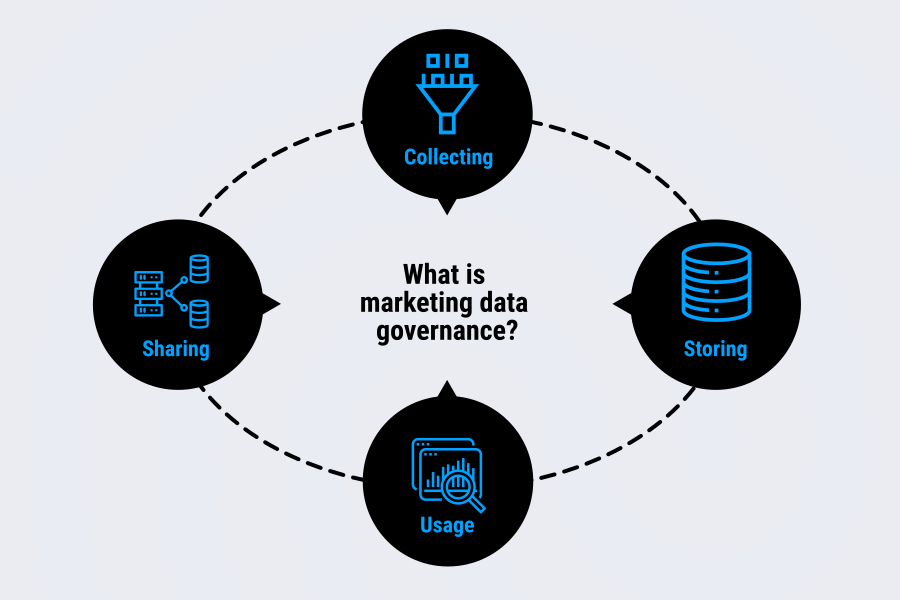
At a practical level, governance answers the questions that can slow down marketing teams:
- Can your email platform access purchase history?
- Should conversion events fire for users who declined tracking cookies?
- What happens when someone requests their data be deleted?
- Who approves new tracking implementations?
Without governance, decisions are inconsistent. Different teams make different choices, data may flow to unauthorized platforms, and privacy compliance becomes inconsistent.
With governance, you establish a repeatable framework. Rules are clearly defined, systems enforce them automatically, and when regulators or customers request details on data handling, clear and well-documented answers are readily available.
What is a data governance framework?
A data governance framework is the structured approach used to implement governance across your organization. It includes:
- Policies and standards that define acceptable data practices, privacy requirements, and quality thresholds. These provide the rules that everyone follows.
- Roles and responsibilities that assign clear ownership for data collection, consent management, quality monitoring, and privacy compliance oversight.
- Technical controls like server-side tagging, consent management platforms, and access permissions that enforce your policies automatically.
- Documentation and processes that capture data lineage, consent records, and audit trails so you can prove privacy compliance and troubleshoot issues.
A marketing data governance framework connects these elements into a cohesive system. It supports consistent governance, whether you’re launching a new campaign, integrating a marketing tool, or responding to a privacy request.
Why marketers need data governance in a cookieless era
Third-party cookies made audience targeting simple. But as they disappear, the focus shifts to first-party data. This change is an upgrade, but it requires some investment. First-party data is more accurate and transparent. You own it, and your users provide it knowingly. But it only works if it’s trustworthy.
However, keeping data reliable can be challenging. Fake email addresses, duplicate conversion events, unsynced preferences, or inadequate consent records can quickly distort the truth behind your analytics. When data quality erodes, so does the performance of every campaign that depends on it.
Governance changes that. It creates the standards and processes that keep data accurate, privacy-compliant, and consistent across systems.
But marketing data governance isn’t just a policy on paper. It’s a living set of rules that needs to be enforced at the point of data collection and processing. To achieve this level of enforcement and control, organizations must centralize the flow of their data.
Server-side tagging makes that enforcement possible. Instead of each browser sending data directly to every platform, your server acts as a single, secure checkpoint. Data passes through this checkpoint first, where you can validate events, apply consent rules, and enrich or filter information before it leaves your infrastructure.
This control is critical for regulations like the EU’s General Data Protection Regulation (GDPR) and the California Privacy Rights Act (CPRA). Governance, enabled by server-side tagging, verifies that user consent is applied consistently across your entire data stack, not just in one isolated platform.
Learn more about server-side tagging and how it impacts consent and data collection.
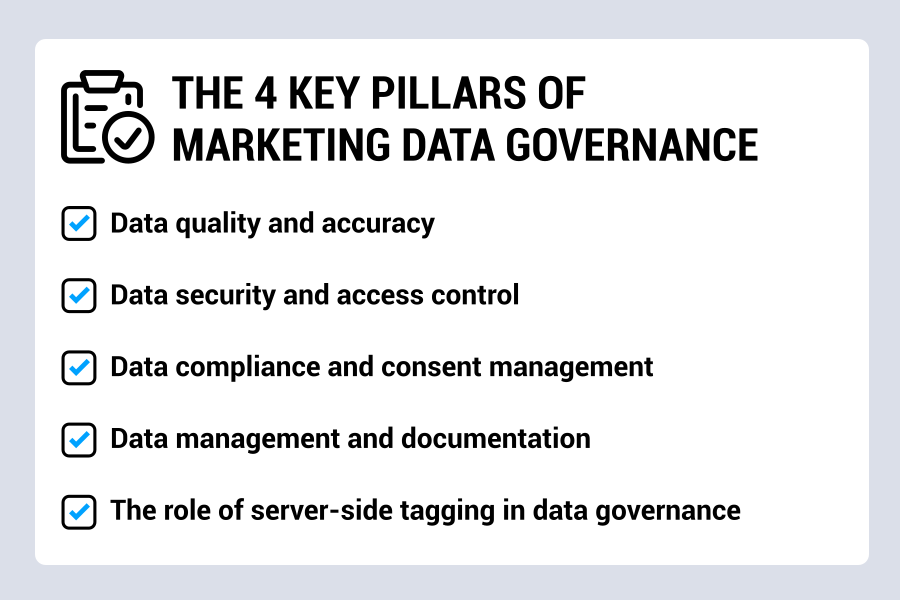
The 4 key pillars of marketing data governance
Good marketing decisions depend on good data. Data governance is about creating the conditions for that. Making sure the information you collect, store, and use is reliable, protected, and handled responsibly. These four pillars work together to make that happen.
Data quality and accuracy
Accurate data helps you understand your audience and measure performance with confidence. But quality starts long before analysis; it begins at the moment of collection. If forms accept typos or tools pass incomplete fields through, small mistakes multiply fast.
Strong data quality practices catch those errors early. That means validating entries as they come in, preventing duplicates, and keeping formats consistent across systems. When everything aligns, your reporting reflects what’s really happening, not a distorted version of it.
The result? Campaigns that target the right people, performance data you can trust, and less time spent fixing issues later.
Data security and access control
Customer data is valuable and proprietary, and it should be treated that way. Not everyone in your company needs to see or handle every piece of it.
To protect your customer information, access control helps secure both users and teams by limiting what each person or system can see or do. For instance, marketers can work with aggregated or anonymized data, administrators can update permissions, and analysts can export reports, but not personal details.
Every connection to an external tool follows the same principle: share only what’s necessary. A simple audit trail keeps track of who accessed what and when. Clear boundaries like these reduce risk and build trust.
Data compliance and consent management
Privacy regulations have raised the bar for how organizations collect and use data. Clear consent builds trust and helps you reach audiences who actually want to hear from you (by the methods and about the topics they prefer).
A consent management platform (CMP) keeps these preferences consistent across systems. When a user opts out, that choice automatically updates everywhere. You’re not managing permissions tool by tool, and you avoid the risk of outdated or conflicting records.
Good privacy compliance is also about proof. Keep records of when consent was given, what permissions were granted, if and when consent was revoked, and when data was removed. It’s not just about avoiding fines; it’s about showing your customers that you respect their choices.
Data management and documentation
Knowing where your data comes from and where it goes makes everything easier.
Data lineage maps that journey. It shows which systems collect information, how it’s transformed, and where it ends up. If something looks off in a report, you can trace it back to its source instead of guessing.
A simple data catalog adds clarity for teams. It lists what data exists, where it’s kept, who’s responsible for it, and how it should be used. That way, anyone working with customer information can do it confidently and consistently.
The role of server-side tagging in data governance
Server-side tagging helps you put these principles into practice. It creates a controlled environment between your website and the tools you connect to, so you can decide exactly what data gets shared and when.
Instead of sending raw data directly from the browser to multiple platforms, server-side tagging lets you filter, adjust, or remove information before it leaves your server. It’s also easier to apply consent rules at this stage, so users’ preferences are respected automatically.
The result isn’t a new marketing trick; it’s a cleaner, more transparent data flow that supports accuracy, security, and privacy compliance.
How to implement a data governance framework
Setting up data governance doesn’t need to be complicated. Start small, focus on clarity, and build from there. The goal is to make your marketing data easy to understand, use, and protect.
Start with data mapping
You can’t govern what you don’t understand. Begin by inventorying every system that collects, stores, or processes customer data. This includes your CRM, email platform, advertising accounts, analytics tools, customer service software, and any databases or data warehouses.
For each system, document:
- Data collected
- Data sources
- Retention period
- Access
- Connected systems
This mapping exercise reveals gaps in your current setup. You might discover tools collecting data without proper consent mechanisms, platforms retaining information longer than necessary, or systems with overlapping data that’s inconsistent between them.
Define policies and standards
With a clear picture of your current state, establish the rules that will govern future data handling. These policies should address:
- Collection standards to specify what information you’ll gather, how consent will be obtained, and what validation happens at the point of entry
- Storage and retention rules to define where data lives, how long different data types are kept, and when information gets archived or deleted
- Access policies to determine who can view, edit, or export data based on their role and responsibilities
- Sharing guidelines to outline which external platforms receive data, what information they can access, and under what conditions data leaves your infrastructure
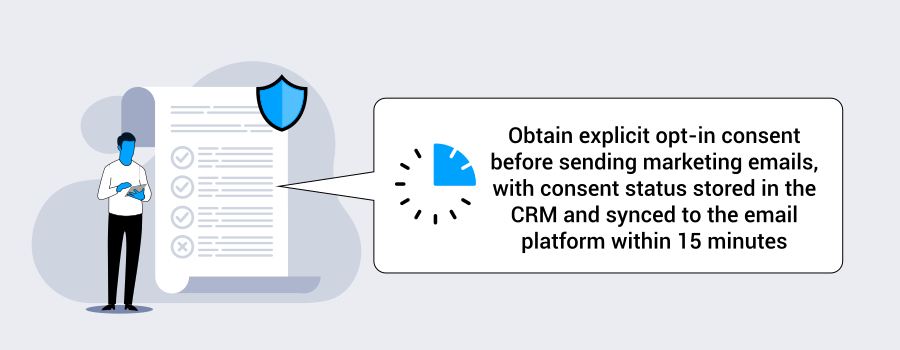
Keep policies clear and specific. “Follow privacy regulations” is too vague. “Obtain explicit opt-in consent before sending marketing emails, with consent status stored in the CRM and synced to the email platform within 15 minutes” is actionable.
Assign ownership and accountability
Governance fails without clear ownership. Designate specific individuals responsible for different aspects of your data operations.
These roles could be full-time positions or added responsibilities, depending on your organization’s size. What matters is clarity about who makes decisions, who enforces policies, and who gets contacted when issues arise.
Implement technical controls
Policies mean nothing without systems that enforce them. This is where server-side tagging, a consent management platform, and access controls come in.
Start with consent management. Implement a platform that collects user preferences, stores consent status, and makes that information available to every system that needs it. Your consent management platform should integrate with your server-side tagging setup so consent rules apply automatically to all data collection.
Set up server-side tagging next. This creates the central checkpoint where you can validate data, enforce consent, and control what information reaches each platform. Begin with your most critical conversion events and expand coverage over time.
Lastly, configure access controls in each system. Use role-based permissions to limit who can view or modify data. Enable audit logging so you can track every action.
Tracking the success of your data governance system
Good data governance in marketing should make your marketing stronger, not slower. The best way to show that is through measurable improvements in both performance and protection.
You can track progress through metrics like:
- Governed data sources: This measures how much of your ecosystem is formally documented and actively follows set policies, proving you have comprehensive control and eliminating unauthorized data tools — often called “shadow IT” — that can create budget waste and risk.
- Fewer tracking errors or consent mismatches: Meaning leaner, more privacy-compliant data that is legally sound. This facilitates your confident use of collected customer information for better targeting, while significantly reducing your exposure to regulatory fines.
- Fresher, more consistent data: Better for audience insights and personalization, specifically by shrinking the time delay (latency) between a customer action and that data being available for real-time activation, leading to higher campaign conversion rates.
- Faster privacy request handling: This shows your internal processes work efficiently, reducing the administrative cost of privacy compliance and demonstrating the operational maturity required to build consumer trust by respecting and quickly responding to users exercising their data rights.
- Reduction in unapproved tags or data flows: Proving tighter control and visibility over your digital properties. This instantly reduces external data leakage risks and provides the secondary benefit of improving website load speed and performance.
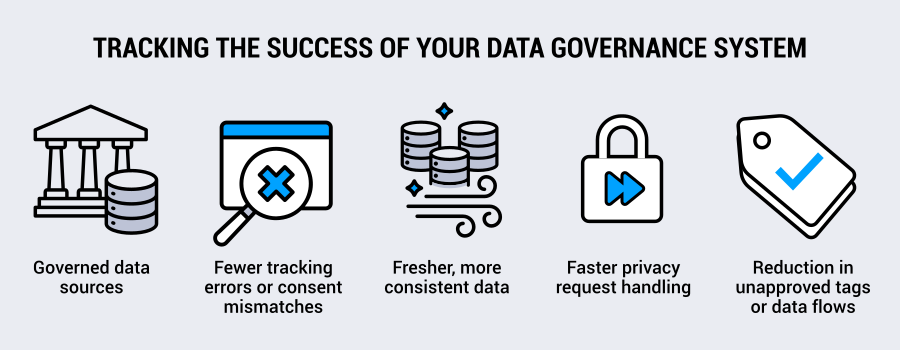
These numbers tell a story of efficiency and trust. When your data is reliable, your campaigns become easier to measure, optimize, and justify. That’s how governance turns into return on investment.
Use data governance in marketing to build trust
Strong data governance doesn’t just protect your business; it builds confidence in how you use data every day. Because when information is accurate, secure, and collected with respect for user choice, marketing decisions become clearer and more effective. You spend less time cleaning data and more time using it.
Tools like a consent management platform paired with a server-side tagging solution help make that consistency possible. Keep everything aligned behind the scenes so your marketing can perform with integrity.