

How to create Terms and Conditions for an e-commerce website
Terms and Conditions (T&Cs) help to protect your online store by setting clear expectations with customers, reducing chargebacks and their impact on your revenue, and lowering your risk of legal disputes.

They also impact how shoppers view your website. Fewer than half of consumers say they trust e-commerce stores, which is fewer than those who trust other types of retailers. Clear, well-drafted terms communicate that your business is legitimate and professional, helping you attract new customers and build trust and repeat purchases with existing ones.
But just using a generic Terms and Conditions template leaves gaps. Running an online store involves unique challenges, like managing large volumes of customer data and fulfilling international orders. You need comprehensive terms tailored to your company’s needs and operations to protect your business.
This article explores why Terms and Conditions for e-commerce matter, and explains what an effective agreement covers with examples of each clause.
At a glance
- Terms and Conditions act as a contract between your e-commerce store and your customers. They set the rules for using your site and purchasing products.
- A clear Terms and Conditions agreement reduces legal risk by defining your obligations and outlining customer responsibilities.
- E-commerce sites should display Terms and Conditions prominently. For example, linked from the website’s footer, during checkout, and at the account creation step.
- Strong Terms and Conditions cover core areas like pricing, liability, shipping, refunds, IP ownership, promotions, user content, and governing law.
- Consumer laws in the EU, UK, and U.S. shape certain requirements for e-commerce Terms and Conditions, so understanding these regulations and incorporating them into your agreement is essential for cross-border sales.
What are the Terms and Conditions for an e-commerce website?
Terms and Conditions (also sometimes referred to as Terms of Service) make up the legal contract between your e-commerce website and your customers. They set rules for how people access and use your platform and purchase products from your online store.
Although they exist alongside other policies, T&Cs serve a distinct purpose. They combine both your terms of sale and your website use policy into a single contract.
Other important policies include:
- Privacy policy: Explains how you collect, process, and store information and your legal bases for doing so
- Cookie policy: Outlines the tracking technologies you use on your site and visitors’ consent options
- Returns and refund policy: Covers the options customers have under consumer laws if products are faulty, arrive late, or are not as described
Together, these policies help you meet data privacy compliance requirements and protect your e-commerce website from unnecessary risks. Your Terms and Conditions agreement can reference each of them, but it shouldn’t replace them.
Why should your store have a Terms and Conditions agreement?
Every online business that sells to customers benefits from having T&Cs, and they are often legally required. For starters, these agreements limit your liability by defining the scope of your service.
The agreement helps clarify where your obligations to customers end, so they know which situations you are and are not responsible for. Clear boundaries like these minimize the risk of complaints or claims being made against your business.
Terms and Conditions also outline your customers’ rights and responsibilities. They set expectations for how to use your online store, which reduces the chance of confusion or misunderstandings. They also give you grounds to take action if someone breaches your agreement.
Finally, T&Cs help signal to visitors that you’re a trustworthy brand because you provide transparency around how your company operates before customers make a purchase. This extra reassurance can attract new customers, especially since 97 percent of people express concerns about shopping on unfamiliar websites.
Where should e-commerce sites display their Terms and Conditions?
Your e-commerce Terms and Conditions or Terms of Service should be easily accessible from anywhere on your website. The footer of each page is a highly visible option. You can also increase visibility by labeling the link clearly and using a legible font size, color, and type.
Additionally, include the link at key moments in customer interactions, such as during checkout or account creation. This gives website visitors a quick way to refer to your policies before they confirm a purchase. That kind of simple accessibility maintains trust and supports the enforceability of your agreement.
What do e-commerce businesses need to include in their Terms and Conditions?
While each business’s terms will be different, in general T&Cs must cover certain core areas to reflect how your e-commerce business operates. Here are some recommendations for sections to include for an agreement that is comprehensive and enforceable.
Be aware that these examples can serve as inspiration, but you should never just copy and paste another site’s Terms and Conditions. Instead, consult legal counsel to build out an agreement that aligns with how your business operates.
General terms of use
General terms of use act as an introductory clause and provide a brief overview of the conditions for using your website and its features. Typically, this section states the need to comply with applicable laws and follow any additional rules you have in place to protect your business.
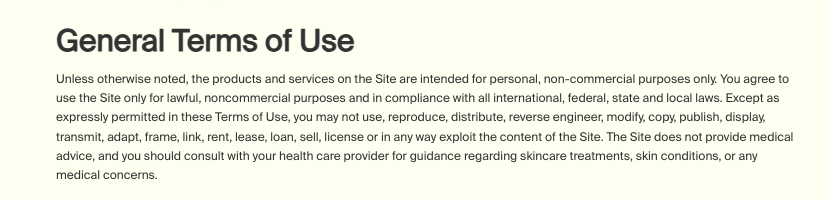
Many businesses add a policy limiting use of their website to noncommercial purposes. The goal is to prevent customers and competitors from exploiting your website for their own gain. In the following example, the cosmetics brand Aesop has included a list of prohibited activities, such as copying and redistribution, to clarify these rules for visitors.
Intellectual property rights
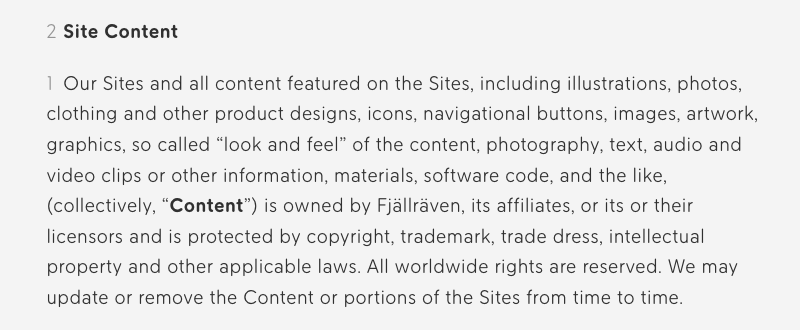
An intellectual property (IP) or copyright clause clarifies who owns the content on your website and states that visitors aren’t permitted to copy or redistribute it without your permission. This clause protects your brand’s creative work by preventing people from reusing your materials elsewhere.
For an example of what content to include in your intellectual property clause, see this example from Fjällräven. The outdoor clothing and equipment brand’s policy lists different products, brand assets, and website features.
Pricing and payment terms
Your Terms and Conditions should include a clause that explains your pricing structure and how payment processing works at your online store. It should include:
How you display prices
Which taxes and other fees may apply
Accepted currencies
Accepted payment methods
When you charge cards
Renewal information (if you have subscription services)
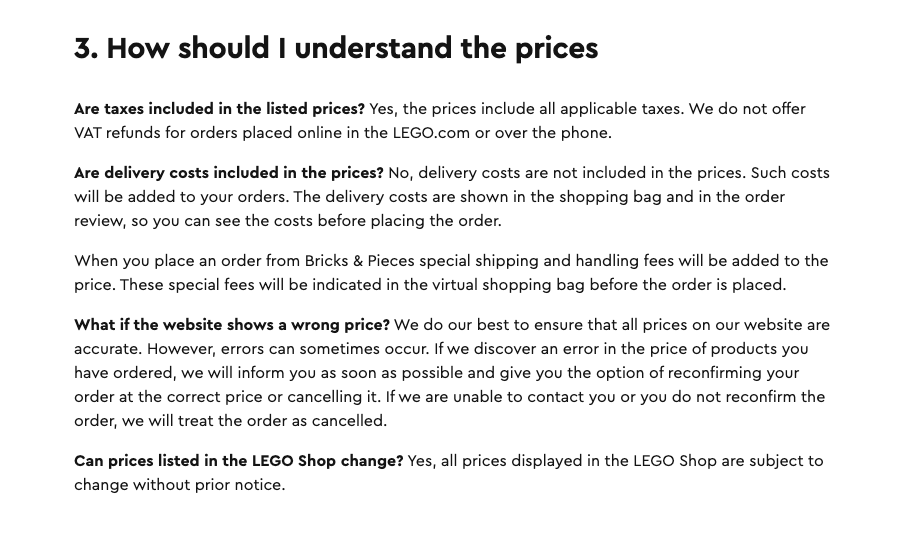
It’s a good idea to clarify that you retain the right to change prices at any time, as LEGO has done in the example below. This minimizes the risk of customer disputes due to price increases or sales ending before they had a chance to make a purchase.
Exclusion and limitation of liability
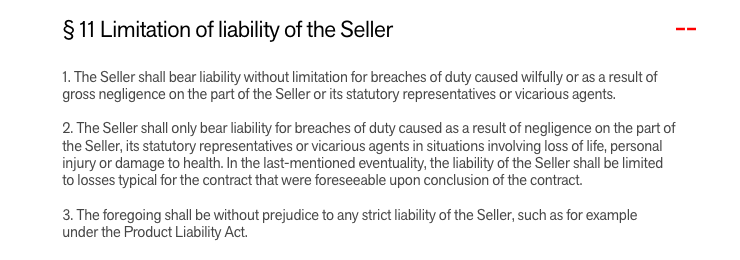
A limitation of liability clause states the boundaries of your company’s obligations to customers to the maximum extent permitted by law.
As shown in the example below from Mammut, this clause typically excludes liability for issues caused by customers breaching your terms or by circumstances beyond your control. For example, stores aren’t usually held responsible for delays or issues resulting from:
- Adverse weather conditions or natural disasters
- Strikes, shutdowns, and other disruptive events
- Government-imposed restrictions
- Technical issues with the customer’s device or internet
- Third-party providers
Product information
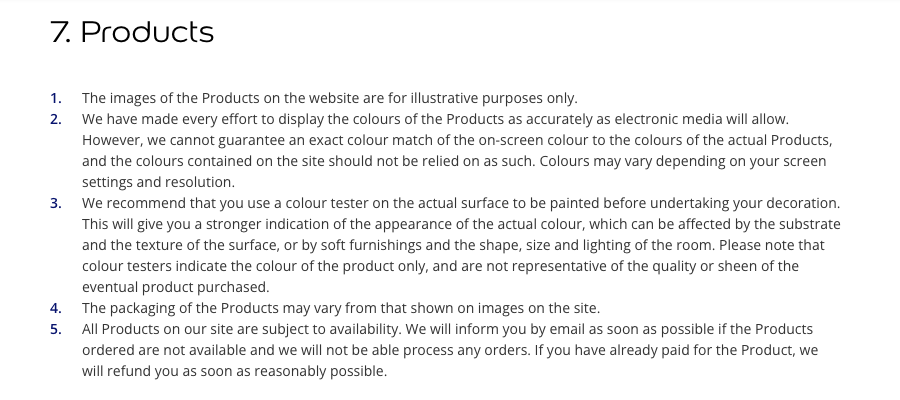
Include a clause that explains that products may differ slightly from how they appear online. Doing so sets customers’ expectations and avoids disputes over minor differences between product descriptions and images versus the item the customer receives.
For example, paint brand Dulux has included a large product policy in their Terms and Conditions because light, wall texture, and room size can affect how colors appear.
Promotions and sales
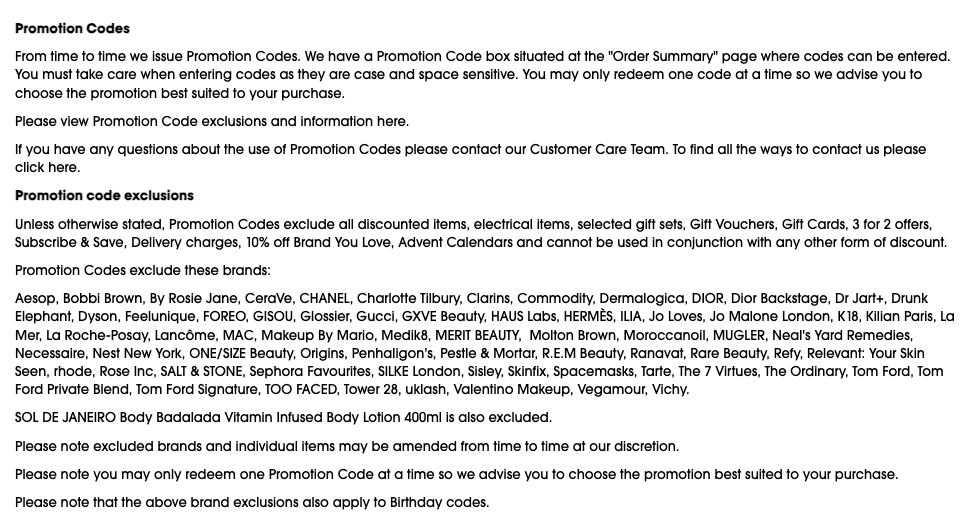
Discounts, promotional codes, and limited-time offers create legal obligations your website needs to clarify. Include a section on promotions in your agreement to explain your rules for:
- Eligibility
- Expiration dates
- Usage limits
- Exclusions
- Minimum spend thresholds
If you have different types of promotions, you may need a separate section for each one, like beauty retailer Sephora has done in this example.
Shipping and delivery information
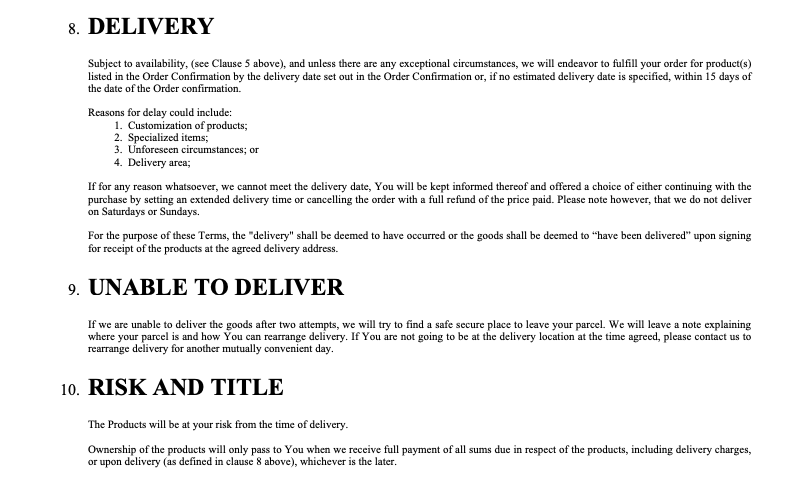
This clause explains how your business fulfills orders, including:
- Shipping costs
- Delivery methods
- Estimated timeframes
- Third-party partners you work with
Covering different scenarios can help customers understand what to expect and reduce your risk of receiving negative reviews. For instance, fashion retailer Zara’s policy explains what happens if a package can’t be delivered. That way, people know what to do if they aren’t home when a delivery attempt is made or if their order is sent to the wrong address.
You may also want to create a separate shipping policy to outline this information. Regardless, it’s a good idea to include at least an overview of the way your shipping and delivery processes work in your T&Cs.
Return and refund information
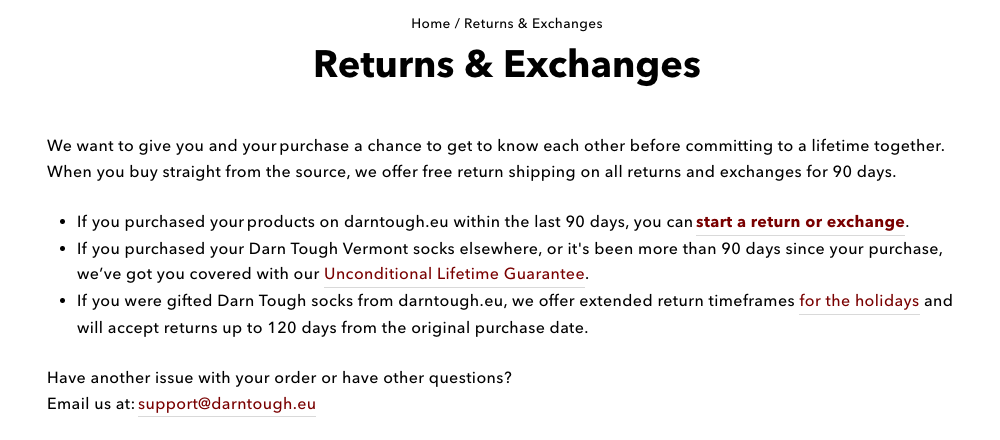
Depending on where your business and customers are located, consumer laws may require you to accept returns within certain time limits and offer refunds or replacements for faulty products. You must include this information in your site terms to make customers aware of their rights.
A return and refund clause also gives you a chance to clarify your processes. For example, sock company DarnTough uses their policy to explain the conditions for its “Unconditional Lifetime Guarantee,” which enables customers to claim free replacement products at any time.
User-generated content
You may want to include a clause that sets rules about what types of content users can contribute to your website. A user-generated content clause states that you have the right to remove anything that violates your terms or harms other users.
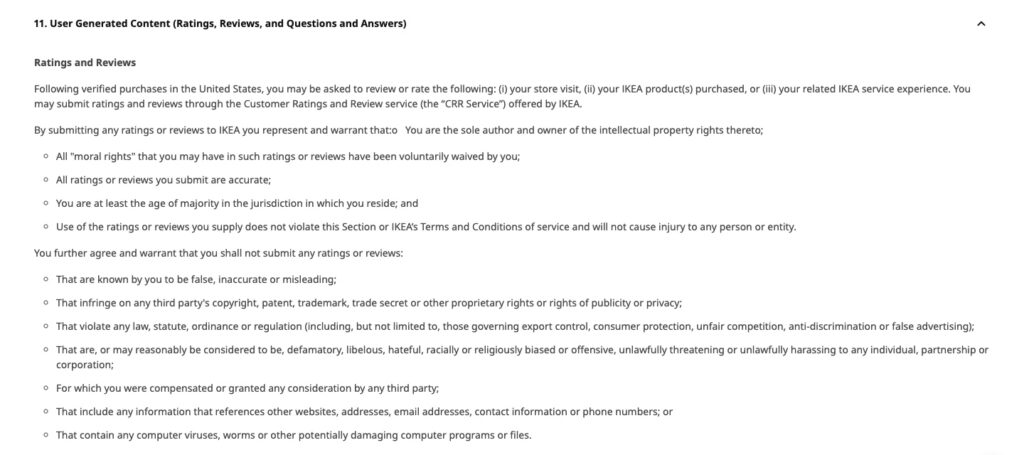
Most e-commerce stores only have to concern themselves with customer reviews, ratings, and questions. For example, furniture and household goods conglomerate IKEA prohibits users from submitting feedback that misrepresents their business or contains hateful language.
Some websites permit users to upload content to create customized products, in which case you need to clarify what’s acceptable and who owns the intellectual property.
Amendment of terms
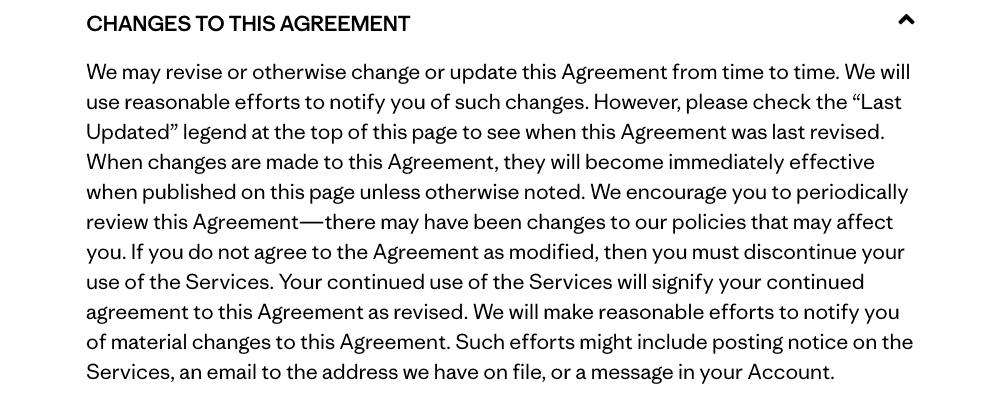
Terms and Conditions should change as your business practices, relevant regulations, and legal obligations evolve. Include an amendment of terms clause to clarify your right to update your policies, as well as your responsibility to customers for communicating these changes.
Consider displaying the date your agreement was last updated at the top of the page, like outdoor clothing and recreation company Patagonia does. This shows customers which version of your terms they agreed to and which rules applied for a specific purchase, which can help you resolve potential disputes faster.
Jurisdiction and governing law
This clause states which country’s laws apply to the agreement and under which jurisdiction your business handles dispute resolution.
Businesses that operate across borders need to clarify this detail. If an overseas customer understands which consumer laws apply to purchases made on your site, they won’t mistakenly pursue legal action against you for not following the policies in place in their own country.
A governing law clause doesn’t need to be extensive. Even multinational retailers like Bosch only dedicate a few paragraphs to it in their agreement.

Which consumer laws govern e-commerce Terms and Conditions requirements?
Although you have some flexibility about what to include in T&Cs, you’re often bound by consumer laws. These determine your responsibilities to customers and how you must shape the clauses of your agreement.
Here are three main consumer laws to be aware of:
| Regulation | Jurisdiction | What it impacts | Overview |
| Consumer Rights Directive | EU | Returns and refunds | EU residents are entitled to certain protections, including upfront information about products and payments and the right to withdraw from purchases. Member States must uphold these rights and enforce laws, but they’re free to set their own penalties, as long as they’re “effective, proportionate and dissuasive.” |
| Consumer Rights Act 2015 | UK | Repairs and exchanges | Companies are legally required to facilitate repairs and replacements within a reasonable timeframe and at their expense. However, customers can’t insist on this option if the costs are disproportionate to the price of the original purchase. |
| Mail, Internet, or Telephone Order Merchandise Rule (MITOR) | U.S. | Shipping and delivery | This law states that you must only give realistic timeframes for shipping and delivery. If you don’t provide a time frame, the default is 30 days. |
Protect your business and build trust with customers
Clear, well-written Terms and Conditions help you run your business with confidence by minimizing your risk of disputes with customers. They’re essential for online stores that deal with cross-border sales, regulatory oversight, and constant web traffic.
But T&Cs are just one part of a broader legal and data privacy compliance strategy.
Usercentrics, for example, helps you comply with key privacy laws like the General Data Protection Regulation (GDPR) and the California Consumer Privacy Act (CCPA). As regulations change, the platform automatically updates your privacy notice, cookie banner settings, and other disclosures about your data practices.
Keeping all of your documentation accurate and up to date, from Terms and Conditions to data processing policies, helps you prevent disputes, avoid penalties for noncompliance, and keep your business running smoothly.