
Data privacy regulations and compliance requirements continue to shift. Even a well-equipped legal team can struggle to keep up and implement them effectively. But compliance reporting tools help you and your teams to minimize these challenges.
Compliance reporting software automates adherence to regulatory requirements. In doing so, it makes achieving and maintaining compliance less stressful and more straightforward. This article provides a detailed overview of the best tools available today to make your choice simpler.
At a glance
- Understanding compliance reporting tools: See what the software offers and how it helps your business.
- Differentiating tools: Learn the main types of compliance tools based on their functions.
- Overview of 13 compliance tracking software providers: Review each provider’s target audience, core functionality, prices, and their pros and cons.
- Selection criteria: Use our straightforward checklist to choose the tool that will best support your business.
Key features of effective compliance reporting tools
TTo efficiently monitor, manage, and comply with changing data privacy regulations — including the EU’s General Data Protection Regulation (GDPR) and the California Consumer Privacy Act (CCPA) — compliance reporting tools usually include the following features:
- Automated data collection: Tools like consent management platforms (CMPs) accurately and efficiently collect and manage user consent and require minimal manual effort.
- Centralized dashboards: Compliance reporting services provide a unified, real-time overview of your compliance status, risks, and activities for quick decision-making and prioritization.
- Real-time alerts: Tools send prompt responses to stakeholders regarding potential and real compliance breaches with required actions to mitigate risks and boost trust.
- Audit trails: Detailed records of all compliance activities and modifications support transparency and accountability.
- Consent logs: Compliance reporting tools record and manage user consent activities to support CCPA and GDPR compliance.
- Documentation export: These systems generate actionable reports for internal reviews and external regulatory submissions.
- Integration with legal and security systems: Compliance reporting software seamlessly connects with existing governance, risk, and compliance (GRC) tools, security platforms, and legal workflows to enhance oversight and operational efficiency.
With these features, a compliance reporting system creates an automated and transparent ecosystem that promotes data privacy, increases organizational trust, and helps manage regulatory risks.
Types of compliance reporting tools
By their tCompliance reporting tools can be divided into five broader categories:
- Privacy compliance tools: Discover and map data in adherence with specific data privacy regulations and frameworks (e.g., GDPR, CCPA, ePrivacy Directive, etc.)
- Security compliance tools: Align activities with information security standards and organizational controls, such as the International Organization for Standardization 27001 (ISO 27001), System and Organization Controls 2 (SOC 2), and more
- GRC platforms: Enterprise-wide tools for registering risks, executing privacy control management, and reporting in a manner that supports compliance
- Vendor risk management tools: Control risks and manage the compliance operations of third-party vendors
- Consent and tracking compliance tools: Implement and control compliance as part of a broader consent-based marketing strategy
Below, we provide more details on thirteen vendors that specialize in compliance reporting services. We define their features, benefits, and prices to help you make an informed decision.
1. Usercentrics
Best for: automated privacy compliance for medium and large businesses.
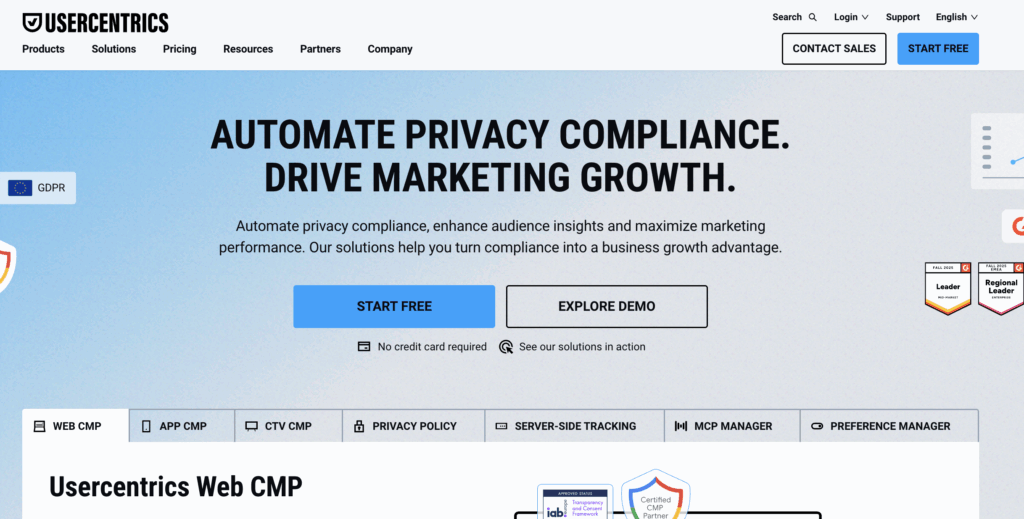
Usercentrics Web Consent Management Platform provides a comprehensive consent management and compliance reporting system. Usercentrics CMP helps businesses balance data privacy and marketing performance, comply with international privacy laws, manage user consent across websites and apps, and foster transparency and trust in data collection.
Features:
- A certified Google CMP partner that integrates with Google Tag Manager and Google Analytics
- Integrated with Google Consent Mode v2 and the Transparency & Consent Framework (IAB’s TCF v2.3)
- Seamless integration with content management systems like Wix and WordPress
- Automates privacy compliance functions to align with GDPR, CCPA, ePrivacy Directive, and other requirements
- Marketing analytics for actionable insights, A/B testing, and granular data on user interactions and consent choices
- Customization of consent banner designs and placement to align with brand marketing
Usercentrics pros and cons
Pros
- Detailed and actionable reports for regulatory analytics
- Automated and audit-ready documentation for GDPR, CCPA, and other data privacy regulations
- Powerful integrations and useful dashboards
- 60 supported languages
- Privacy Policy Generator
- Transparency for legal, marketing, and IT teams
- Server-Side Tagging for accurate consent-forward data
- Cookie and tracking technology database to save time and resources
- Free trial and transparent pricing options
Cons
- The Essential plan is limited to only one privacy regulation
- Analytics data is only stored for 90 days
Pricing
After a 14-day free trial, you can sign up for one of five subscription options:
- Essential: USD 8/month (one privacy regulation and domain, two languages, up to 1,500 sessions)
- Plus: USD 16/month (multiple privacy regulations, one domain, five languages, up to 3,000 sessions)
- Pro: USD 34/month (multiple privacy regulations, three domains, 60 languages, up to 15,000 sessions)
- Business: USD 56/month (multiple privacy regulations, ten domains, 60 languages, up to 50,000 sessions)
- Corporate: Pricing upon request (unlimited domains, A/B testing, and other advanced features)
2. Centraleyes
Best for: managing multiple compliance frameworks and teams.
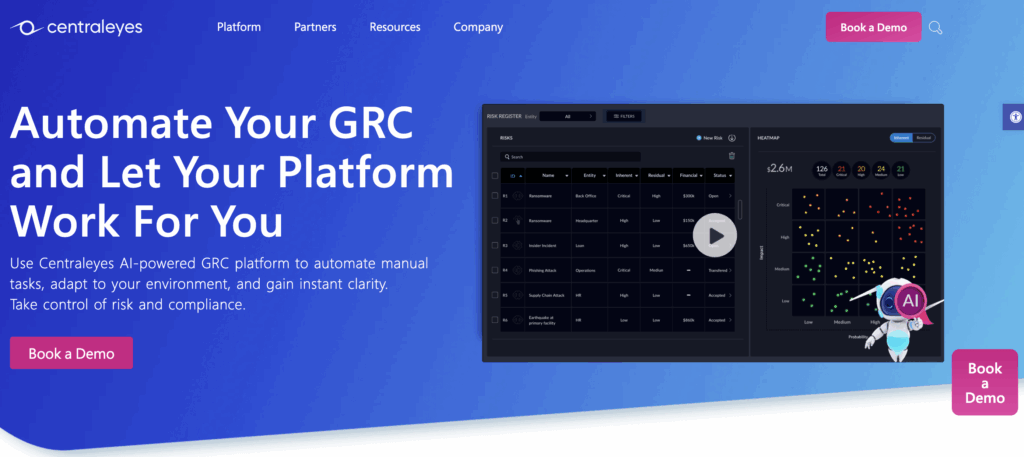
Centraleyes provides an AI-powered GRC platform with a focus on cyber risks. Compatible with over 180 compliance frameworks, standards, and regulations, this compliance audit software enables companies to map cross-functional controls, assess risks, and generate reports for internal, third-party, and boardview use.
Features:
- Supports CCPA, Health Insurance Portability and Accountability Act (HIPAA), ISO 27001, NIST 800-53, and many more
- First-party, third-party, and boardview platform options
- High level of compliance report customization
- Focus on cyber risk assessment and management
- A unified compliance reporting system that combines several domains
Centraleyes pros and cons
Pros
- GRC that covers multiple compliance regulations and security standards
- Automated workflows to simplify compliance tasks and remediation tracking
- Scalable solution adaptable to various organizational sizes and structures
- Cyber risks focus
Cons
- Navigating the website may be confusing for self-setup
- Prices and plans are not transparent
Pricing
Prices and plans are available on the demo call with the Centraleyes team.
3. Skillcast
Best for: employee training and engagement in compliance reporting.
Skillcast provides an educational platform that combines compliance training with reporting. On the platform, you can implement training programs, review policies, and monitor employee engagement on compliance-related topics, like anti-bribery or data protection.
Features:
- AI-based compliance with intelligent assistance on demand
- Central portal for employee training, policy reviews, and customized audit-ready reports
- Integrates with existing learning management systems
- Over 400 compliance training programs
- Accredited with ISO 27001, Cyber Essentials, and Cyber Essentials Plus standards
- Powered by Microsoft Azure cloud storage and computing
Skillcast pros and cons
Pros
- Specializes in employee elearning
- Suitable for multiple industries
- Ability to customize the course content or build it from scratch
Cons
- Prices are not transparent
- Reports may look bulky and need manual input
- Lacks EU-oriented content
Pricing
Skillcast offers three subscription plans, with prices available upon request:
- Standard: Learning Management System, library of training courses with microlearning modules, third-party course hosting
- Enhanced: Additional enhanced branding, nudge learning, diagnostics, and AI Digital Assistant
- Premium: Additional Policy Hub, Training 360, surveys, compliance registers, and other advanced features
4. Diligent
Best for: third-party risk management and leadership.
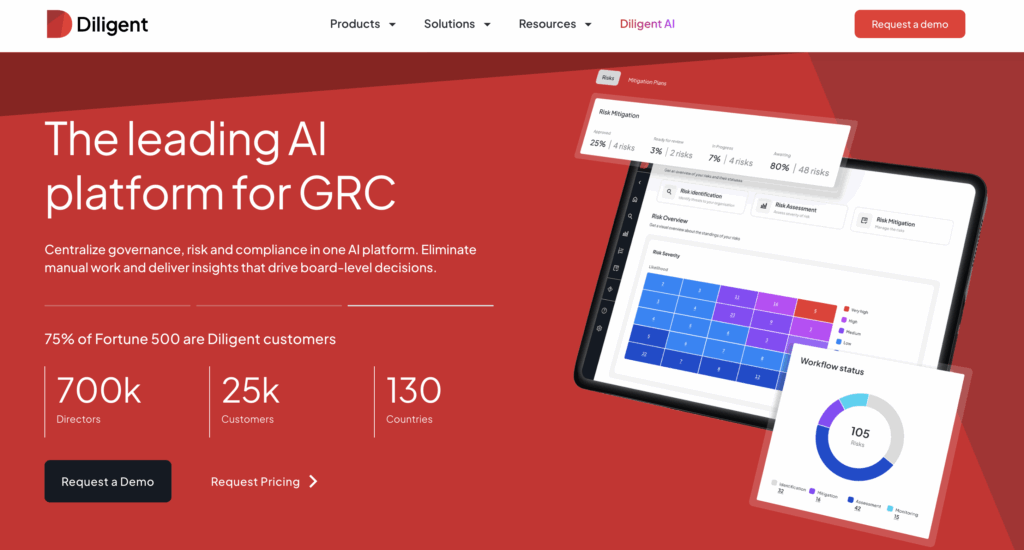
Diligent GRC is an AI-powered tool that helps organizations minimize risks, prepare for audits, and adhere to regulatory standards under clear internal protocols. This compliance reporting system serves as a unified source of truth, providing real-time dashboards with valuable insights from data-driven decisions for organizations.
Features:
- Diligent One Platform that unifies all GRC applications
- AI-powered analytics and tracker for regulation changes and suggesting controls
- Automated monitoring and testing for compliance gaps
- Live dashboards with compliance metrics
- ESG metrics, third-party risk management, and policy tracking
Diligent pros and cons
Pros
- Real-time regulatory and risk tracking
- Scalable solution for complex enterprises
- Unified platform for compliance management
Cons
- Prices and details of plans are not transparent
- Platform functions may seem confusing and require input from the Diligent team
Pricing
Exact details of Diligent pricing plans are available on the demo call.
5. Drata
Best for: businesses that are interested in constant monitoring.
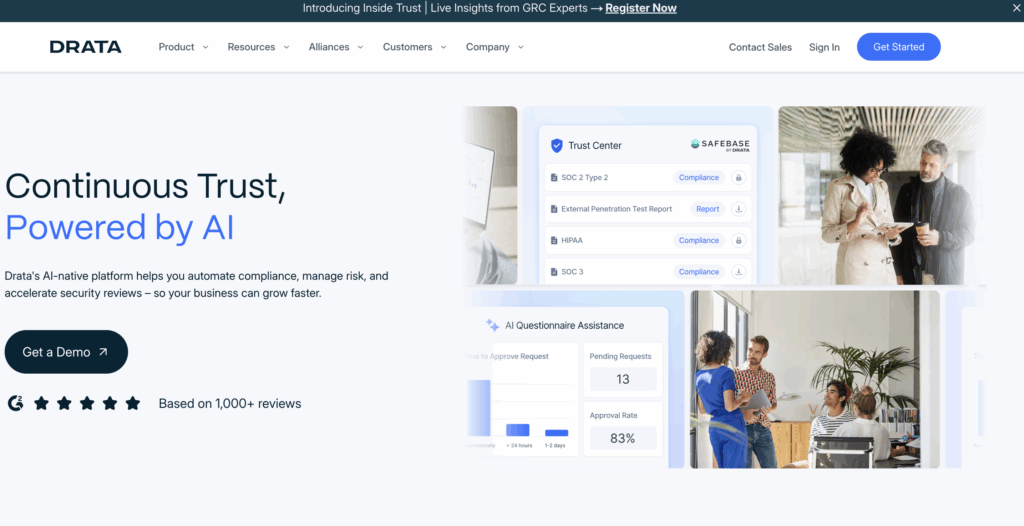
Drata provides an AI-native GRC platform for automated compliance, centralized risk governance, and enhanced security. This single, scalable platform minimizes manual input and delivers insights for proactive compliance, risk management, and business acceleration.
Features:
- Compliance with SOC 2, ISO 27001, ISO 42001, HIPAA, GDPR, and more
- Automated governance for reducing delays and scaling
- Trust Center that manages and publishes the security posture
- Vendor risk management
- AI Questionnaire assistance for automated security reviews
Drata pros and cons
Pros
- Centralized GRC platform with data privacy and industry standards compliance capabilities
- Scalable solution for multiple enterprise sizes
- Vendor risk management AI tool
Cons
- The service needs a demo to set up and get prices
- Steep learning curve for non-technical teams
Pricing
Drata asks clients to participate in a demo to discuss the details and pricing plans.
6. Zluri
Best for: IT teams managing access across multiple cloud applications.
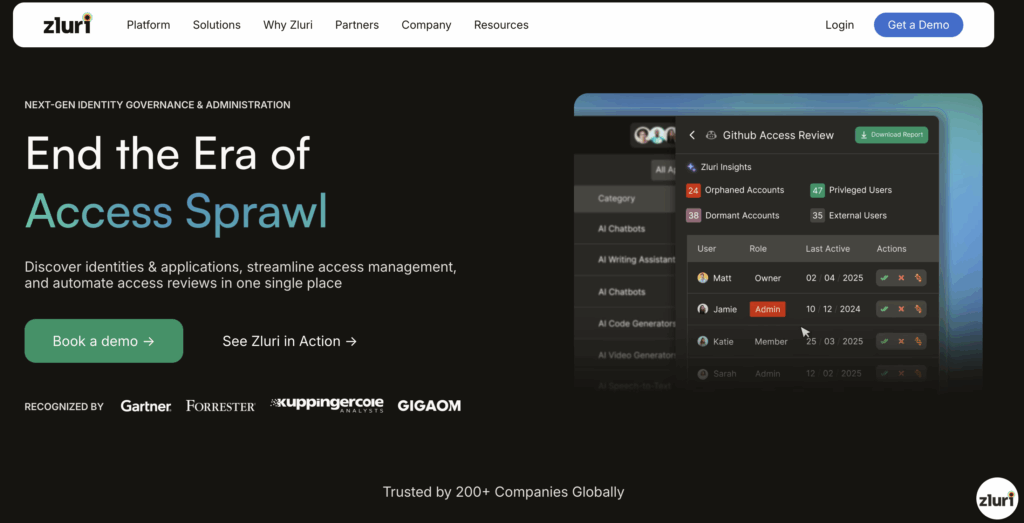
Zluri provides a SaaS management and compliance tool that automates software asset management, audits, and governance. It features risk assessments, policy-driven access controls, threat alerts, audit reports, and lifecycle management of user access and SaaS services.
Features:
- A vast integration catalog that features Google Workplace, Microsoft 365, Zoom, Zendesk, Slack, Asana, Salesforce and many more
- Compliance with SOC 2, ISO 27001, HIPAA, SOX ITGC, and PCI DSS
- SaaS management with access discovery, shadow IT and AI monitoring, IT cost management, and contracts management
- No-code policy builder for access management
- Tools for automated access requests
- End-to-end automation for simplified audits, access remediation, and strengthened security posture
Zluri pros and cons
Pros
- Full SaaS lifecycle management
- Adaptive automation to business needs
- Ability to discover multiple identities, apps, and activities and automate their compliance and access controls
Cons
- Cloud-dependent thus requires online connectivity to sync
- Need to contact the team to explore pricing options
Pricing
To see the prices and plans, you need to request a Zluri demo call.
7. MetricStream
Best for: templates and pre-built compliance schedules and evaluations.
MetricsStream GRC streamlines compliance, risk management, and audits across enterprises. The platform provides centralized risk assessments, regulatory mapping, automated monitoring, policy and audit management, and real-time reports. Its AI tools qualify risks and deliver regulatory insights for proactive mitigation.
Features:
- Compliance with CCPA, HIPAA, ISO 27000 series, NIST, and PCI DSP
- Predefined templates and schedules for IT compliance surveys, certifications, and self-evaluations
- Predefined criteria and checklists for automatic assessments
- Tools for systematic and quick issue and remediation management
MetricStream pros and cons
Pros
- Wide range of enterprise and operational risk management tools
- AI and automation to improve efficiency and reduce manual workloads
- Predefined templates for easy adoption
Cons
- Non-transparent prices and subscription details
- Platform customization may require extra effort
Pricing
Book a demo call with the team to get more pricing details.
8. Cyera
Best for: small companies interested in trying various compliance reporting tool options.
Cyera offers an AI-native data security platform designed for hybrid and cloud environments, making data compliance easier with smart automation. For this, it automatically identifies, maps, and classifies sensitive data throughout your digital footprint, monitors activities in real-time, and simplifies compliance reporting processes.
Features:
- Comprehensive insight into data residency, access patterns, and data usage to support data governance
- Automated detection and accurate classification of sensitive data across cloud, SaaS, and on-premises environments
- Integration with AWS, Azure, and Google Cloud for holistic data security posture management
- Continuous monitoring of data compliance posture and real-time detection of privacy risks and policy violations
- Streamlined processing of Data Subject Requests (DSRs) using automated workflows for verification and handling auditability
- AI-driven risk evaluations and step-by-step remediation guidance aligned with the GDPR, CCPA, HIPAA, and more
Cyera pros and cons
Pros
- Data security focus, empowered by AI tools
- Real-time monitoring and alerts
- Scalable and flexible for different enterprises
Cons
- Prices and plans are not transparent
- Automation capabilities are still limited
Pricing
Pricing for Cyera plans are available upon request.
9. Sprinto
Best for: fast-growing companies looking for numerous features in one compliance reporting system.
Sprinto provides a GRC automation platform that speeds up compliance by automating workflows, evidence collection, and control monitoring. It features risk assessment modules, role-based task management, cloud integration, audit-ready evidence sharing, and a centralized dashboard.
Supporting over 200 integrations, it enables real-time monitoring and proactive remediation, reduces manual efforts, improves audit readiness, and offers collaboration tools for auditors and compliance teams.
Features:
- Compliance with SOC 2, HIPAA, GDPR, ISO 27001, ISO 27017, CCPA, and more
- Vulnerability management module that integrates with other scanning tools
- Vendor risk management with empirical risk assessments and breach monitoring
- Ticket-based change tracking with real-time monitoring of compliance controls
- Adaptive access policies tools based on dynamic, contextual factors
- End-to-end audit management to demonstrate compliance with clarity
Sprinto pros and cons
Pros
- Automated evidence collection, control monitoring, and documentation
- Connects with over 200 popular platforms (AWS, Azure, Google Cloud, and more)
- A vast range of platform features
Cons
- No pricing plan details available on the website
- Requires an app to function fully
Pricing
To get Sprinto prices, you need to request a demo from their team.
10. Libryo
Best for: companies in the environment, health, and safety (EHS) sectors.
Libryo provides an AI-powered EHS platform that helps organizations track, understand, and manage legal obligations. It offers real-time updates, tailored legal registers, and summaries with translations for global teams. Libryo centralizes compliance documents, risk assessments, and audit trails to boost accountability and transparency.
Features:
- AI-Native EHS regulatory intelligence solution that can filter and track local laws for compliance teams
- Audit readiness support with regulatory reporting, risk assessments, compliance tasks, and actionable steps
- Centralized document and task management with task assignment and progress tracking tools
- Tools to translate complex legal documents into simpler sentences and many languages
- Compliance with ISO standards (14001, 9001, 45001, 27001, 22000, 50001)
Libryo pros and cons
Pros
- Ability to set real-time legal updates and notifications
- Integration capabilities with other compliance reporting tools
- Supports a vast range of ISO standards
Cons
- Limited to three industries (environment, health, and safety)
- Prices and plans are not transparent on the website
Pricing
Request a demo call to get details about Libryo prices and subscription plans.
11. LogicGate
Best for: companies interested in multiple compliance reporting services in one solution.
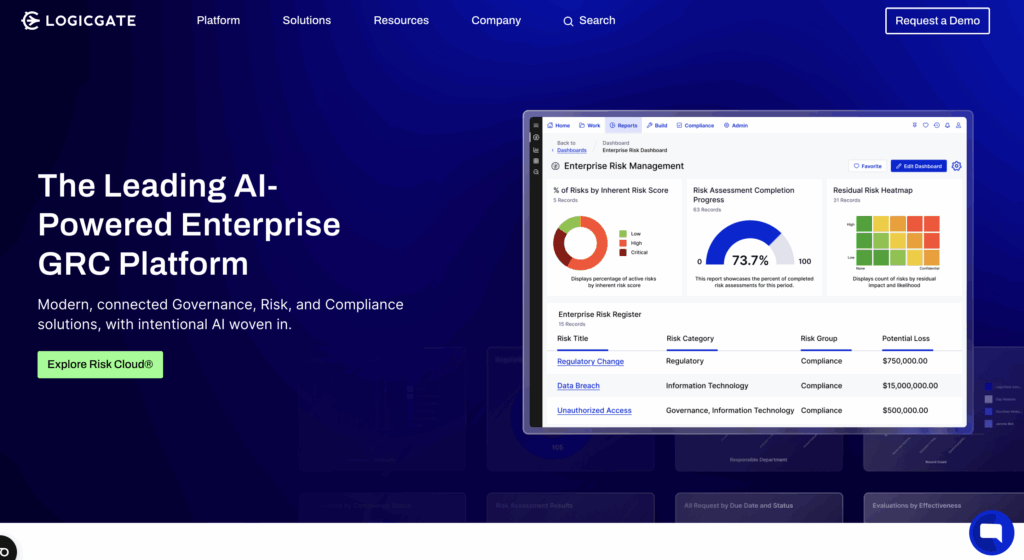
LogicGate offers a Risk Cloud platform that lets companies build compliance solutions without coding. It simplifies regulatory management by consolidating risk data and automating workflow tasks for risk management, audits, and reporting, reducing complexity.
Features:
- Governance and policy tools for ethical conduct and clear role definitions
- Automated risk assessments, mitigation workflows, and evidence collection
- Compliance and audit tools for scalable growth within legal and regulatory boundaries
- Supports integration with multiple security and privacy frameworks like ISO, NIST, HIPAA, GDPR, and more
- A unified platform for governance, compliance, and third-party risk information
LogicGate pros and cons
Pros
- No-code tools for compliance workflow modeling
- Highly adaptive tools for diverse organizational needs
- Centralizes risk, compliance, audit, and incident management in one platform
Cons
- Limited customization abilities
- No pricing available on the website
Pricing
Book an intro call with LogicGate sales to discuss the pricing options.
12. AuditBoard
Best for: businesses interested in compliance reporting tools with customizable risk assessment and audit abilities.
AuditBoard is a GRC platform that offers centralized dashboards with real-time compliance, KPIs, and risk data. Enhanced automation helps with efficiency, teamwork, and accountability, reduces manual effort, and improves audit readiness checks.
Features:
- Compliance with SOX, GDPR, HIPAA, ISO, NIST, PCI, and more
- A unified platform that integrates risk management, audit, and compliance functions
- Live editing, commenting, and task tracking collaborative tools
- 200+ third-party app integrations (Jira, Snowflake, ServiceNow, and more)
- Custom dashboards and reporting for visual risk overviews, drag-and-drop reporting, and version history
AuditBoard pros and cons
Pros
- Advanced reporting and analytics for data-driven decision-making
- Robust risk assessment and policy management tools
- Strong audit trail capabilities
Cons
- Complexity in building dashboards
- Pricing plans are not transparent
Pricing
To see the prices and available pricing plans, you need to book a demo with the AuditBoard team.
13. HSI Donesafe
Best for: simple yet flexible EHS compliance reporting services that can scale up in complexity.
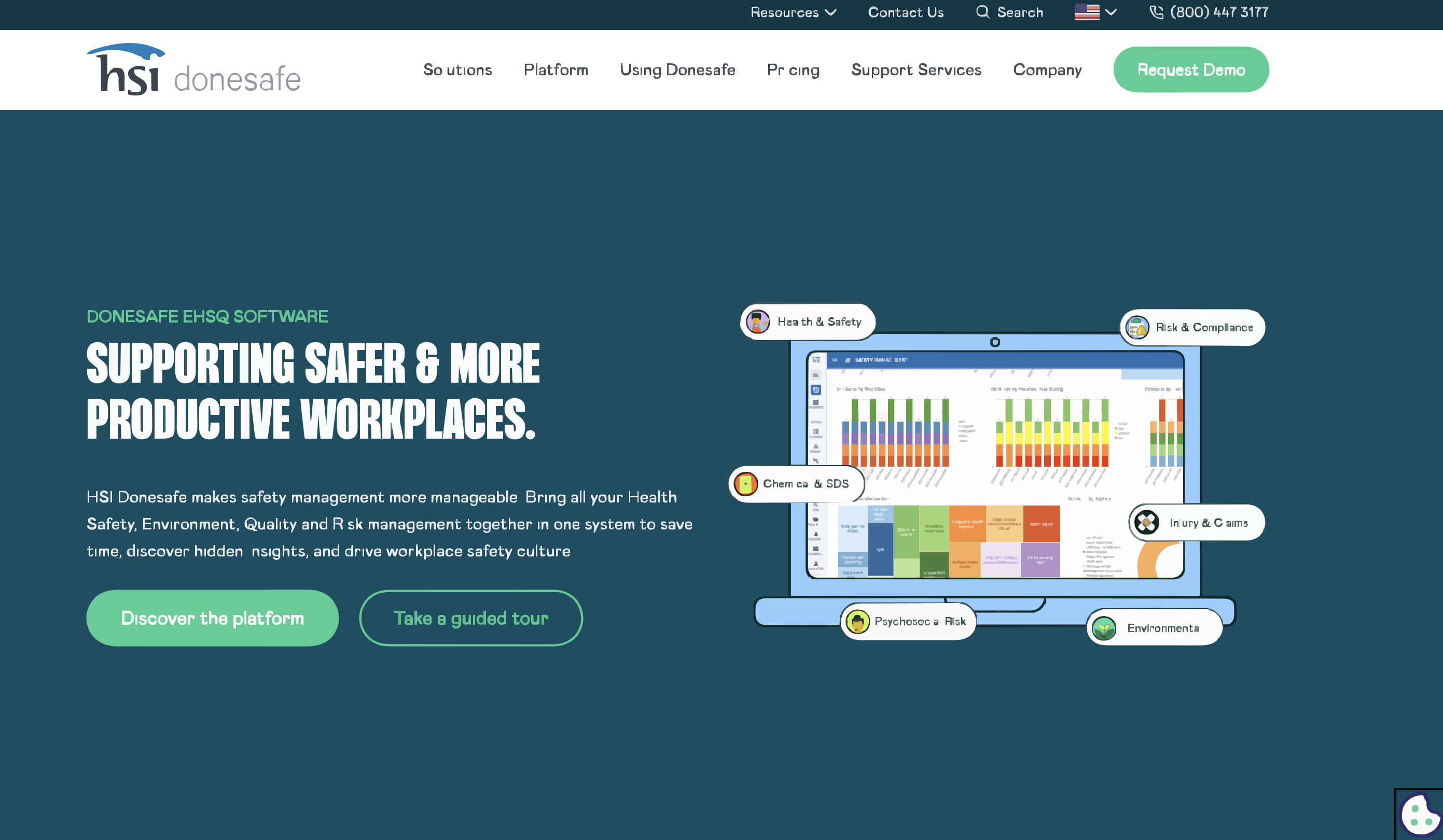
HSI Donesafe provides a cloud-based EHS platform that unifies environmental, health, safety, quality, and risk management by linking risk data, incident reports, and audits for real-time monitoring. Its modular design allows for customization and expansion, making it ideal for industries with complex regulations.
Features:
- 60+ modules to customize the platform
- Detailed reports by role, team, trends, metrics, root causes, and more
- Compliance with GDPR, ISO 27001, 31000, 45001, and more
- Live dashboards with key safety and compliance statistics
HSI Donesafe pros and cons
Pros
- Modular dashboard structure that can grow with your needs
- No-code design
- Offline and online functionality
Cons
- No transparency in pricing
- Service onboarding can be difficult
Pricing
Request a demo to find out more about HSI Donesafe’s pricing policy.
How to choose among compliance reporting tools?
You should take these criteria into account:
- Regulation coverage: Critically evaluate the jurisdictions where your business operates and the laws and standards you need to comply with.
- Reporting formats: Regulations typically require compliance reporting, so check the templates or examples for relevant laws when choosing a compliance reporting system.
- Integrations: Determine if the tool’s integrations work with your existing tech stack and growth plans.
- Consent and event logs: Consent management is a requirement of many privacy regulations like the GDPR and CCPA, and logs help prove compliance and protect your organization.
- Data retention settings: Platform customization is key for data protection compliance, meaning correctly storing, managing, and deleting it. The tool you choose should help your business employ these principles.
- Global compliance frameworks: The number of regulations requiring ongoing compliance operations increases as your business scales, and the tool you choose should have the necessary modules and flexibility for expansion.

Join our growing community of data privacy enthusiasts now. Subscribe to the Usercentrics newsletter and get the latest updates right in your inbox.
