
For most businesses, data is everything. That means that if your data is a mess, your business is courting chaos. Data governance best practices aim to prevent that from happening. They function like air traffic control to oversee how validated data travels through secure channels to trusted endpoints and users.
This data governance guide will demonstrate how your business can go from data chaos to data-driven business efficacy, customer trust, and privacy compliance.
What is data governance?
Data governance practices make up the data management framework that provides a structured approach to data-related processes within an organization. In other words, data governance is a reliable system for organizing and controlling data.
Data governance encompasses the policies, internal rules, and processes for data-related operations. It makes data easier to track, control, and predict. In this way, it supports compliance with data privacy regulations like California’s Consumer Privacy Act (CCPA) and the EU’s General Data Protection Regulation (GDPR).
Data governance activities help organizations protect and manage data across operations by enhancing its quality, controlling access, reducing silos, and enforcing privacy and security compliance.
Data governance, data management, and data compliance: What’s the difference?
While frequently used interchangeably, data governance, data management, and data compliance differ in their purposes:
- Data governance establishes the rules and policies for data use.
- Data management focuses on handling and using data in accordance with those governance rules.
- Data compliance aligns data practices with external legal requirements and industry standards for data collection, handling, and use.
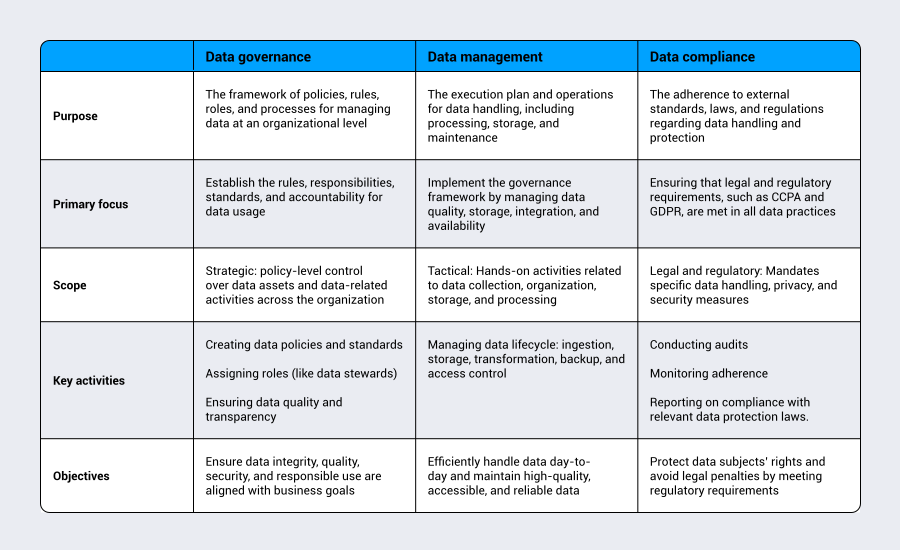
The table below provides a more detailed comparison among data governance, data management, and data compliance.
| Data governance | Data management | Data compliance | |
| Purpose | Provides a framework of policies, rules, roles, and processes for managing data at an organizational level | Creates an actionable plan for data handling, including processing, storage, and maintenance | Supports meeting external standards, frameworks, and regulatory requirements regarding data handling and protection |
| Primary focus | Establishes the rules, responsibilities, standards, and accountability for data usage | Implements the governance framework by managing data quality, storage, integration, and availability | Complying with policy and regulatory requirements, such as from the CCPA and GDPR |
| Scope | Strategic: policy-level control over data assets and data-related activities across the organization | Tactical: hands-on activities related to data collection, organization, storage, and processing | Legal: mandates specific data handling, privacy, and security measures based on relevant data privacy laws, frameworks, and policies |
| Key activities | – Creating data policies and standards – Assigning roles (like data stewards) – Promoting data quality and transparency | Managing the data lifecycle, which includes collection, activation, storage, transformation, backup, and access control | – Conducting audits – Monitoring adherence – Reporting on compliance with relevant data protection laws |
| Objectives | Aligning data integrity, quality, security, and responsible use with business goals | Efficiently handling data day to day and maintaining high quality, accessibility, and reliability | Protecting data subjects’ rights and avoiding legal, financial, and operational penalties by meeting regulatory requirements |
Best practices in data governance set rules and responsibilities within a strategic framework, while data management introduces its practical implementation. Meanwhile, data compliance aligns data activities with external legal and regulatory standards.
Why data governance matters for modern businesses
By establishing rules, assigning responsibilities, and using the right management tools, a data governance framework keeps your organizational data accurate, protected, and cleared to use.
These improvements matter as the world increasingly relies on data. Best practices in data governance help your organization:
- Continuously optimize data accuracy, consistency, and integrity: Data governance principles and practices aim to ensure data quality, accuracy, and consistency throughout organizations. Functions include data stewardship, quality controls, and audits to verify data integrity.
- Strengthen privacy compliance: Governance frameworks incorporate privacy requirements and rely on tools like compliance audit software to automate reporting and make compliance easier.
- Support data-driven decision-making: Data governance provides decision-makers with access to high-quality, reliable data to conduct more accurate forecasting, allocate resources more efficiently, and stay ahead of market trends.
- Reduce security and regulatory risks: A data governance program enforces security and access controls, reducing breaches that cause penalties and damage. It supports CCPA and GDPR compliance through accountability and traceability, simplifying audits and mitigating legal risks.
- Build customer trust: Data governance demonstrates a commitment to data privacy and protection that customers value.
- Maximize data ROI: Strong data governance helps organizations invest in data analytics and business intelligence and get more actionable insights from them.
Core principles of effective data governance
The core principles of effective data governance include:
- Accountability and ownership: Specifying ownership and management of each dataset supports data quality, security, accountability, and regulatory compliance.
- Transparency and documentation: Keeping clear records of the data lifecycle, policies, and activity logs fosters trust and simplifies audits.
- Security and privacy by design: Embedding encryption, access controls, and privacy requirements into systems and processes from the outset protects sensitive data throughout its lifecycle.
- Data quality and lifecycle management: Data accuracy, completeness, and consistency, alongside timely updates, all maintain data trustworthiness and support effective decision-making.
These principles strengthen data management inside an organization and make responsibilities and transparency visible to its external stakeholders.
10 tips for data governance best practices
Given the complexity of data governance tasks, relying on best practices for data governance will help you streamline operations and promote data integrity, regulatory compliance, and security.
Create a data governance team structure with clear roles
Data responsibility starts with assigning clear roles and accountability levels. Within your organization, consider assigning:
- Data owners who will be directly responsible for data
- Data stewards who will oversee its quality
- Data custodians that are responsible for managing data security
Extra data governance roles and responsibilities
With time, you can add more roles and assign more detailed responsibilities as relevant to your business context and corporate culture. For example:
- Data Protection Officer (DPO)to oversee the data privacy strategy, act as a liaison, and assume responsibility for compliance with the GDPR and other regulations
- IT and security teams, who will implement technical controls, support data infrastructure security, manage access permissions, and continuously monitor for security threats
- Legal and compliance departments to monitor changes in data privacy regulations, conduct regular audits, and implement changes to your data governance framework to address potential risks
- Executive leadership, who will be responsible for setting data governance priorities, assigning resources, and leading data governance culture
Risk management, HR, and other teams may carry out specific risk assessments, protect data used for marketing, and handle other data quality responsibilities.
Create a unified data governance framework
While strategizing your data governance plan, draft general policies, procedures, and rules as early as possible. Create a roadmap of your current data-related activities and consider possible changes on the framework level for more effective data governance implementation.
Establish data classification and access controls
As you collect data, classify it by sensitivity, and enforce strict access controls to protect confidential information from unauthorized use. To achieve both privacy by design and privacy compliance, implement data anonymization and data minimization practices.
Comply with privacy regulations
Data compliance is central to good data governance. To achieve regulatory compliance, make sure you understand and are able to implement the requirements of the relevant regulations based on jurisdictions where your business operates. Requirements may include the principles of the GDPR, U.S. state-level data privacy laws, or other region-specific regulations.
Maintain up-to-date data inventories and flow maps
Your data governance framework should both set the foundation for data management and address feedback and necessary changes after it has been implemented. Assign someone the responsibility for keeping records of data journeys and flow maps within your organization to identify changes and possible risks, and make adjustments.
Implement consent and preference management systems
To build customer trust as the outcome of data governance, consider investing in a consent management platform (CMP). This way, you can automate data privacy while offering users transparent choices to manage their personal data.
Develop clear data retention and deletion policies
Many data privacy laws require you to retain data only for as long as it’s needed to fulfill your stated purpose. Establish timelines and procedures for storing and securely disposing of data at the governance level. This will help you maintain privacy compliance and minimize unnecessary risks.
Regularly audit and monitor your data handling practices
Regular audits with actionable outcomes are as important as having a clear data governance foundation. Assign a responsible person to oversee a regular calendar of ongoing reviews and inspections to identify breaches, inefficiencies, or noncompliance in advance.
Educate employees on data protection and compliance
Conduct regular staff training that clarifies data privacy requirements and data governance principles — framed to the company’s operations — to promote a culture of data responsibility.
In training, make sure you introduce role-based content so that employees understand their specific roles, responsibilities, and procedures in different scenarios relevant to their positions.
Use automation and technology to enforce governance rules
Maintaining privacy compliance is an ongoing task that can be complex. Using software to automate this, as well as data classification and access management, can help you better manage privacy compliance as regulations evolve.
How to overcome the most common data governance challenges
While implementing data governance best practices, organizations may face several challenges. Here are the most common and what you can do to overcome them:
Data silos and inconsistent ownership
Silos can cause data to lose its quality as it moves (or doesn’t) across departments, especially when the teams have conflicting interests. To mitigate fragmentation risks and improve consistency, invest in centralized data platforms with integrated pipelines and clear data ownership roles.
Lack of clear accountability
Clearly defined responsibilities within the data governance team structure will help you achieve an actionable and effective data governance system. Establishing those responsibilities will help prevent internal conflicts and miscommunication.
Outdated systems and manual processes
Legacy IT systems can become a major obstacle to big data governance. Introducing automated workflows with real-time data synchronization can address this problem as your business scales.
Balancing innovation with privacy compliance
The growing reliance on AI and big data can make it difficult to balance rapid experimentation with ongoing regulatory compliance. Detailed policies and regular audits create a system in which good data governance practices address real business challenges.
How to implement a data governance framework
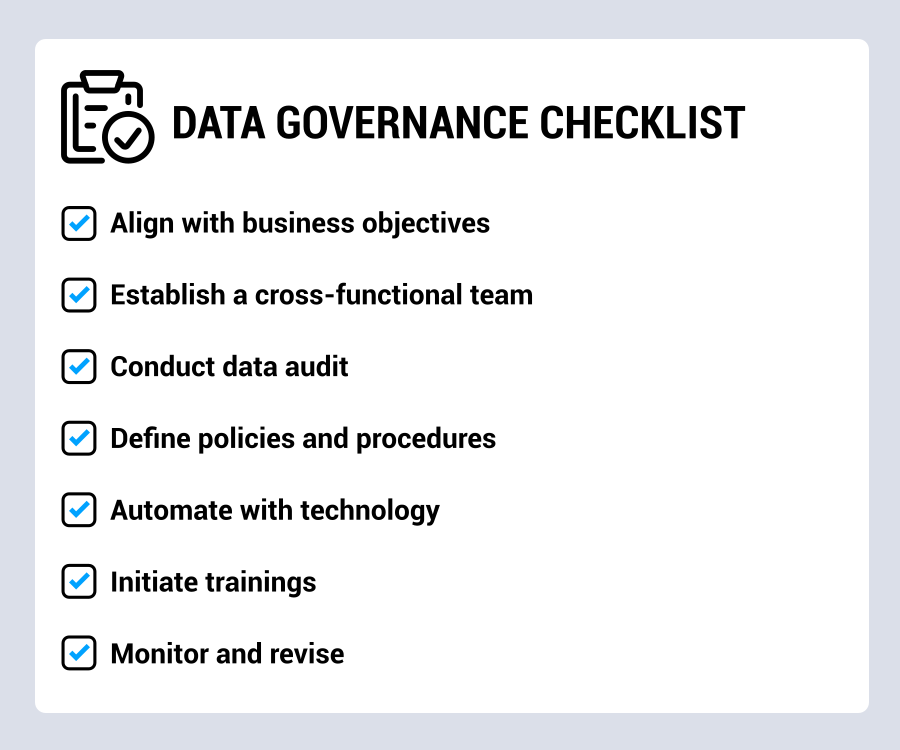
Here are step-by-step instructions for the implementation of data governance:
- Align governance with business objectives: Define clear goals tailored to your business needs. Focus on data domains that are vital to organizational success.
- Establish a cross-functional governance team: Assign roles and responsibilities within your data governance team structure and prioritize accountability in job descriptions and performance reviews.
- Conduct a data audit: Make an inventory of data assets, sources, users, and storage formats to assess data quality, privacy risks, and privacy compliance gaps.
- Define policies and standards: Based on the developed roadmap, document operational rules and establish detailed policies for data classification, access controls, retention, and deletion.
- Implement supporting technology: Integrate automated tools for data mapping, metadata management, compliance tracking, and quality monitoring.
- Train personnel: At the leadership level, communicate the data governance workflow and introduce regular training sessions to keep awareness and engagement high.
- Constantly monitor, measure, and refine your data governance strategies: Use defined metrics to evaluate how mature your governance is and how effective your policies are.
Tools and technologies for data governance
Here are some specific tools and technologies you can use for data governance implementation:
- Data catalog and lineage tools: These are useful for creating an inventory of data assets, documenting metadata, origins, and data lineage that data stewards can rely on.
- Security and access control systems: These tools help you to implement data access policies by regulating who can view or alter data according to their roles and privileges.
- Automated privacy compliance monitoring: Constantly monitor data environments for compliance with automated tools that immediately flag issues or policy breaches.
- Consent management platforms: CMPs like Usercentrics CMP handle user consent for data collection and processing, including consent signaling throughout the marketing ecosystem. They help ensure organizations comply with privacy laws, frameworks, and partner platforms’ policies. These tools automate the process of obtaining and managing user permissions across websites, apps, and other connected platforms, giving people control over their data preferences.
How Usercentrics supports data governance and compliance
The Usercentrics CMP will help your organization achieve centralized consent and preference management with data transparency and audit readiness.
When you prioritize user-friendly, scalable platforms, it enhances cross-team collaboration, streamlines governance workflows, and improves adaptability in the face of changing data landscapes.
Usercentrics CMP enables organizations to centralize and automate their data privacy compliance while integrating with customer relationship management software, tag managers, and the rest of the marketing tech stack for greater usability.

Join our growing community of data privacy enthusiasts now. Subscribe to the Usercentrics newsletter and get the latest updates right in your inbox.
