

The European Union’s General Data Protection Regulation (GDPR) is complex, covering a wide range of business operations and ways that personal data is handled. For team members to understand how they contribute to ongoing compliance, they need GDPR training.
It’s important that employees understand the importance of this training, rather than imagining just another boring meeting with complex terms and hard-to-follow logic.
But GDPR awareness training is necessary — and not just once. Maintaining compliance is an ongoing process, and the role of a GDPR meeting is to clarify each participant’s responsibility for compliance as it pertains to the regulation’s requirements. Below, we’ll cover how to design your own program to make GDPR compliance accessible.
What is GDPR training?
GDPR awareness training for employees consists of a series of meetings that help everyone in a company who deals with personal data understand the basics of privacy compliance and how to apply data privacy priorities, processes, and activities on a day-to-day basis.
GDPR courses should equip employees with the information and skills they need to make decisions that enable their work and the company’s operations to be compliant with the GDPR.
The goals of data protection training are:
- Make the principles of the GDPR more familiar and applicable
- Discuss and solve common misconceptions about GDPR definitions
- Provide a GDPR overview with relevant, practical examples
- Reframe the data protection mindset so that privacy compliance is built into daily practices
GDPR compliance training is a tool to align your business practices with current data protection regulations.
Why GDPR training is crucial for business
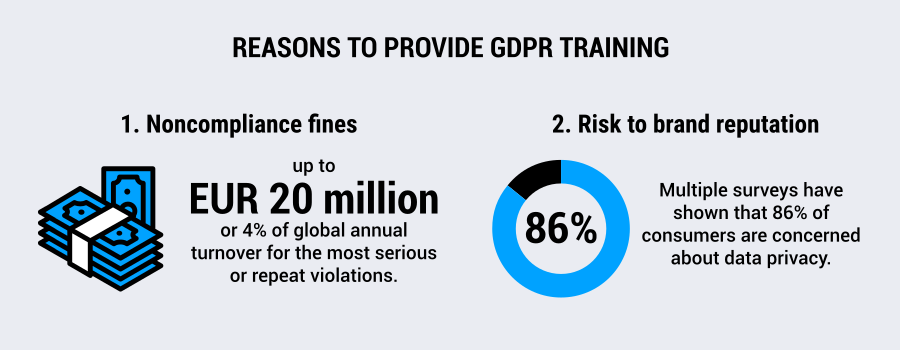
In the EU, non-compliance with the GDPR can lead to severe penalties, reaching up to four percent of global annual turnover or EUR 20 million, whichever is higher.
In addition to monetary losses, businesses risk reputational damage. Based on recent data privacy statistics, up to 86 percent of Americans consider data privacy to be a growing concern. Data breaches mean significant loss in customer trust, in addition to operational disruptions and legal liability.
Other reasons for data protection training for staff include:
- Promoting compliance with data protection laws
- Improving data quality and storage practices
- Educating employees on proper personal data handling
- Simplifying compliance activities to streamline business processes
- Proactively demonstrating commitment to personal data protection to invest in stakeholder trust, confidence, and loyalty
- Giving staff confidence and a clear understanding of their role in data privacy protection
- Building privacy by design into your business
How data training for employees establishes privacy by design as a competitive advantage
GDPR awareness training for employees helps to establish company-wide understanding of what is required for GDPR compliance.
By making data privacy foundational, businesses make data protection and compliance the default for employees. GDPR training adds practical understanding of how GDPR compliance works on the decision-making level.
Privacy by design is a unique competitive advantage. Not every business prioritizes it, because building this culture requires maintenance and effort.
Businesses should be ready to establish a comprehensive framework of policies and procedures beyond single measures, like holding regular GDPR courses and implementing GDPR compliance software. But given the rising customer concern with data privacy, privacy by design is worth the effort.
Is data protection training obligatory for businesses?
Art. 39 GDPR includes conducting compliance training in the list of direct responsibilities of the Data Protection Officer (DPO). However, not all organizations require this role, so training may be handled by another privacy officer. It also advises data controllers and processors on their GDPR obligations, including monitoring compliance.
GDPR articles that relate to corporate responsibility and accountability in the context of GDPR training includes:
- Art. 5(1)(f) GDPR sets the principle of integrity and confidentiality
- Art. 25 GDPR requires organizations to implement data protection by design
- Art. 39 GDPR assigns DPOs the task of monitoring compliance, which includes raising awareness and training staff
Who needs GDPR compliance training in your organization?
Here is the list of roles that are likely to have access to personal data. That means they’re among those with the most responsibility for GDPR compliance-focused activities and should attend your GDPR training:
- Data protection officers under the Art. 39 GDPR requirement
- HR managers who handle employee, applicant, and contractor data
- Marketing teams, who work with customer data and consent information
- IT teams, because they manage data security, encryption, and access controls
- Customer service and sales staff, as they handle support and individual data requests
- Contractors and third-party partners, since they handle personal data for the organization (though the controller ultimately bears the most compliance responsibility)
This list is not exhaustive. Those who work with personal information (PI) differ among organizations, so you should consider the specifics of your business and include anyone who has access to and uses personal data as part of their work.
Topics to cover in your data protection course
The exact curriculum of your GDPR courses will depend on your business context and company needs. Still, there are some topics that most GDPR training programs cover:
- Personal data and data subject rights: Introduce what personal data is, who data subjects are, and how the eight fundamental rights work in practice.
- Data processing principles and lawful bases: Provide a GDPR overview that explains the lawful grounds for processing personal data (consent, contract, legal obligation, vital interests, public tasks, or legitimate interests).
- Handling data breaches and reporting protocols: Design, discuss, and present a crisis management plan for handling data breaches.
- Data retention and data minimization: Cover practical steps for limiting data collection and storage timeframes, and create a calendar for data audits, regular reviews, and deletion.
- Consent management and transparency: Provide team members with best practices for obtaining, documenting, and managing user consents, including ensuring data processing stops if consent is withdrawn.
International data transfers: Explain the role of data privacy and the various agreements and mechanisms (like standard contractual clauses) that enable adequacy for cross-border flow of data.
How to create a GDPR training program
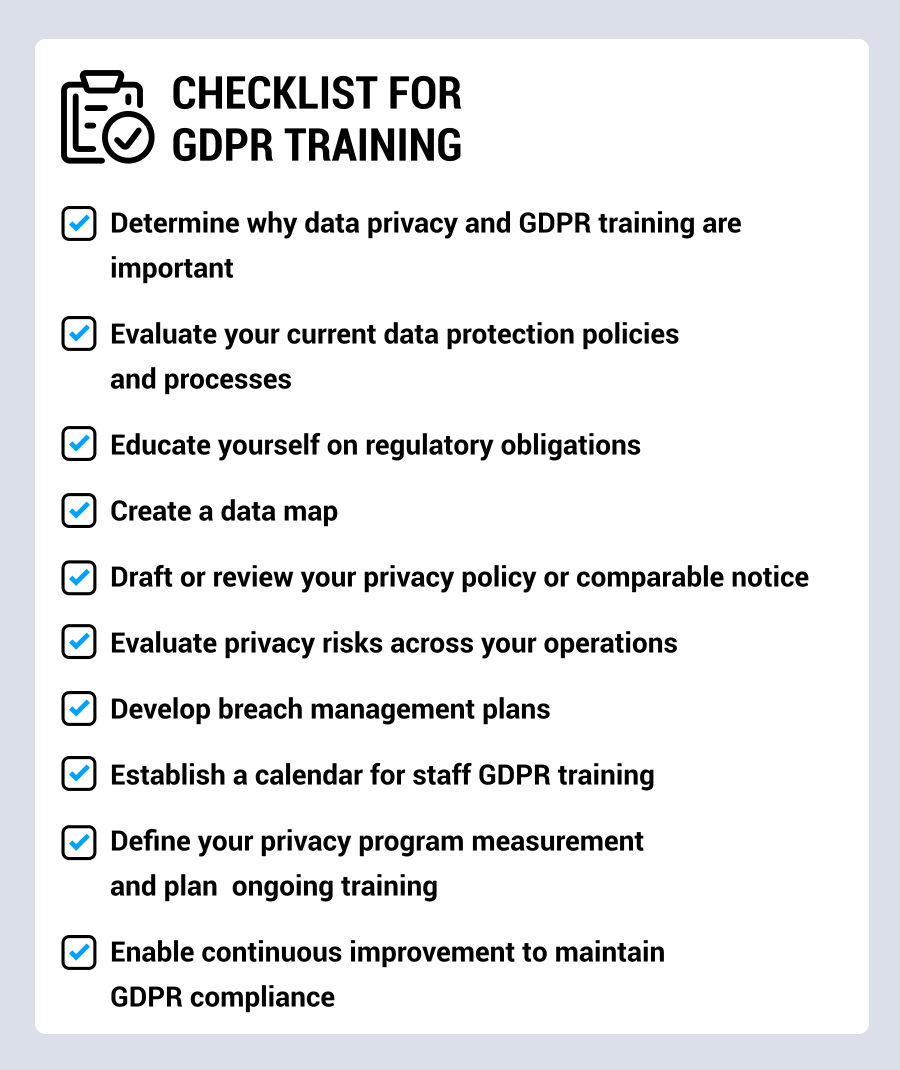
There is no one right way to build a GDPR staff training program, but here are ten steps we recommend following when designing yours:
1. Identify your data privacy drivers
Determine your main “whys” for your business to prioritize your data protection course. Reasons can include regulatory compliance, competitive advantages, customer trust, or data protection risk management.
Evaluate the state of your current data protection processes
Conduct a Strengths, Weaknesses, Opportunities, and Threats (SWOT) analysis to benchmark where you’re starting from.
Educate yourself on regulatory obligations
Determine which privacy laws, guidelines, partner policies, and other obligations affect your business, whether that includes the GDPR, US state-level data privacy laws, industry-specific laws, or any other regulations.
Create a data map
Create an inventory of all data sources, destinations, and journeys, as well as everyone who has access at each point.
Draft comprehensive policies and a plan for updates
Create detailed data protection policies based on your organization’s data map that show how personal data is collected, processed, and shared. Ensure that your privacy policy and other relevant documents are regularly updated as data processing operations, technologies in use, and legal requirements change.
Evaluate your operational privacy risks
For each policy, identify gaps, vulnerabilities, and determine appropriate controls.
Design breach management plans
Based on identified vulnerabilities, create procedures to handle breaches, including how you will identify a breach, investigate it, and notify authorities and (when required) impacted users within the mandated time frame.
Establish a calendar for data protection training for staff
Create a syllabus for your course that includes a manageable timeline and when future training will happen.
Set up measurement indicators for improvement and success
These may include KPIs, tracking metrics, regular refreshers, and quizzes to see what information is being retained. You should also regularly audit data handling operations to identify issues and areas for training reinforcement.
Enable continuous improvement
Provide your staff with ongoing tools and resources, and be ready to collect and respond to feedback from customers, employees, and other stakeholders.
During the training, we recommend engaging teams with role-based learning. In practice, it means adjusting the content and real-life examples provided during the GDPR training to the needs of each department. If you have the time and resources, you can also create separate GDPR courses for each team.
For example, since marketing teams manage personal data for campaigns, their areas of responsibility include providing transparency about data collection and use, and consent management (especially for third-party systems and tools in use).
They may benefit from discussing privacy policies and different consent management platforms and their signaling capabilities, which might not be relevant for other teams.
Educating staff on GDPR principles and the importance of data privacy promotes a culture that encourages ongoing compliance. The number and structure of each organization’s GDPR courses may differ, but the goals are the same: to reach company-wide GDPR awareness and develop a proactive approach to data privacy protection and compliance.
Tools and resources for GDPR training
For further research and additional information, check out these useful resources.
EU regulations
- GDPR text and compliance guidelines: This online database of GDPR rules and recommendations also has useful information for interpretation and meeting obligations.
- European Data Protection Board (EDPB) guidelines: The EDPB provides practical guidelines and frequently asked questions on different GDPR topics, such as data subject rights, data breach handling, and data protection impact assessments.
- Usercentrics Privacy Policy Generator: Enables you to create a customized privacy policy in minutes, which addresses your specific business needs and data handling operations.
Supervisory authorities and support
GDPR enforcement is not managed centrally, but rather the EU Member States have their own Data Protection Authorities (DPAs).
In addition to investigations and punitive actions, these entities serve an educational role, providing training materials, webinars, toolkits, and case studies on GDPR compliance best practices.
Many DPAs offer advisory services or helplines so organizations can consult experts on GDPR-related questions.
Online training platforms and courses
- DPO GDPR training: Some organizations, like Deloitte or PECB, offer certification courses for data protection officers (DPOs) and compliance teams.
- Foundational GDPR e-learning platforms: Providers like GDPR.eu, IAPP CIPP certification, and others offer GDPR courses that cover a range of topics, from basics to advanced compliance.
- Industry-specific training providers: Some platforms specialize in sector-specific GDPR training for healthcare, finance, or public-sector organizations to address unique regulatory challenges.
How Usercentrics supports GDPR compliance
Usercentrics CMP helps your business implement real-life applications of the GDPR principles in your training program. Provide the required information about data processing and informed consent options, per the requirements of the GDPR and other laws.
Integrate Usercentrics CMP with your current marketing and analytics tech stack as part of your company-wide data protection framework.
Even with a complete set of tools and resources, GDPR training is an ongoing process within a broader privacy by design framework. Staff changes, as do technologies in use and relevant laws.
Tools like Usercentrics CMP help automate regulatory compliance functions while you build a privacy-first culture and secure data handling operations. Gain peace of mind while focusing resources on growing your business.
Join our growing community of data privacy enthusiasts now. Subscribe to the Usercentrics newsletter and get the latest updates right in your inbox.
