

Choosing the right cookie consent tool affects how you collect data, how reliable your analytics are, and how much trust users place in your brand. For marketers, product teams, and privacy leads, the challenge is finding a solution that works across regions, fits your existing setup, and can be managed without excessive overhead.
If you’re looking for regulatory context, our GDPR overview provides a helpful starting point.
You’ll often see overlapping terms in this space:
- Cookie consent tools usually focus on collecting user choices through banners and controls.
- A cookie consent manager adds more structure through automation, integrations, and preference management.
- A cookie consent management platform brings these elements together, supporting cookie scanning, consent records, and long-term compliance as your business grows.
At a glance
- Cookie consent tools help organizations collect, manage, and document user consent for use of cookies and tracking technologies in line with global privacy laws, including the GDPR and CCPA/CPRA.
- Compliant consent management improves data quality and analytics reliability by enforcing consent-based firing of cookies and tags.
- Modern consent solutions integrate with analytics, marketing platforms, Google Tag Manager, and server-side tagging to apply consent consistently across client-side and server-side environments.
- Key features to evaluate when choosing a cookie consent tool include automated cookie scanning, customizable and region-aware cookie banners, consent storage and audit logs, preference management, and tool integrations.
- The article compares 12 leading cookie consent tools (including Usercentrics, OneTrust, Cookiebot, TrustArc, Osano, Termly, iubenda, Didomi, InMobi Choice, Complianz, Axeptio, and CookieYes), outlining features, pros, cons, best-fit use cases, and pricing models.
- Get guidance on how to choose the right solution based on business size, geographic reach, tech stack complexity, and audit readiness.
Why businesses need cookie consent tools
For most organizations, consent challenges start with operations. Different regions apply different rules, marketing teams rely on multiple tools, and websites change constantly. Without the right support in place, consent quickly becomes inconsistent, hard to prove, and difficult to manage over time. That’s why cookie consent tools are necessary.
Legal requirements across regions
Privacy laws all share a common expectation: users should understand what data is collected and have meaningful control over it. How that expectation is enforced varies by region.
Under European frameworks like the GDPR, most non-essential cookies require prior consent before they are set. In the U.S., laws such as the CPRA focus more on transparency and opt-out rights, particularly around selling or sharing personal data. Brazil’s LGPD follows a consent-based approach similar to the GDPR, with its own local requirements.
For global businesses, this creates a practical challenge. Consent needs to work differently depending on where a user is located, while for many businesses it’s still managed centrally. A cookie consent manager helps apply the right logic automatically and system-wide, rather than relying on manual workarounds or region-specific versions of a site.
For a deeper look at European obligations, see our guide to GDPR compliance.
From cookie consent banners to full infrastructure
Many teams start with a CMP that enables them to display a simple cookie consent banner and quickly discover its limits. Manually updating cookie lists, hard-coding logic into tag managers, or maintaining custom scripts might work for a small site, but it doesn’t scale.
Every new marketing tool, A/B test, or embedded service can introduce new cookies. Without continuous scanning, consistent categorization, and reliable consent signals, gaps appear. What looks compliant on the surface may not match what’s actually happening in the browser.
A cookie consent management platform replaces one-off fixes with an infrastructure approach, connecting banners, consent logic, storage, and reporting into a system that can evolve as your site does.
Enforcement, trust, and credibility
Regulators increasingly expect organizations to demonstrate how user consent is collected and respected, not just that a banner exists. Enforcement actions often focus on missing consent, unclear choices, or cookies being set before users have agreed. At the same time, users are paying closer attention to how their data is handled. Clear choices, honest explanations, and consistent behavior all contribute to trust.
Efficiency over manual handling
Building and maintaining consent logic internally can be resource-intensive. It requires ongoing development time, legal interpretation, and constant testing as regulations and tools change. Dedicated user consent solutions reduce that overhead by handling updates, edge cases, and regional requirements centrally.
How cookie consent managers impact marketing and analytics
There’s a common fear that adding consent controls will automatically lead to gaps in reporting, weaker attribution, and less insight overall. In practice, the opposite is often true. When consent is handled properly, it improves the quality and reliability of the user data you collect, and makes it easier to use with confidence.
Data loss: myths vs reality
Consent doesn’t remove data at random. It changes when and how data is collected. Without a structured approach, cookies may fire before a user has made a choice, or continue running even after consent is withdrawn. This creates compliance risks and produces unreliable data that’s hard to defend or act on.
Modern cookie management tools apply consent-based logic, meaning tracking technologies only activate once the right conditions are met. While this can reduce raw data volume, it replaces guesswork with clarity. The result is smaller, cleaner datasets that better reflect user intent and can be trusted across teams.
Consent signals and modern analytics
Today’s analytics and marketing platforms are built to work with consent signals. Rather than relying on all-or-nothing tracking, they can adjust behavior based on user preferences. A consent manager passes these signals consistently to your tools, ensuring that tags fire (or don’t) in line with each user’s choices.
This approach also helps align consent with how tracking cookies are used in practice. Analytics, personalization, and advertising tags can be controlled independently, giving teams a more accurate view of performance without over-collecting data or blurring consent categories.
Client-side vs server-side consent handling
How consent is enforced matters as much as whether it exists. In a purely client-side setup, decisions are made in the browser, and tags are blocked or allowed based on the user’s choice. This works well for many use cases, but can become complex as sites scale.Server-side setups add another layer of control. By integrating consent logic with server-side tagging, consent choices can be propagated securely and consistently before data is forwarded to third parties. This improves performance, reduces unnecessary data exposure, and gives teams more control over how consent is applied across their marketing stack.

Cookie consent tool vs. consent management platform
Consent terminology is often used inconsistently, which makes comparing solutions harder than it should be. Understanding the difference between a basic cookie management tool and a full consent management platform (CMP) helps you choose a solution that matches your needs today and can scale with you over time.
What cookie consent tools typically cover
Basic cookie consent tools focus on the user-facing layer. Their main job is to present a banner, capture a user’s choice, and apply simple blocking rules based on that decision. This usually includes:


For smaller websites or region-specific use cases, this level of functionality can be enough. If your site uses a limited number of tools, operates in one regulatory environment, and doesn’t require detailed reporting, a lightweight solution may meet your needs.
What consent management platforms add
A consent management platform (CMP) goes beyond the banner. It connects consent collection with the systems needed to manage it consistently and at scale. In addition to the user-facing experience, CMPs typically provide:
- Automated cookie scanning to detect new technologies
- Cookie categorization by purpose and provider
- Consent storage with time-stamped records
- Audit logs and compliance reporting
Many CMPs are also referred to as cookie management software in commercial contexts, particularly when they focus on website consent. What distinguishes them is their ability to support multiple regions, domains, and teams while maintaining a single source of truth for consent.
When a basic tool is enough and when a CMP is required
A simple consent tool can work when requirements are limited and risk is low. As soon as complexity increases, as with multiple regions, frequent site changes, enterprise reporting, or audit readiness, the gaps become bigger.
In those cases, a CMP provides the structure needed to manage consent centrally, adapt to regulatory changes, and demonstrate privacy compliance with confidence.
Key features to look for in a cookie consent management tool
A strong cookie consent setup should be easy to manage day to day, flexible enough to adapt to change, and reliable when you need to demonstrate compliance. Use the checklist below to evaluate whether the tool can support your requirements now and as your setup grows.
Key features
Automated cookie scanning and categorization
Customizable and privacy-compliant cookie banners
Consent storage, logs, and proof of consent
Preference management and user experience
Integrations and tag management compatibility
Automated cookie scanning and categorization
Websites are dynamic, so manual tracking can quickly fall behind. New cookies are introduced whenever tools are added, scripts are updated, or content changes.
Automated scanning helps identify which tracking cookies are in use, where they come from, and what they do. This includes distinguishing between first-party and third-party cookies, detecting scripts that load dynamically, and keeping classifications up to date through continuous scans. Without this, it’s difficult to be confident that your consent setup reflects what actually happens on your site.
Customizable and privacy-compliant cookie banners
Your cookie banner is where consent becomes visible to users. It should be clear, honest, and aligned with legal requirements in each region you serve.
Look for tools that support both opt-in and opt-out logic, granular consent choices by purpose, and region-specific behavior.
For example, users in the European Union (EU) typically need to give consent before non-essential cookies are set, while U.S. frameworks focus more on opt-out and disclosure. Flexible configuration allows a single setup to support different experiences through a privacy-compliant cookie banner or cookie popup, without creating multiple versions of your site.
Consent storage, logs, and proof of consent
Collecting consent is only part of the picture. Data privacy regulations also require you to be able to demonstrate it.
A reliable solution stores consent records with time stamps, consent scope, and user preferences, and makes them accessible for audits or regulatory requests. Alignment with internal data retention policies is also important, ensuring consent data is kept only as long as necessary.
These capabilities support broader data protection compliance and reduce uncertainty when consent needs to be reviewed or validated.
Preference management and user experience
Consent isn’t a one-time action. Users should be able to review and change their choices easily.
Preference centers allow users to withdraw or adjust consent at any time, reinforcing transparency and control. Good user experience matters here: clear language, accessible design, and intuitive navigation help users understand their options and make informed decisions.
These elements should align with what you communicate in your privacy policy, creating a consistent experience across touchpoints.
Integrations and tag management compatibility
Consent only works if it connects to the tools that rely on it.
A strong solution integrates with Google Tag Manager, analytics platforms, and advertising tools so consent choices are applied consistently. Support for server-side tagging is increasingly important, allowing consent signals to be enforced before data is shared and helping teams manage performance, security, and data flows more effectively.
Top cookie consent tools compared
Usercentrics CMP
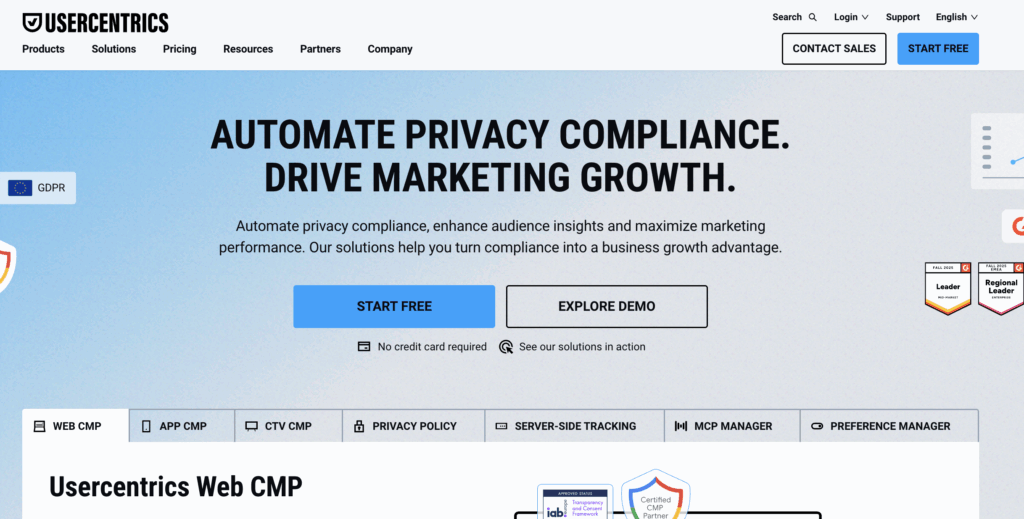
Usercentrics CMP is a consent management platform for websites or apps designed to help organizations manage cookie consent and broader privacy requirements across regions. It combines user-facing consent experiences with backend tooling for consent storage, signaling, reporting, and integrations, making it suitable for businesses operating in regulated markets.
Key features:
- Automated cookie scanning and categorization
- Configurable consent banners with regional logic
- Consent storage with detailed logs and audit-ready records
- Preference management and consent withdrawal
- Integrations with tag managers, analytics, and advertising tools
- Support for server-side consent enforcement
Best for: Mid-sized to enterprise organizations, businesses operating across multiple regions, teams that need scalable consent management with audit readiness.
Pricing: Plans start at GBP 6 per month for Essential and GBP 14 for Plus (both covering one domain), moving up to GBP 25 for Pro (three domains) and GBP 42 per month for larger operations (up to ten domains).
Pros
- Good balance between usability and compliance depth
- Supports multi-region consent requirements from a single setup
- Clear consent records and reporting for audits
- Flexible integrations for modern marketing stacks
Cons
- More features than smaller sites may need
- Setup can require initial configuration to align with complex environments
OneTrust
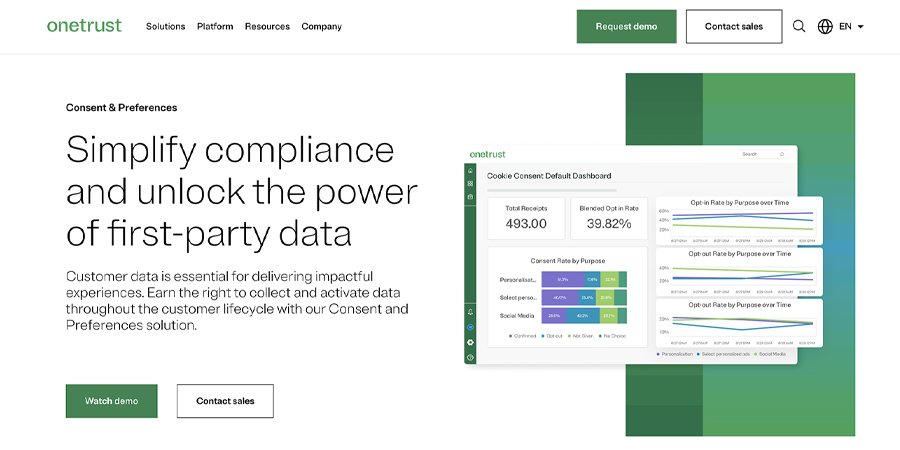
OneTrust is a broad privacy, risk, and compliance platform that includes cookie consent and preference management as part of a larger governance offering. Its consent tooling is typically used by organizations with complex regulatory, reporting, and internal governance requirements.
Key features:
- Cookie consent banners with regional configuration
- Automated cookie scanning and categorization
- Consent storage, audit logs, and reporting
- Preference and consent lifecycle management
- Integrations with analytics, marketing, and governance tools
- Support for broader privacy workflows beyond cookies
Best for: Large enterprises with mature privacy and compliance functions, organizations managing consent alongside broader GRC workflows, and teams that need extensive reporting and governance controls
Pricing: Enterprise-level pricing, typically quote-based. Costs vary depending on modules selected, traffic volume, and organizational scale
Pros
- Comprehensive platform covering consent, privacy, and risk
- Strong audit and reporting capabilities
- Suitable for complex regulatory and enterprise environments
- Integrates consent into wider compliance programs
Cons
- Interface and setup can feel complex for teams solely focused on cookie consent
- More functionality than many small marketing teams require
- Implementation often requires dedicated resources
Cookiebot by Usercentrics
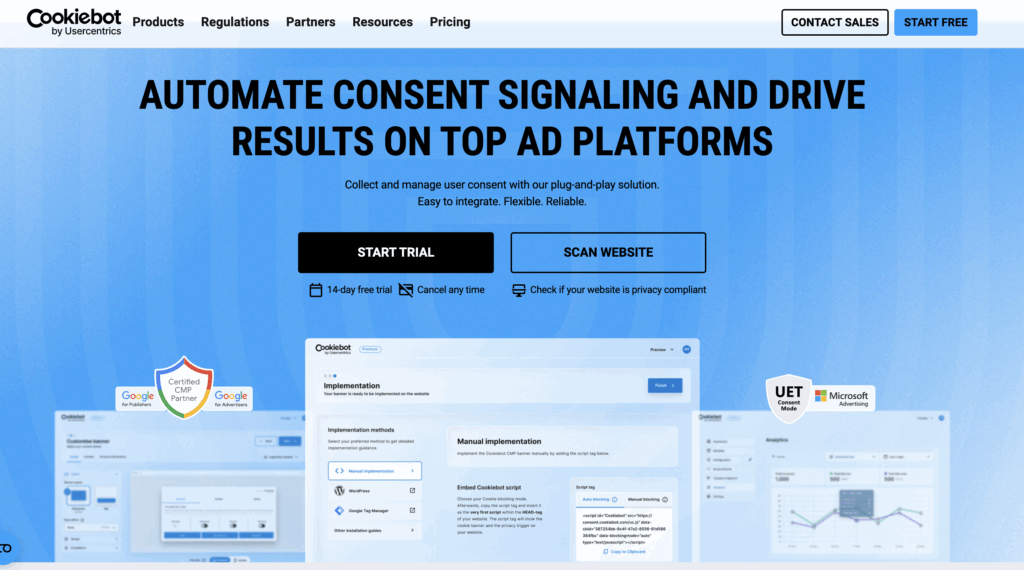
Cookiebot CMP is a cookie consent solution focused on automated cookie scanning and consent collection for websites. It’s widely used by small to mid-sized organizations looking for a relatively quick way to implement privacy-compliant cookie consent without extensive configuration.
Key features:
- Automated cookie scanning and classification
- Customizable cookie consent banners
- Consent storage and documentation
- Support for multiple languages and regions
- Integrations with common CMSs and tag managers
Best for: Small to mid-sized businesses, marketing teams managing standard websites, and organizations with relatively simple consent requirements.
Pricing: Tiered pricing starts at GBP 6 per domain (up to 50 subpages) and goes up to GBP 78 per domain (more than 7,000 subpages). There is also a free version with limited features.
Pros
- Easy to deploy with minimal setup
- Automated scanning reduces manual cookie management
- Well-suited to simple website environments
- Clear consent documentation for standard use cases
Cons
- Limited flexibility for complex or highly customized setups
- Less control over advanced consent logic compared to full CMPs
- Can become restrictive for multi-domain or enterprise environments
TrustArc
TrustArc is a long-established privacy management provider offering cookie consent as part of a broader compliance and governance suite. Its solutions are typically used by organizations that want to manage consent alongside wider privacy, risk, and regulatory obligations.
Key features:
- Cookie consent banners with regional configuration
- Automated cookie discovery and categorization
- Consent storage with reporting and audit support
- Preference management for users
- Integrations with analytics, marketing, and compliance tools
- Support for broader privacy assessments and frameworks
Best for: Mid-sized to large organizations, businesses managing consent as part of a wider privacy program, and teams that need structured reporting and regulatory alignment.
Pricing: Quote-based. Costs depend on selected modules, traffic volume, and organizational complexity.
Pros
- Strong reputation and experience in privacy compliance
- Consent tools integrated into a wider privacy management ecosystem
- Good reporting and documentation for audits
- Suitable for organizations with formal governance processes
Cons
- Interface and workflows may feel heavy for teams focused mainly on marketing
- Implementation can require more extensive setup and coordination
- Pricing and feature depth may exceed the needs of smaller organizations
Osano
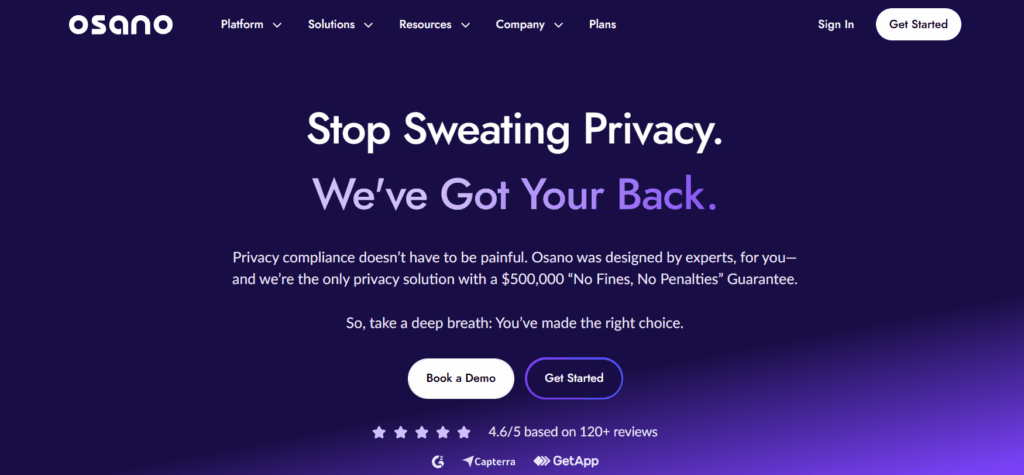
Osano provides a privacy management platform that offers cookie consent as part of a broader compliance toolkit. It’s positioned as a user-friendly option for teams that want to manage consent, disclosures, and privacy workflows without heavy implementation overhead.
Key features:
- Customizable cookie consent banners
- Automated cookie scanning and categorization
- Consent storage and reporting
- Preference management for users
- Integrations with common CMSs, analytics, and tag managers
- Additional tools for privacy disclosures and vendor management
Best for: Small to mid-sized businesses, marketing and privacy teams looking for a balance of simplicity and coverage, and organizations managing consent alongside basic privacy operations.
Pricing: Osano uses a subscription-based, tiered pricing model. Costs vary based on traffic volume and selected features. Self-service plans are available, with a free option for individuals or a USD 199 plan for small teams managing up to three domains.
Pros
- Clear, approachable interface that’s easy to manage
- Faster setup compared to larger enterprise platforms
- Combines consent management with wider privacy tooling
- Suitable for teams without dedicated privacy engineering resources
Cons
- Less flexibility for highly complex or custom consent logic
- Advanced enterprise reporting options are more limited
- May require workarounds for very large or multi-brand deployments
Termly
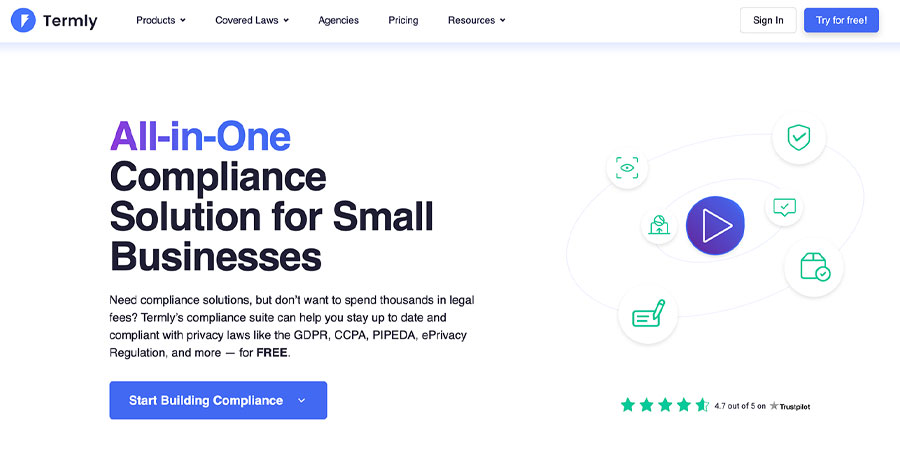
Termly offers a compliance-focused tool that enables cookie consent banners alongside a generator for privacy policies and other legal documents. It’s commonly used by smaller businesses looking for an accessible way to meet basic cookie consent and disclosure requirements.
Key features:
- Customizable cookie consent banners
- Automated cookie scanning and categorization
- Consent storage and basic reporting
- Geotargeted behavior for different regions
- Policy generators for privacy and cookie policies
Best for: Small businesses and startups, teams without dedicated privacy or technical resources, and websites with straightforward consent requirements.
Pricing: Three plans are available: free for “minimal compliance”, Starter for “essential protection”, and Pro+ for “complete compliance.”
Pros
- Easy to set up and manage without technical expertise
- Combines cookie consent and policy creation in one place
- Clear interface designed for non-specialist users
- Suitable for simple websites and standard use cases
Cons
- Less suited to large-scale deployments with complex governance needs
- Limited flexibility for advanced consent logic across regions
- Fewer integrations for complex marketing and analytics environments
iubenda
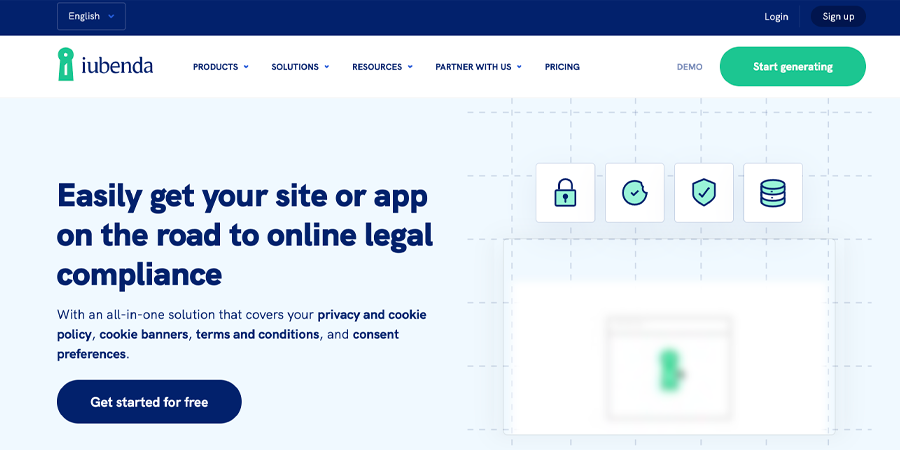
iubenda provides cookie consent tools alongside policy and legal document management, with a strong focus on helping businesses meet European privacy requirements. Its consent solution is commonly used by organizations that want cookie consent and documentation handled together in a single interface.
Key features:
- Customizable cookie consent banners and pop-ups
- Automated cookie scanning and categorization
- Geotargeted behavior for EU, U.S., and other regions
- Consent storage and basic logging
- Integrated privacy and cookie policy generation
- Multi-language support
Best for: Small to mid-sized businesses, organizations operating primarily in the European Union, and teams that want cookie consent and legal documentation managed together.
Pricing: Tiered pricing starting at USD 5.99 a month up to USD 199.99 per month.
Pros
- Strong coverage of European consent and documentation requirements
- Combines cookie consent with policy management in one system
- Flexible banner customization and geotargeting
- Suitable for managing consent across multiple websites under higher-tier plans
Cons
- Consent reporting and audit tooling are more limited than enterprise CMPs
- Advanced integrations with complex marketing stacks can be restrictive
- Less granular control for large-scale, multi-region governance setups
Didomi
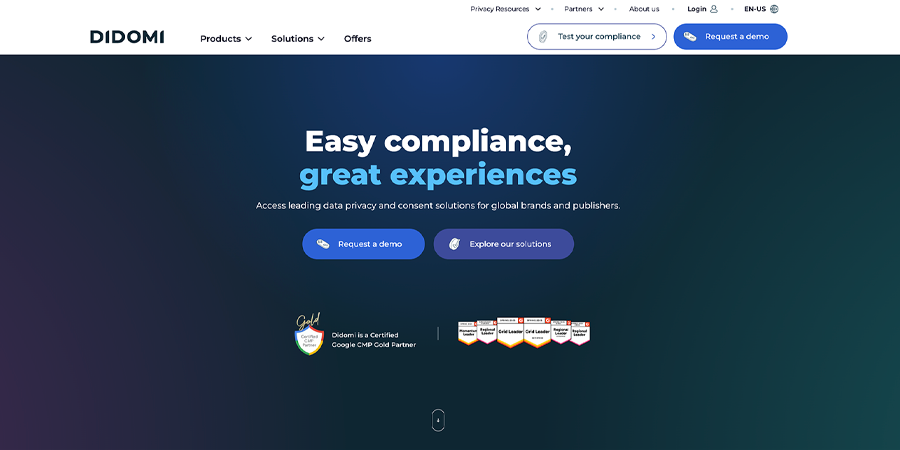
Didomi provides a consent management platform with a strong focus on compliant consent collection for websites and apps. It’s widely used by publishers and digital businesses that need flexible consent experiences across regions and devices.
Key features:
- Customizable cookie consent banners and pop-ups
- Granular consent choices by purpose and vendor
- Geotargeted behavior for different regulatory regions
- Consent storage with reporting and audit support
- Preference management and consent withdrawal
- Integrations with tag managers, analytics, and advertising platforms
Best for: Publishers and media organizations, digital businesses operating across multiple regions, and teams that need detailed consent controls without a full governance, risk and compliance (GRC) platform.
Pricing: Quote-based subscription. Costs vary depending on traffic volume, platforms (web/app), and feature requirements.
Pros
- Flexible consent UI with strong customization options
- Well-suited to multi-region consent requirements
- Granular vendor- and purpose-level consent controls
Cons
- Interface and configuration can feel complex for smaller teams
- More setup required compared to lightweight cookie tools
- Advanced features may exceed the needs of simple websites
inMobi CMP

InMobi CMP (formerly Quantcast Choice) is a consent management solution designed primarily for publishers and advertising-driven websites. It focuses on helping organizations collect, manage, and signal user consent in line with global privacy regulations, with strong support for advertising frameworks.
Key features:
- Customizable cookie consent banners and pop-ups
- Support for the IAB’s Transparency and Consent Framework (TCF)
- Geotargeted consent behavior by region
- Consent signals for advertising and analytics vendors
- Preference management and consent withdrawal
- Integrations with ad tech platforms and tag managers
Best for: Publishers and media organizations, websites reliant on advertising or programmatic revenue, and teams that need standards-based consent signaling rather than broad consent governance.
Pricing: Offers a free tier for core consent functionality. Additional features and higher usage volumes may require paid plans, depending on implementation and scale.
Pros
- Well-aligned with advertising and publisher consent requirements
- Strong support for industry standards like the IAB TCF
- Clear consent signaling for ad and measurement vendors
- Widely used in ad-supported digital environments
Cons
- Heavily oriented toward publisher and advertising use cases, so might not suit every business
- Less flexibility for non-ad-centric marketing stacks
- Limited audit and reporting features compared to enterprise CMPs
Complianz by iubenda
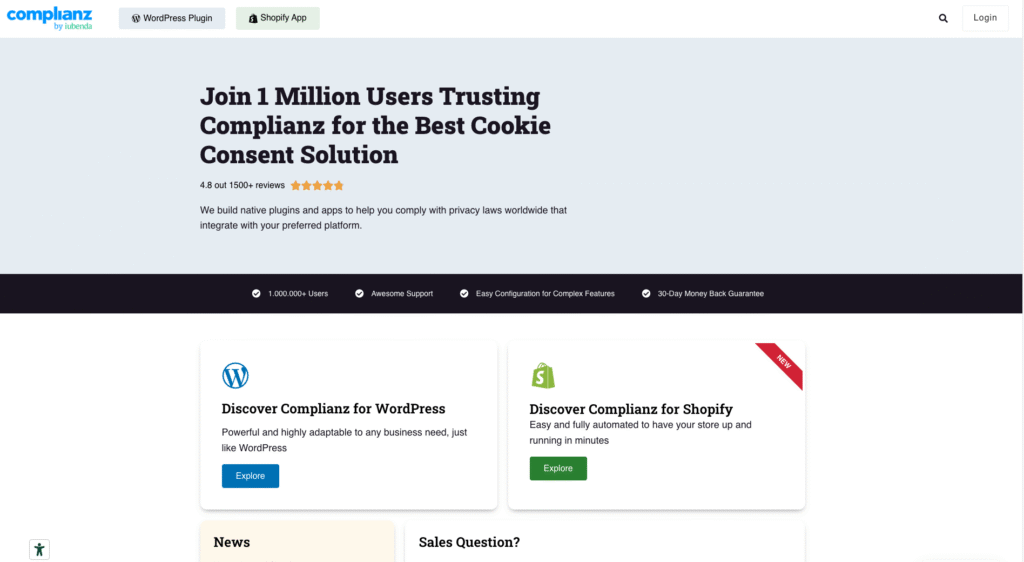
Complianz provides a cookie consent tool best known for its strong WordPress and Shopify integrations and region-specific compliance presets. It’s designed to help website owners configure cookie consent quickly, with guided setup based on applicable privacy laws.
Key features:
- Customizable cookie consent banners and pop-ups
- Automated cookie scanning and categorization
- Region-based consent logic (EU, U.S., UK, and more)
- Consent storage and basic documentation
- Built-in compliance wizard and presets
- Native integration with WordPress and Shopify
Best for: WordPress and Shopify site owners, small to mid-sized businesses, and teams looking for a guided, compliance-focused cookie consent tool.
Pricing: Different tiers for WordPress and Shopify. Shopify has a free tier suitable for most new merchants, and a premium tier (USD 5.99 per month or USD 59 per year) for those who need more extensive support. WordPress plans start at USD 59 a month for a Personal plan (one website) up to Agency (25 websites) for USD 399 per month. There’s also a mid-tier plan (up to five websites) for USD 179 a month.
Pros
- Strong fit for WordPress and Shopify-based websites
- Guided setup makes configuration accessible for non-specialists
- Regional presets reduce manual legal interpretation
- Good balance of automation and control for standard use cases
Cons
- Not available outside the WordPress and Shopify ecosystems
- Fewer advanced integrations for complex marketing stacks
- Reporting and audit features are more basic than full CMPs
Axeptio
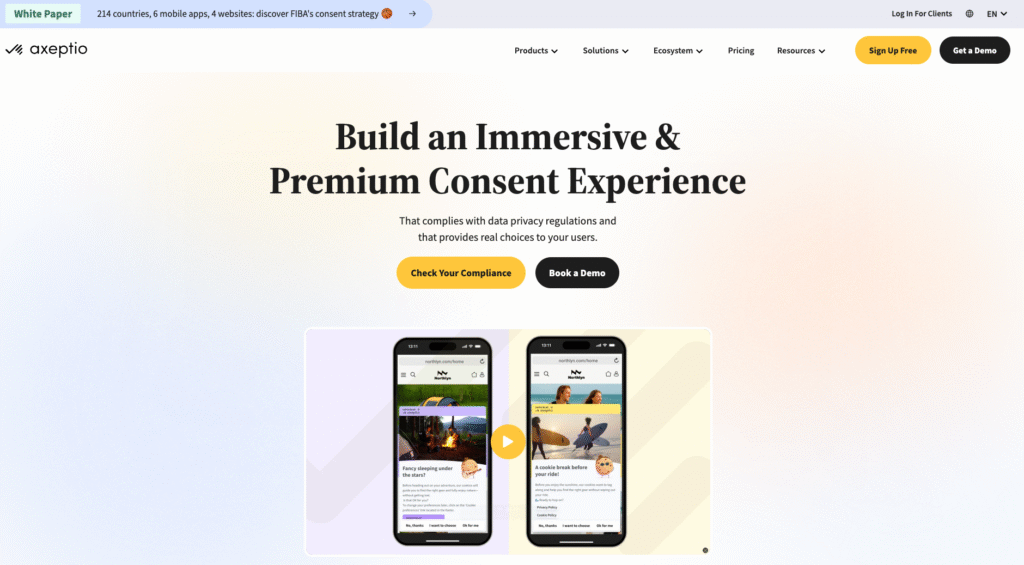
Axeptio is a cookie consent tool with a strong emphasis on user experience and clear communication. It’s designed to help organizations collect consent in a way that feels transparent and understandable to users, while still meeting regulatory requirements.
Key features:
- Customizable cookie consent banners and pop-ups
- Clear, plain-language consent messages
- Granular consent choices by purpose
- Geotargeted behavior for different regions
- Consent storage and basic reporting
- Integrations with common CMSs and tag managers
Best for: Brand-led teams focused on user trust and transparency, and websites where consent UX is a priority.
Pricing: Tiered pricing starts at GBP 29 per month up to GBP 129 per month, with a GBP 69 option and a free plan available. Pricing is based on pageviews and features.
Pros
- User-friendly consent experience that prioritizes clarity
- Flexible banner design and messaging options
- Supports granular consent without complex configuration
- Good fit for teams that care about user experience and brand tone
Cons
- Limited advanced reporting and audit capabilities
- Fewer enterprise-focused integrations
- Less suited to highly complex or regulated environments
CookieYes
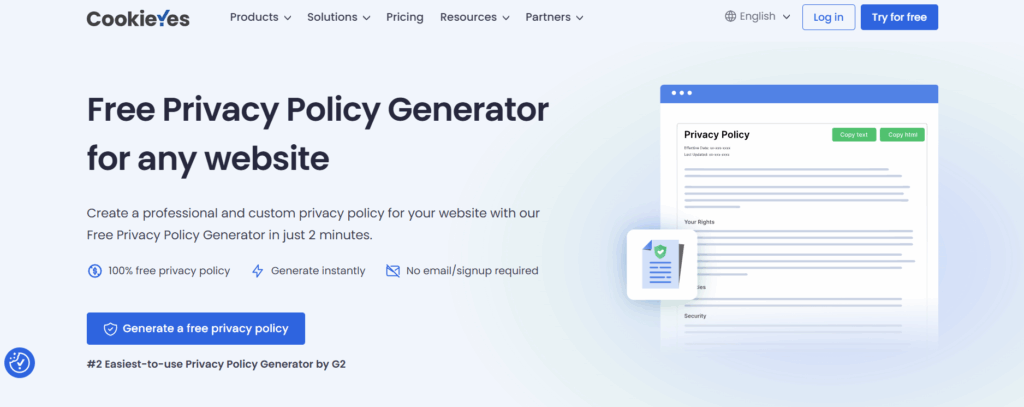
CookieYes provides a cookie consent tool designed to help websites implement consent banners and basic cookie controls quickly. It’s commonly used by smaller organizations that want a simple, low-overhead way to meet cookie consent requirements.
Key features:
- Customizable cookie consent banners and pop-ups
- Automated cookie scanning and categorization
- Geotargeted consent behavior for different regions
- Consent storage and basic logs
- Integrations with Google Tag Manager and popular CMSs
Best for: Blogs and content-driven websites, SMBs, and startups.
Pricing: Plans start at USD 10 per month for SMBs, and range to USD 55 per month for large businesses with high traffic. There’s also a medium tier priced at USD 25 per month, and agency pricing is available on request.
Pros
- Fast and straightforward to set up
- Clear focus on cookie consent without added complexity
- Entry-level pricing makes it accessible for smaller sites
Cons
- Limited reporting and audit functionality
- Less flexibility for advanced consent logic or complex stacks
How to choose the right cookie consent solution
The right cookie consent solution depends on how your business operates and how much complexity you need to manage. What works for a small website may not scale as regions, tools, and expectations grow.
- Business size: Smaller teams often benefit from lightweight tools that are quick to deploy and easy to maintain. As organizations grow, centralized controls and shared visibility across teams become more important.
- Geographic reach: Consent requirements vary by region. If your audience spans multiple countries or states, look for a solution that applies region-specific logic automatically, without manual configuration.
- Tech stack complexity: Consent affects analytics, advertising, and embedded services. The more tools you use, the more important reliable integrations and consent enforcement become.
- Audit and compliance maturity: If audits or regulatory reviews are part of your reality, choose a solution that supports clear consent records and aligns with compliance audit software.

Join our growing community of data privacy enthusiasts now. Subscribe to the Usercentrics newsletter and get the latest updates right in your inbox.
